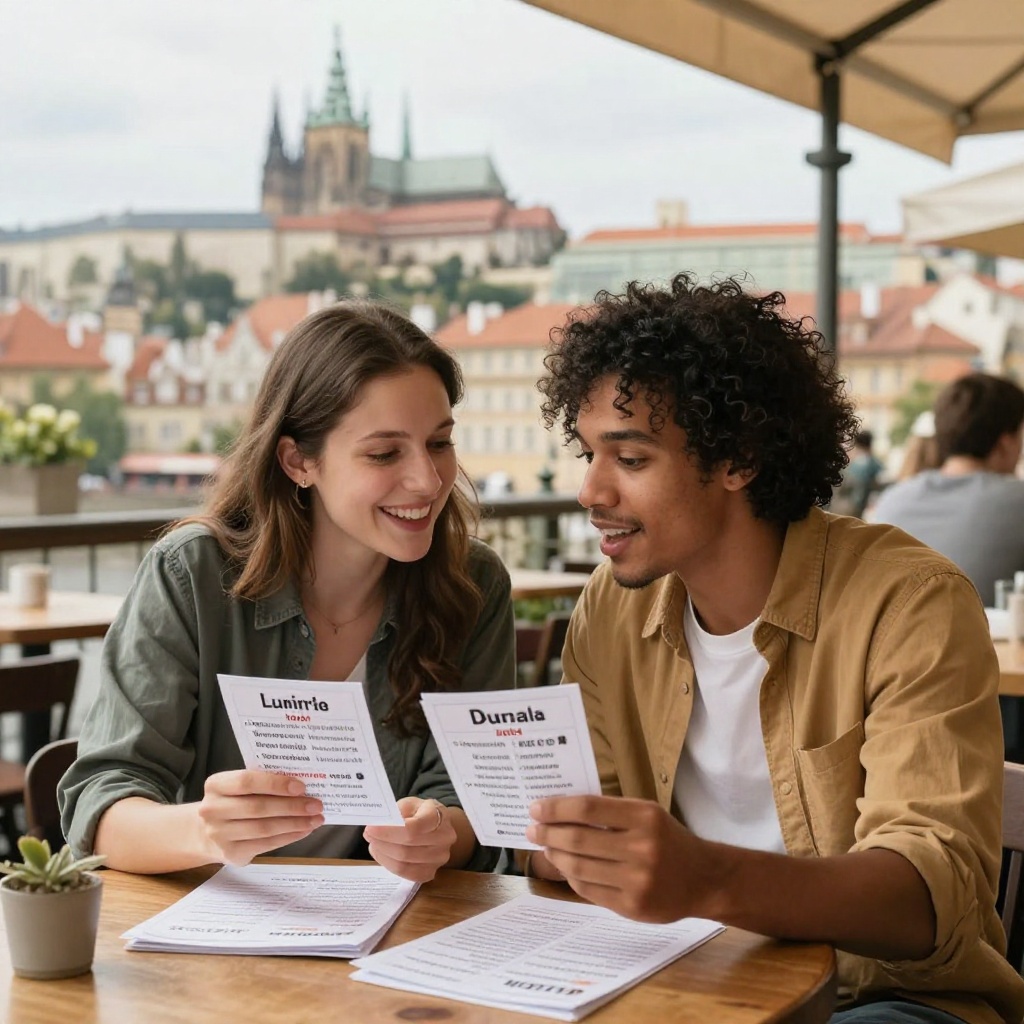
Czech Texting Slang to Chat With Your Partner
Learn modern Czech texting slang and SMS abbreviations. From "ahoj" to "pp", master the digital language Czechs actually use online.
When you're texting your Czech partner, formal language goes out the window. Like everywhere else in the world, Czechs have developed their own texting shorthand, slang, and digital expressions. Understanding these will help you chat naturally with your partner and decode their messages.
Let's dive into the world of Czech texting!
Essential Text Abbreviations
Phrase to Learn
pp
Pa pa - bye bye
[ pa pa ]
Use this at the end of a sweet, casual text. It is short, natural, and very common in chats with a partner.
Czech texting uses plenty of abbreviations to save time:
Pronunciation: neh neh
"nn, to nechci." - A quick, informal refusal that reads as casual in text, not rude.
Common Abbreviations
| Abbreviation | Full Form | English |
|---|---|---|
| pp | pa pa | bye bye |
| nn | ne ne | no no |
| jj | jo jo | yeah yeah |
| mm | mám | I have |
| tt | tady | here |
| dd | dnes | today |
| zz | zítra | tomorrow |
| dik/díky | děkuji | thanks |
| nz | nevím | I don't know |
| pls/plz | prosím | please |
Czech Keyboard Shortcuts
Czechs often skip diacritics (háčky and čárky) when texting quickly. So "miluji tě" might appear as "miluji te" or even "miluju te". Don't be confused - it's just faster typing! Context makes it clear.
Romantic Text Slang
When texting your partner, you'll want these sweet expressions:
Pronunciation: mahm tyeh rahd/rah-da
"Mám tě ráda, krásný den!"
Pronunciation: PU-su
"Pusu, zítra!"
Pronunciation: PU-sin-ki
"Pusinky, dobrou noc."
Love Text Vocabulary
These words are sweet, but they are not all used the same way. Some work as a sign-off, while others sound better inside a full sentence.
| Czech | English | Usage | Example text |
|---|---|---|---|
| Pusu! | Kiss! | Text sign-off | Pusu, lásko! |
| Pusinka | Little kiss | Soft and affectionate | Posílám pusinku. |
| Pusinky | Little kisses | Plural, very sweet | Pusinky a dobrou noc. |
| Objetí | Hug | For virtual hugs | Posílám objetí. |
| Miluji tě ❤️ | I love you | Strong, direct | Miluji tě moc. |
| Stýská se mi | I miss you | Feels natural when you are apart | Stýská se mi po tobě. |
Pronunciation: STEES-kah seh mi poh TO-beh
"Stýská se mi po tobě." - The most natural form when you want to say you miss your partner.
Internet Slang & Modern Expressions
Pronunciation: smeekh
"Smích, to je skvělé!"
Pronunciation: SMEH-yu se
"Směju se, musím ti to ukázat."
Pronunciation: MI-mo-kho-dem
"Mimochodem, viděl jsi to nové auto?"
Popular Online Expressions
| Term | Meaning | Context |
|---|---|---|
| OK/oki | Okay | Casual agreement |
| Super | Great | Positive response |
| Paráda | Awesome | Very positive |
| Hustý | Cool/Intense | Youth slang |
| Pohoda | All good/Chill | Everything's fine |
| Jasně | Sure/Of course | Casual agreement |
| Fakt? | Really? | Expressing surprise |
| Vážně? | Seriously? | Similar to Fakt |
Pronunciation: HUS-tee
"To je hustý! (That's cool!)"
English Mixing
Young Czechs freely mix English words into their texts. "Sorry," "cool," "OK," "nice," and "super" are used constantly. Don't be surprised if your partner's messages are a Czech-English hybrid - it's completely normal!
Question Shortcuts
Pronunciation: gdeh ysi
"Kde jsi? Už jsi blízko?"
Pronunciation: tso DYEH-lahsh
"Ahoj, co děláš teď?"
Quick Question Forms
| Full Form | Short Form | English |
|---|---|---|
| Co děláš? | Co? | What (are you doing)? |
| Kde jsi? | Kde? | Where (are you)? |
| Kdy přijdeš? | Kdy? | When (are you coming)? |
| Jak se máš? | Jak? | How (are you)? |
| Proč? | Proč? | Why? |
| Co se děje? | Co se děje | What's happening? |
Pronunciation: veesh tso
"Víš co? Musím ti něco říct."
Expressing Emotions in Text
Digital communication in Czech relies heavily on phonetic shortcuts and emotional particles to bridge the gap between spoken and written language. When texting, native speakers often strip away formal grammar to prioritize speed and emotional clarity, using specific slang that signals their current headspace. This shorthand is essential for maintaining a natural rhythm in a conversation, ensuring that the sentiment behind your words is clear without needing a lengthy explanation.
This section focuses on the specific vocabulary used to broadcast your feelings via text message. We will cover "Positive Emotions" to help you share excitement or contentment, as well as "Negative/Frustrated Emotions" for those instances where you need to express annoyance or disappointment. Learning these distinctions prevents messages from sounding robotic and allows for a more nuanced exchange of feelings.
Positive Emotions
Pronunciation: YU-pee
"Jupí, povedlo se to!"
Pronunciation: yeh
"Jéé, děkuju!"
| Czech | English | Emotion |
|---|---|---|
| Jupí! | Yay! | Excitement |
| Jéé | Wow | Pleasant surprise |
| Super! | Great! | Happiness |
| Paráda! | Awesome! | Very positive |
| Tak jo! | Alright then! | Agreement |
| Skvělé! | Excellent! | Enthusiasm |
Negative/Frustrated Emotions
Pronunciation: no yo
"No jo, už jdu."
Pronunciation: SAK-ra
"Sakra, to je smůla!"
| Czech | English | Context |
|---|---|---|
| No jo... | Well yeah... | Reluctant |
| Sakra | Darn | Mild frustration |
| Kruci | Dang | Even milder |
| Mno | Well... | Hesitation |
| Bohužel | Unfortunately | Bad news |
| Škoda | Too bad / Pity | Disappointment |
Flirty Texting
Pronunciation: TYEH-sheem seh na TE-be
"Moc se na tebe těším!"
Pronunciation: NE-moo-zhoo seh DOCH-kat
"Nemůžu se dočkat zítra!"
Flirty Text Phrases
| Czech | English |
|---|---|
| Myslím na tebe | Thinking of you |
| Chybíš mi | I miss you |
| Těším se! | Looking forward to it! |
| Nemůžu přestat myslet na tebe | Can't stop thinking about you |
| Kdy tě uvidím? | When will I see you? |
| Večer? ❤️ | Tonight? |
Pronunciation: MIS-leem na TE-be
"Posílám pusu, myslím na tebe."
Text Reactions
Quick ways to react to messages:
Pronunciation: fakt
"Fakt? To nemyslíš vážně!"
| Reaction | Meaning | Use When |
|---|---|---|
| Jo | Yeah | Agreeing |
| Ne | No | Disagreeing |
| Jasně | Sure | Confirming |
| Fakt? | Really? | Surprised |
| Vážně? | Seriously? | Very surprised |
| Cože? | What?! | Shocked |
| No teda! | Wow! | Impressed |
| Aha | Oh, I see | Understanding |
Voice Messages
Many Czechs prefer sending voice messages (hlasové zprávy) instead of typing long texts. If your partner sends you audio messages, it's a sign of closeness - they're comfortable being casual with you. Try sending one back!
Planning & Logistics
Pronunciation: SEY-deh-meh seh
"Sejdeme se večer?"
Pronunciation: gdeh a gdi
"Super, kde a kdy se sejdeme?"
Meeting Up Phrases
| Czech | English |
|---|---|
| Sejdeme se v 7? | Shall we meet at 7? |
| Kde a kdy? | Where and when? |
| Jsem tam za 5 min | I'll be there in 5 min |
| Jedu | On my way |
| Už jsem tady | I'm here already |
| Budu mít zpoždění | I'll be late |
| Sorry, nestíhám | Sorry, running late |
| Počkej na mě | Wait for me |
Pronunciation: uzh YE-du
"Už jedu, budu tam brzy!"
Good Night Texting
Pronunciation: DOB-roh
"Dobrou, zítra!"
Pronunciation: SLAD-keh sni
"Dobrou noc a sladké sny."
Bedtime Text Phrases
| Czech | English |
|---|---|
| Dobrou noc | Good night |
| Dobrou ❤️ | Night |
| Sladké sny | Sweet dreams |
| Spi dobře | Sleep well |
| Uvidíme se zítra | See you tomorrow |
| Budeš mi chybět | I'll miss you |
| Pusinku na dobrou noc | Goodnight kiss |
Quick Reference - Text Abbreviations
| Abbreviation | Full Form | English |
|---|---|---|
| pp | pa pa | bye bye |
| jj | jo jo | yeah yeah |
| nn | ne ne | no no |
| tt | tady | here |
| dd | dnes | today |
| zz | zítra | tomorrow |
| nz | nevím | don't know |
| dik/díky | děkuji | thanks |
| pls | prosím | please |
| btw | by the way | btw |
Start Texting!
Now you're ready to text your Czech partner like a pro. Start with the basics - "Čau", "Díky", and "Pusu" will get you far. Don't worry about perfect spelling or diacritics in casual texts - your partner will understand and appreciate your effort.
The most important thing is to communicate. Even a simple "Myslím na tebe ❤️" (Thinking of you) will make your partner smile. So grab your phone and start chatting!
Related Articles
Ready to learn together?
Speak their language, touch their heart. Fun games, voice practice & goals made for two.
Start Learning for $0.00 →✨ Try free — no credit card needed
Frequently Asked Questions
What Czech texting abbreviations should I learn first to text my partner?
Start with the most common ones: "jj" (jo jo, meaning yeah yeah), "nn" (ne ne, meaning no no), "pp" (prosím, please), and "dd" (děkuji, thanks). These four abbreviations alone will make your Czech texts feel more natural and save you typing time in daily conversations with your partner.
Is it weird to use Czech texting slang if I am still a beginner?
Not at all. Using Czech text slang actually shows your partner that you are engaging with real, living Czech rather than textbook language. Start with common abbreviations and emoji patterns, and your partner will likely find it charming and encouraging to see you communicating casually in their language.
How do Czech people use emojis differently from English speakers?
Czech texters tend to use emojis more sparingly than many English speakers and often prefer text-based expressions. Hearts and kissing emojis are common between partners, but excessive emoji use can feel juvenile. Match your partner's emoji style by observing what they send, and practice texting with your partner daily.
What is the best way to flirt in Czech over text without sounding awkward?
Keep it simple and genuine. Texts like "Myslím na tebe" (Thinking of you) or "Nemůžu se dočkat, až tě uvidím" (I cannot wait to see you) are natural and romantic without trying too hard. Czech flirting tends to be more understated than in English, so sincerity wins over cleverness.
Should I use Czech or English when texting my partner about serious topics?
Use English for serious or emotionally complex topics where being misunderstood could cause problems. Czech is perfect for daily affection, casual plans, and fun exchanges. As your Czech improves, you can gradually introduce more substantial topics. Mixing both languages in the same conversation is completely normal for bilingual couples.