Danish Phrases for Meeting the In-Laws: Make a Great Impression
Learn essential Danish phrases for meeting your partner's family. From warm greetings to expressing gratitude with hygge, impress your Danish-speaking in-laws.
Meeting your partner's Danish family is an important, warm experience. Danish culture values hygge—cozy togetherness—and your effort to speak Danish will be warmly appreciated.
Why Language Matters
While Danes speak excellent English, using Danish shows genuine investment in becoming part of the family. It demonstrates respect for their culture and creates hygge.
First Impressions
The initial moments of meeting Danish in-laws often dictate the atmosphere for the rest of the visit. In Denmark, social etiquette leans toward a balance of relaxed informality and polite reserve. Arriving at the door with a clear, audible greeting and maintaining steady eye contact is a standard expectation that signals respect and presence. While Danish culture is generally egalitarian, showing a baseline of linguistic effort during these first few seconds bridges the cultural gap and acknowledges the significance of the introduction.
This section covers the essential vocabulary for starting the encounter on a positive note. The focus remains on standard Greetings to ensure the opening remarks are appropriate for the setting, whether it is a formal Sunday lunch or a casual afternoon coffee. Selecting the correct temporal greeting—differentiating between morning, afternoon, and evening—demonstrates a level of cultural awareness that goes beyond basic textbook phrases.
Greetings
Hyggeligt at møde jer (Hyg-ge-lit at mu-the yer) Nice to meet you
Warm greeting using the beloved word hyggelig.
Det er en ære at møde [partner's name]s familie (De air en e-re at mu-the [partner's name]s fa-mee-lye) It's an honor to meet [partner's name]'s family
[Partner's name] har fortalt mig meget om jer (..har for-talt mai mai-et om yer) [Partner's name] has told me a lot about you
Expressing Gratitude
Tak fordi I byder mig velkommen i jeres hjem (Tak for-di ee bew-ther mai vel-ko-men ee ye-res yem) Thank you for welcoming me into your home
Det smager fantastisk! (De sma-er fan-tas-tisk!) It tastes fantastic!
Tusind tak for alt (Tu-sen tak for alt) Thank you so much for everything
Talking About Your Partner
Jeg elsker jeres søn/datter meget højt (Yai el-sker ye-res sun/da-ter mai-et hoyt) I love your son/daughter very much
[Partner's name] er et fantastisk menneske (..air et fan-tas-tisk men-es-ke) [Partner's name] is a fantastic person
I har opdraget en fantastisk person (Ee har op-dra-et en fan-tas-tisk per-son) You've raised a fantastic person
Han/Hun gør mig meget lykkelig (Han/Hun gur mai mai-et lyk-ke-li) He/She makes me very happy
Polite Conversation
Kan jeg hjælpe med noget? (Kan yai yel-pe meth no-et?) Can I help with anything?
Kan I fortælle mig mere om [topic]? (Kan ee for-tel-le mai mee-re om [topic]?) Can you tell me more about [topic]?
I har et meget smukt hjem (Ee har et mai-et smookt yem) You have a very beautiful home
Familie er også meget vigtigt for mig (Fa-mee-lye air o-so mai-et vik-tit for mai) Family is also very important to me
Saying Goodbye
Det var hyggeligt at møde jer (De var hyg-ge-lit at mu-the yer) It was nice to meet you
Jeg håber vi ses snart igen (Yai ho-ber vee sees snart ee-en) I hope we see each other again soon
Cultural Tips
- Hygge: Creating cozy, warm atmosphere is highly valued
- Informality: Danish families tend to be informal
- Punctuality: Be on time
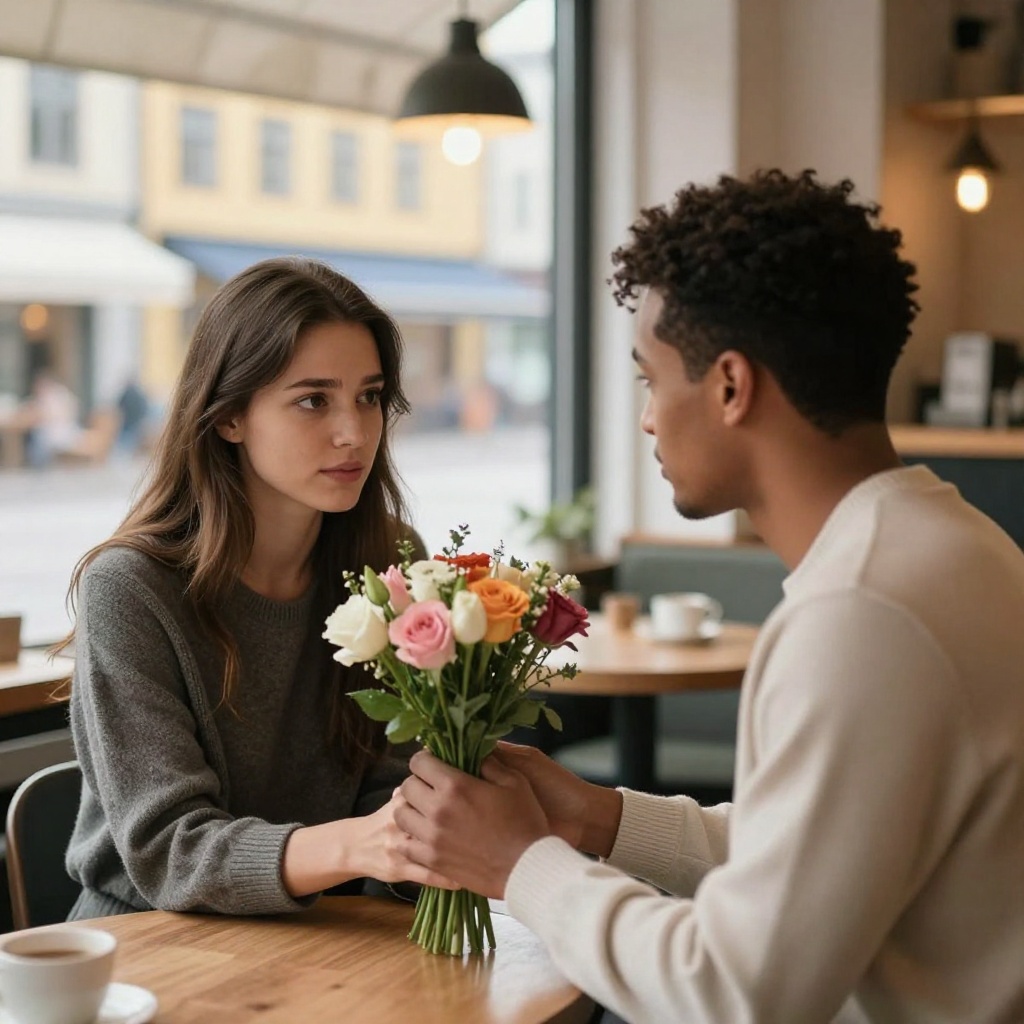
- Bring gifts: Wine, flowers, or chocolates appropriate
- Humor: Danes appreciate wit and understatement
Building Relationships
Jeg betragter jer som min egen familie (Yai be-trag-ter yer som min e-en fa-mee-lye) I consider you as my own family
I er altid velkomne hos os (Ee air al-ti vel-kom-ne hos os) You are always welcome with us
Your effort to speak Danish creates the hygge connection Danes treasure.
Related Articles
Ready to learn together?
Speak their language, touch their heart. Fun games, voice practice & goals made for two.
Start Learning for $0.00 →✨ Try free — no credit card needed
Frequently Asked Questions
How should I greet Danish in-laws for the first time?
A handshake with eye contact and a warm "Hej, det er dejligt at møde dig" (Hi, it is lovely to meet you) is perfect. Danish families are generally informal, so first names are expected from the start. Your partner can brief you on any specific family customs before the meeting.
What topics impress Danish in-laws in conversation?
Show interest in Danish culture, ask about their local area, and discuss your shared interests or hobbies. Danes appreciate people who are curious and well-read. Avoid one-upping or boasting, which conflicts with Danish cultural values. Preparing a few thoughtful Danish questions with your partner beforehand shows initiative.
How do I handle Danish in-laws who speak entirely in Danish during visits?
Smile, stay engaged, and catch keywords you recognize. Ask your partner to summarize key points quietly. Saying "Undskyld, mit dansk er ikke så godt endnu" (Sorry, my Danish is not so good yet) earns patience. Each visit becomes a listening comprehension exercise that improves your understanding for next time with their family.
What role does hygge play when visiting Danish in-laws?
Hygge is central to Danish family gatherings. Contributing to the atmosphere by helping in the kitchen, lighting candles, or engaging warmly in conversation shows you understand and value this cultural concept. Saying "Det er virkelig hyggeligt" (This is really cozy) to your partner's family demonstrates cultural awareness that earns genuine appreciation.
How often should I visit or call my Danish in-laws?
Danes tend to have close but not overly frequent family contact. Monthly calls and visits during holidays and birthdays are typical. Your partner can guide you on their family's specific expectations. Always greet them in Danish during calls, even briefly, to maintain the relationship and show continued effort.