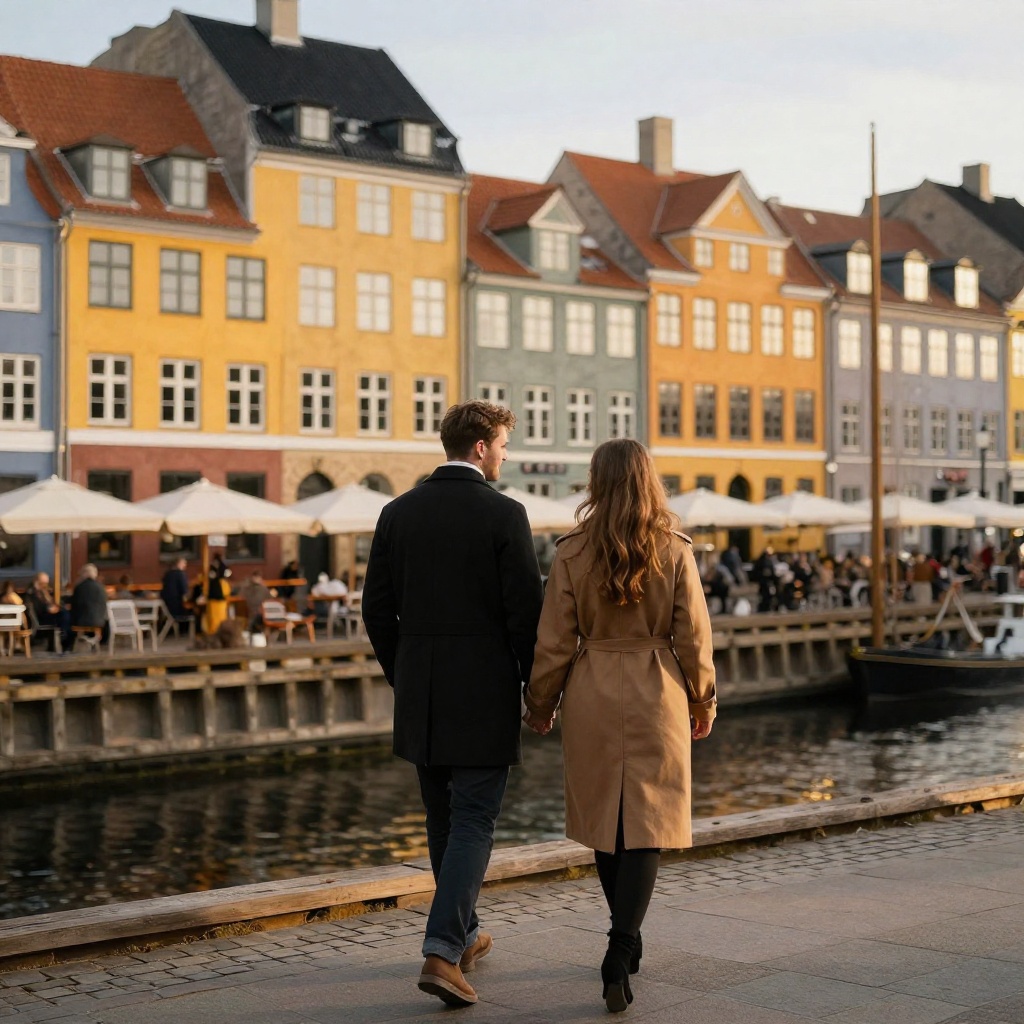
Danish for Couples: 25 Essential Phrases
Learn Danish with your partner. Essential daily phrases, romantic expressions, and family conversation skills for mixed-language couples.
Learning Danish together as a couple creates beautiful opportunities to bond while discovering Scandinavian culture. Whether you're planning a romantic trip to Copenhagen, connecting with Danish family, or simply sharing a new adventure, mastering essential Danish phrases will strengthen your relationship and open doors to wonderful experiences.
Basic Greetings: Your First Danish Words
Every Danish conversation starts with a greeting. These fundamental phrases will give you both confidence from day one.
Pronunciation: SKAT
"Godmorgen, skat."
Pronunciation: go-MOR-en, min EL-skuh-deh
"Godmorgen, min elskede, sov du godt?"
Pronunciation: go-AF-ten, min KAIR-eh
"Godaften, min kære. Jeg har savnet dig."
Pronunciation: go-NAT, min SKAT
"Godnat, min skat. Drøm sødt."
Danish Greetings
Danes are relatively informal. "Hej" works in almost any situation - with friends, colleagues, even in shops. The more formal "Goddag" (good day) is rarely used except in very formal settings. Feel free to use "hej" confidently!
Essential Courtesy Phrases
Use these first, because they work in almost every interaction. The pronunciation column is a rough guide for English speakers, and the example helps you hear how the phrase fits into a real sentence.
| Danish | Pronunciation | English | Usage note |
|---|---|---|---|
| Tak | tak | Thank you | Short, warm, and very common. Works alone or after a favor. |
| Mange tak | MANG-uh tak | Thank you very much | Use when you want to sound a little more emphatic. |
| Selv tak | sel tak | You're welcome | Often used as a natural reply after someone thanks you. |
| Undskyld | oon-SKYL | Excuse me / Sorry | Useful both for apologizing and for getting attention politely. |
| Ja | ya | Yes | Keep the vowel short and clear; it sounds softer than the English word. |
| Nej | nai | No | Simple and direct. Danish often prefers this kind of plain response. |
Mini-practice: take turns making one complete line with each phrase, for example: Tak for kaffen. (Thanks for the coffee.) Then swap roles and answer with Selv tak.
Romantic Expressions for Couples
Nothing brings couples closer than sharing sweet words in a new language. These romantic Danish phrases will add Nordic warmth to your relationship.
Phrase to Learn
Jeg elsker dig
I love you
[ yai EL-sker dai ]
The most important phrase to learn - use it often!
Pronunciation: yai SOW-ner dai
"Når du er væk, savner jeg dig så meget."
Pronunciation: doo air smook / doo air flot
"Du er så smuk i aften."
Pronunciation: yai TEN-ker paw dai
"Hele dagen har jeg tænkt på dig."
More Romantic Phrases
- Du gør mig lykkelig [doo gør mai LYK-kuh-lee] - You make me happy
- Vil du være min? [veel doo VAR-uh meen] - Will you be mine?
- Du er den eneste for mig [doo air den EN-es-tuh for mai] - You are the only one for me
- Mit hjerte tilhører dig [meet YAIR-tuh til-HØR-er dai] - My heart belongs to you
Danish Directness
Danes value directness and honesty. When expressing feelings, simple and sincere phrases work better than flowery or exaggerated language. "Jeg elsker dig" said genuinely is more meaningful than elaborate declarations.
Daily Conversation Essentials
These phrases help you practice Danish naturally throughout your day together.
Pronunciation: VOR-dan var din DAH, skat?
"Velkommen hjem. Hvordan var din dag, skat?"
Pronunciation: yai har deh DAI-leet meth dai
"Jeg har det dejligt med dig ved min side."
Pronunciation: vath har doo LOO-st til?
"Skat, hvad har du lyst til at spise i aften?"
The Verb "At have" (To Have)
at have
to have
| Jeg | har | I have |
| Du | har | You have |
| Han/Hun | har | He/She has |
| Vi | har | We have |
| I | har | You (plural) have |
| De | har | They have |
Great news: Like most Danish verbs, "har" doesn't change based on the subject!
Travel Phrases for Your Danish Adventure
Planning a romantic trip to Denmark? These phrases will help you navigate together with confidence.
Pronunciation: kan yai YEL-peh dai?
"Du ser travl ud, kan jeg hjælpe dig?"
Pronunciation: skal vee DEH-leh?
"Maden ser god ud, skal vi dele?"
Pronunciation: kan vee SNAK-keh
"Skat, kan vi snakke om det her senere?"
Restaurant and Cafe Phrases
| Danish | Pronunciation | English |
|---|---|---|
| Et bord til to, tak | et bor til toh, tak | A table for two, please |
| Regningen, tak | RAI-ning-en, tak | The bill, please |
| Det var lækkert | deh var LEK-ert | That was delicious |
| Skål! | skawl | Cheers! |
Hygge in Restaurants
Danish dining culture embraces "hygge" - cozy contentment. Meals are meant to be leisurely and enjoyed. Don't rush through dinner! Lingering over food and conversation is not just acceptable but expected. Order a second coffee and enjoy the moment together.
Expressing Feelings and Opinions
Share your thoughts and feelings with these useful phrases:
Pronunciation: yai EL-sker at til-BRING-eh teed meth dai
"Jeg elsker at tilbringe tid med dig i weekenden."
Pronunciation: deh air vee-DOON-er-leet at VAIR-eh SAM-men meth dai
"Det er vidunderligt at være sammen med dig hver dag."
Pronunciation: yai air saw GLATH for at HAH-veh dai
"Jeg er så glad for at have dig i mit liv."
Agreeing and Disagreeing
- Ja, selvfølgelig [ya, sel-FØL-guh-lee] - Yes, of course
- Det synes jeg også [deh SY-nes yai OS-aw] - I think so too
- Måske [MAW-skuh] - Maybe
- Jeg er ikke sikker [yai air ik-kuh SIK-er] - I'm not sure
Questions to Ask Each Other
Practice Danish by asking each other these questions:
Pronunciation: vath skal vee LA-veh ee DAI?
"Godmorgen, skat. Hvad skal vi lave i dag?"
Pronunciation: air doo SOOL-ten?
"Elskede, er du sulten? Jeg kan lave noget mad."
Pronunciation: skal vee gaw en toor?
"Vejret er dejligt. Skal vi gå en tur i parken?"
More Useful Questions
| Danish | Pronunciation | English |
|---|---|---|
| Hvad tænker du på? | vath TEN-ker doo paw | What are you thinking about? |
| Er du træt? | air doo tret | Are you tired? |
| Hvad vil du have? | vath veel doo ha | What would you like? |
| Kan du hjælpe mig? | kan doo YEL-puh mai | Can you help me? |
Making Plans Together
Pronunciation: skal vee
"Skal vi tage ud at spise i aften?"
Pronunciation: yai GLAITH-er mai til
"Jeg glæder mig til vores næste ferie sammen."
Days of the Week
| Danish | Pronunciation | English |
|---|---|---|
| Mandag | MAN-dai | Monday |
| Tirsdag | TEERS-dai | Tuesday |
| Onsdag | ONS-dai | Wednesday |
| Torsdag | TORS-dai | Thursday |
| Fredag | FRAI-dai | Friday |
| Lordag | LØR-dai | Saturday |
| Sondag | SØN-dai | Sunday |
Weekend Plans
Danes highly value work-life balance. Weekends are sacred family and couple time. "Hvad skal du i weekenden?" (What are you doing this weekend?) is a common conversation starter. Plan cozy activities together - that's the Danish way!
Emergency and Help Phrases
While hopefully unnecessary, these phrases provide peace of mind:
Pronunciation: maw yai GEE-veh dai et KNUUS?
"Du ser lidt ked ud af det. Må jeg give dig et knus?"
Pronunciation: kan doo for-KLAH-reh deh?
"Jeg er ikke sikker på, hvad du mener. Kan du forklare det?"
- Ring til politiet [ring til po-lee-TEE-et] - Call the police
- Hvor er hospitalet? [vor air hos-pee-TA-let] - Where is the hospital?
- Jeg taler ikke dansk [yai TA-ler ik-kuh dansk] - I don't speak Danish
Practice Tips for Couples
Learning Danish as a duo allows you to navigate the complexities of the language—such as the distinctive 'soft d' or the variety of vowel sounds—through constant peer feedback. Having a dedicated partner means you can simulate real-world scenarios in a low-stakes environment, allowing the language to move from passive recognition to active usage. By committing to learning as a team, you transform the challenge of mastering Danish into a collaborative project that fits into your existing relationship.
To help you stay on track, we have gathered several methods for integrating the language into your life. This includes establishing Daily Routines that use specific triggers to prompt Danish speech, engaging in Fun Learning Activities that prevent the process from feeling like a chore, and finding ways to Build Your Vocabulary Together so that both of you expand your range of expression at a similar pace. These strategies are designed to make Danish a natural part of your household dialogue.
Pronunciation: kys mai
"Jeg har savnet dig. Kys mig."
Daily Routines
- Morning: Greet each other with "God morgen, skat"
- Throughout the day: Send "Jeg tænker på dig" messages
- Evening: Ask "Hvordan var din dag?"
- Night: Say "Godnat, elskede. Jeg elsker dig"
Fun Learning Activities
- Danish movie nights: Watch Danish films with subtitles
- Cooking together: Try Danish recipes and learn food vocabulary
- Virtual trips: Explore Copenhagen on Google Maps while practicing directions
- Daily challenges: Learn one new phrase each day and use it
Build Your Vocabulary Together
Start with these five phrases this week, then add five more next week. The goal is not memorizing long lists. It is building a small set of patterns you can actually reuse.
| Week 1 | Week 2 |
|---|---|
| Hej Use as a quick opener with anyone. |
Hvad laver du? Great for starting a casual conversation. |
| Tak Pair it with gestures and eye contact. |
Jeg kan godt lide... Use before a noun or activity. |
| Jeg elsker dig Reserve for deeper romantic moments. |
Det er dejligt Useful for describing a nice feeling or scene. |
| Hvordan har du det? Best when you want a real check-in. |
Skal vi...? Lets you suggest plans together. |
| Godnat Easy to make part of a nightly ritual. |
Jeg glæder mig til... Finish the sentence with an event or activity. |
Pattern practice: replace the ending in each phrase with your own details. For example, Jeg glæder mig til fredag or Skal vi gå en tur? This keeps the grammar simple while expanding what you can say.
The Joy of Learning Danish Together
Learning Danish as a couple is more than language study - it's a shared adventure that deepens your connection. Every "Jeg elsker dig" you practice, every "skat" you whisper, creates intimate moments that belong only to you two.
Danish may seem challenging at first, especially the pronunciation, but don't let that discourage you. Your effort to learn speaks volumes about your love and commitment. Practice together, laugh at mistakes together, and celebrate progress together.
Start with a few phrases, use them daily, and watch your Danish flourish alongside your relationship. Before you know it, you'll be having full conversations in Danish and planning your next trip to beautiful Denmark.
Ready to learn together?
Speak their language, touch their heart. Fun games, voice practice & goals made for two.
Start Learning for $0.00 →✨ Try free — no credit card needed
Frequently Asked Questions
What are the most essential Danish phrases for absolute beginners?
Start with "Hej" (Hi), "Tak" (Thanks), "Ja/Nej" (Yes/No), "Undskyld" (Sorry/Excuse me), and "Jeg forstår ikke" (I do not understand). These five phrases cover survival Danish for any situation. Practice them daily with your partner until they become automatic reflexes rather than translated thoughts.
How similar are Danish and English vocabulary?
Very similar in many cases due to shared Germanic roots. Words like "arm" (arm), "finger" (finger), "have" (garden), and "hammer" (hammer) are identical or nearly so. This shared vocabulary gives English speakers a significant head start. Discovering cognates together with your partner turns vocabulary building into a fun game.
What daily routine should a couple follow when starting Danish from zero?
Start with five minutes of Danish at breakfast using only greetings and simple food words. Add a midday Danish text exchange. Practice five new words at dinner. Say goodnight in Danish. This twenty-minute daily structure with your partner builds a habit that compounds into fluency over months without feeling like work.
How do I learn Danish pronunciation when my partner speaks too fast?
Ask your partner to slow down with "Kan du sige det langsomt?" (Can you say it slowly?). Also use audio resources where you can control playback speed. Record your partner saying key phrases at a natural pace and listen repeatedly. The combination of slowed-down partner practice and natural-speed listening builds comprehension gradually.
What free resources can supplement learning Danish with my partner?
Duolingo offers Danish, DR (Danish Radio) has free podcasts, and Basby Danish provides structured lessons. Combine these with Danish TV shows like Borgen or The Killing with subtitles. These solo resources give you vocabulary and listening practice to bring into your daily conversations with your partner or family.