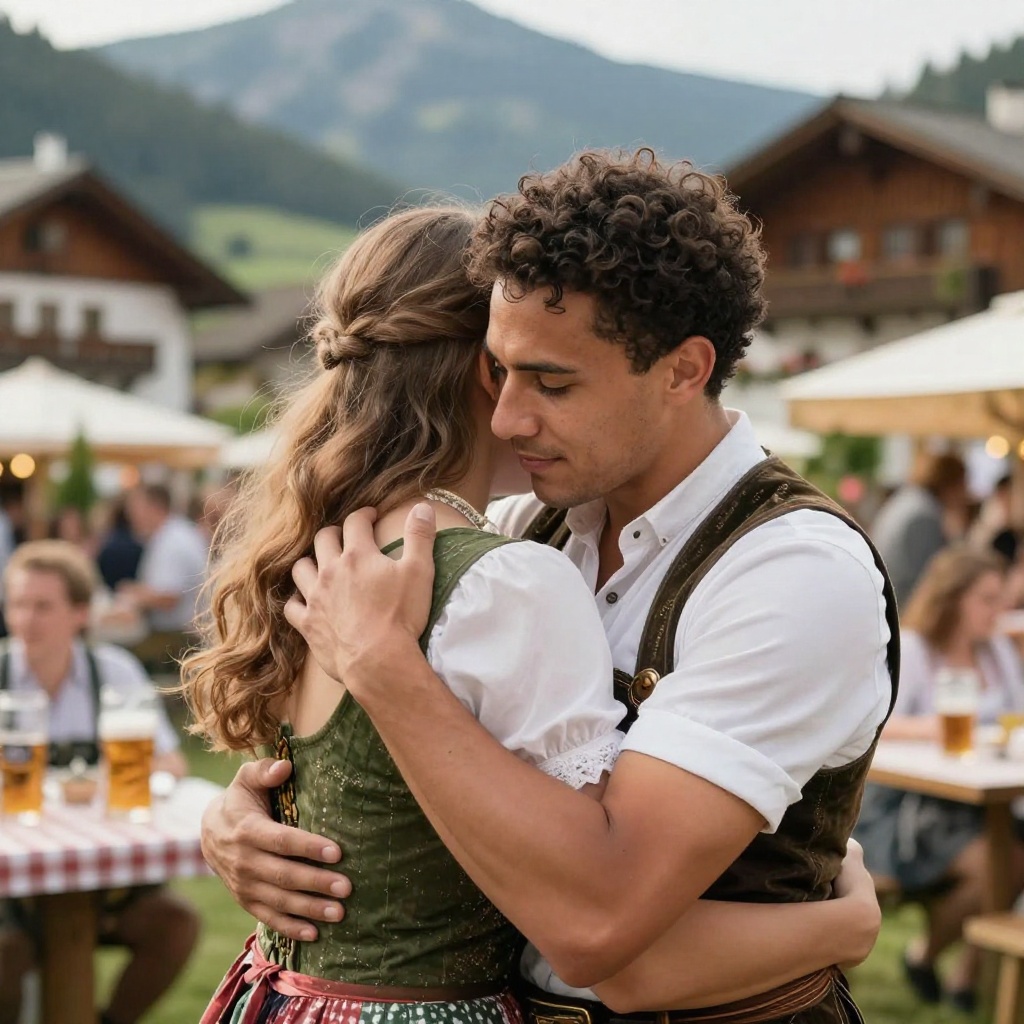
Expressing Emotions in German: Feelings Vocabulary for Couples
Discover 75+ German phrases to express love, happiness, and every emotion. Build deeper connections with authentic emotional vocabulary.
Germans are often stereotyped as emotionally reserved, but anyone who's fallen in love with a German speaker knows the truth: when Germans express emotions, they do it with depth and sincerity. Learning to share your feelings in German isn't just about vocabulary—it's about connecting with your partner in their emotional mother tongue. This comprehensive guide will help you express every feeling with authenticity.
German Emotional Expression: Beyond Stereotypes
While German culture may value emotional restraint in public, intimate relationships are different. German has beautiful, precise words for emotions—some that don't even exist in English. When you learn to express feelings in German, you unlock new ways to connect with your partner's heart.
Cultural Tip
Germans value emotional authenticity. They prefer genuine, well-thought-out expressions over casual emotional statements. When you express feelings in German, take your time and mean what you say—your partner will appreciate the sincerity.
Essential Emotional Vocabulary
Build your foundation with the core emotion words every couple needs.
Positive Emotions
Pronunciation: GLOOK-lish
Declarations of Love
| German | Pronunciation | English |
|---|---|---|
| Ich hab dich lieb | ish hahb dish leep | I love you (warm affection) |
| Ich liebe dich | ish LEE-beh dish | I love you (deep love) |
| Ich bin verrückt nach dir | ish bin fer-RUKT nahkh deer | I'm crazy about you |
| Du machst mich wahnsinnig | doo mahkst mish VAHN-zin-ish | You drive me crazy |
| Ich kann ohne dich nicht leben | ish kahn OH-neh dish nisht LAY-ben | I can't live without you |
| Du bist die Liebe meines Lebens | doo bist dee LEE-beh MY-nes LAY-bens | You are the love of my life |
| Mein Herz gehört dir | mine herts geh-HURT deer | My heart belongs to you |
| Ich brauche dich | ish BROW-kheh dish | I need you |
Daily Expressions of Affection
| German | Pronunciation | English |
|---|---|---|
| Ich liebe es, Zeit mit dir zu verbringen | ish LEE-beh es, tsait mit deer tsoo fer-BRING-en | I love spending time with you |
| Du bringst mich zum Lächeln | doo bringst mish tsoom LEH-sheln | You make me smile |
| Ich denke die ganze Zeit an dich | ish DEN-keh dee GAHN-tseh tsait ahn dish | I think about you all the time |
| Ich vermisse deine Umarmungen | ish fer-MISS-eh DYE-neh oom-AR-moong-en | I miss your hugs |
| Du bedeutest mir so viel | doo beh-DOY-test meer zo feel | You mean so much to me |
Cultural Tip
The distinction between "Ich hab dich lieb" (affectionate love) and "Ich liebe dich" (deep romantic love) is important in German. Many Germans use "Ich hab dich lieb" daily with partners and family, reserving "Ich liebe dich" for profound moments.
Expressing Joy and Happiness
Share your positive emotions with German precision!
Pure Happiness
| German | Pronunciation | English |
|---|---|---|
| Was für ein Glück! | vahs fuer ine gluek | What luck/happiness! |
| Ich bin überglücklich! | ish bin UE-ber-gluek-lish | I'm overjoyed! |
| Ich fühle mich wunderbar | ish FUE-leh mish VOON-der-bar | I feel wonderful |
| Das kann ich kaum glauben! | dahs kahn ish kowm GLOW-ben | I can hardly believe it! |
| Was für eine Freude! | vahs fuer EYE-neh FROY-deh | What joy! |
| Ich könnte vor Freude springen | ish KUHN-teh for FROY-deh SHPRING-en | I could jump for joy |
Gratitude and Appreciation
| German | Pronunciation | English |
|---|---|---|
| Ich danke dir von Herzen | ish DAHN-keh deer fon HERT-sen | I thank you from my heart |
| Das bedeutet mir sehr viel | dahs beh-DOY-tet meer zayr feel | That means a lot to me |
| Ich weiß nicht, was ich ohne dich tun würde | ish vice nisht vahs ish OH-neh dish toon VUER-deh | I don't know what I'd do without you |
| Du bist ein Geschenk | doo bist ine geh-SHENK | You are a gift |
| Danke, dass es dich gibt | DAHN-keh dahs es dish gipt | Thank you for existing |
Expressing Difficult Emotions
Healthy relationships require honest communication about challenging feelings.
Sadness and Pain
Pronunciation: es toot meer vay
Deep Romantic Feelings
| German | Pronunciation | English |
|---|---|---|
| Ich liebe dich jeden Tag mehr | ish LEE-beh dish YAY-den tahk mayr | I love you more every day |
| Du bist mein Grund zu leben | doo bist mine groont tsoo LAY-ben | You are my reason to live |
| Mit dir fühle ich mich vollständig | mit deer FUE-leh ish mish FOHL-shten-dish | With you I feel complete |
| Ich habe mich in deinen Augen verloren | ish HAH-beh mish in DYE-nen OW-gen fer-LOR-en | I got lost in your eyes |
| Du hast mein Herz gestohlen | doo hahst mine herts geh-SHTOH-len | You stole my heart |
| Wenn du lächelst, ist die Welt schöner | ven doo LEH-khelst ist dee velt SHUH-ner | When you smile, the world is more beautiful |
Uniquely German Emotional Words
German has some untranslatable emotion words that are perfect for relationships:
Pronunciation: ZAYN-zookht
"Ich kann total mitfühlen, wie anstrengend das für dich war."
Scenario 1: After a Tough Day
- "Ich bin erschöpft, aber froh, dich zu sehen" (I'm exhausted but happy to see you)
- "Ich brauche eine Umarmung" (I need a hug)
- "Danke, dass du auf mich gewartet hast" (Thank you for waiting for me)
Scenario 2: Sharing Good News
- "Ich muss dir etwas erzählen! Ich bin so aufgeregt!" (I have to tell you something! I'm so excited!)
- "Was für ein Glück, das mit dir zu teilen!" (What happiness to share this with you!)
Scenario 3: Working Through a Disagreement
- "Ich fühle mich frustriert, aber ich will dich verstehen" (I feel frustrated, but I want to understand you)
- "Können wir in Ruhe darüber reden?" (Can we talk about it calmly?)
- "Ich liebe dich, auch wenn wir unterschiedlicher Meinung sind" (I love you even when we disagree)
Daily Emotional Practice
Build emotional fluency through daily habits:
- Morning check-in: "Wie fühlst du dich heute?" (How do you feel today?)
- Gratitude moment: Share what you appreciate about each other
- Evening reflection: "Heute habe ich mich ... gefühlt, als..." (Today I felt... when...)
Cultural Tip
German couples often value "quality time" (gemeinsame Zeit) for emotional connection. Setting aside uninterrupted time for emotional conversation is highly valued in German relationship culture.
Common Mistakes to Avoid
- Wrong word order in emotional sentences (verb placement matters!)
- Confusing "fühlen" reflexive usage (always "Ich fühle mich," not "Ich fühle")
- Overusing "lieben" (Germans use it sparingly for maximum impact)
- Forgetting gender on adjectives (glücklich doesn't change, but ein glücklicher/glückliche does)
Your Emotional Journey in German
Learning to express emotions in German is a journey toward deeper intimacy with your partner. German's precision and unique emotional vocabulary offer ways to express feelings you might not even have words for in English.
Start with the emotions you experience most often. Practice in calm, loving moments. And remember—your partner will cherish your efforts to speak to their heart in their language.
Continue your German journey:
Ready to learn together?
Speak their language, touch their heart. Fun games, voice practice & goals made for two.
Start Learning for $0.00 →✨ Try free — no credit card needed
Frequently Asked Questions
How do Germans express emotions differently than English speakers?
Germans are often perceived as more direct in expressing their emotions. While English speakers might use indirect language to soften the blow, Germans tend to be more straightforward. However, this doesn't mean they lack empathy; it's simply a different communication style. Understanding this difference can prevent misunderstandings in relationships.
Besides 'Ich liebe dich', what are some other ways to declare love in German?
Try "Ich bin verrückt nach dir" (I'm crazy about you) for a passionate declaration. "Du bedeutest mir alles" (You mean everything to me) expresses deep affection. For a more poetic touch, say "Du bist mein Lebensglück" (You are my happiness in life). Choose the phrase that best reflects your feelings and relationship style.
How do you offer comfort in German without sounding insincere?
Avoid empty platitudes. Instead, say "Es tut mir leid, dass du das durchmachst" (I'm sorry you're going through this) to show empathy. Offer practical support with "Wie kann ich dir helfen?" (How can I help you?). A sincere hug and listening ear can be more comforting than words. Show you care by actively listening.
What are some uniquely German words that describe emotions?
Consider "Fernweh," which describes a longing for a place you've never been. "Weltschmerz" refers to a feeling of sadness about the state of the world. These words capture complex emotions that don't have direct English equivalents. Exploring these nuances can deepen your understanding of German culture.
How can couples practice expressing emotions in German daily?
Set aside time each day to share your feelings in German. Use the phrases you've learned to describe your day, your joys, and your frustrations. Create scenarios where you role-play expressing different emotions. This consistent practice will build your confidence and fluency in emotional communication.