German Love Letter Writing: Romantic Phrases for Your Partner
Learn beautiful German phrases for writing love letters to your partner. Master sincere, heartfelt romantic expression in German.
A love letter in German (Liebesbrief) combines sincerity with deep emotional resonance. German speakers value genuine expression, making your heartfelt letter a truly meaningful gift. Writing in a second language shows a level of dedication that transcends simple words, as it demonstrates the time and effort you have invested in understanding your partner's native culture and linguistic nuances.
The German Tradition of Love Letters
German romantic literature includes famous poets like Goethe and Rilke who wrote beautiful love letters. Writing in German connects to a tradition that values sincere, thoughtful expression. This historical context suggests that a letter is more than just a note; it is a permanent record of devotion. In the era of instant messaging, a physical letter carries a weight of intentionality that is highly regarded in German-speaking cultures.
Pronunciation: dee ZAYN-zoocht
Opening Your Letter
Setting the right tone from the very first word is essential in German correspondence. In a romantic context, the opening serves as an emotional threshold, signaling the level of intimacy you share with your partner. Unlike English, where "Dear" is a universal standard, German adjectives must change their endings based on the gender of the person you are addressing. This grammatical precision adds a layer of personalization to your greeting.
Selecting the correct salutation establishes the atmosphere for the rest of the message. Whether you prefer something traditional or a more poetic metaphor, the opening should reflect your unique dynamic. A well-chosen greeting shows that you are attentive to the details of the language, making the letter feel more natural and grounded in German linguistic customs.
This section explores various ways to begin your letter. We will look at standard salutations like Meine Liebe and Mein Lieber, as well as more intimate terms that involve metaphors of the heart and soul. Understanding these subtle shifts ensures your letter feels authentic from the start.
Salutations
Meine Liebe / Mein Lieber My love
Use Meine Liebe for her, Mein Lieber for him. This is the most standard romantic opening, roughly equivalent to "My dear" but with a stronger romantic connotation.
Mein Schatz My treasure
The most common German term of endearment. It is used by couples of all ages and is a versatile way to start a letter to someone you cherish.
Mein Herz My heart
Intimate and tender. This focuses on the emotional core of the relationship and is often used in very personal, private notes.
Mein Ein und Alles My one and everything
Profoundly romantic—they are everything to you. This is a high-intensity greeting reserved for serious, long-term partners.
Expressing Your Feelings
The body of your letter is where you bridge the gap between simple affection and deep devotion. In German culture, there is a concept known as Innerlichkeit, or inwardness, which refers to a rich, private emotional life. Sharing these internal thoughts through writing is considered a significant act of vulnerability and trust. It allows you to move beyond the surface-level interactions of daily life and explore the depths of your connection.
In the following subsections, we will provide specific phrases to help you transition into the core of your message. We cover both opening lines to set the scene and powerful declarations of love that define your relationship's unique bond. These phrases provide the linguistic tools to articulate your heart's intent, whether you are describing a fleeting feeling or a lifelong commitment.
Focusing on how your partner makes you feel rather than just listing their traits helps create a more evocative narrative. German allows for a very direct yet poetic way of describing emotion, which can be very effective in a written format. The subsections below offer a roadmap for building this emotional journey.
Pronunciation: dee guh-BOR-gun-hyte
Opening Lines
Ich schreibe dir, um dir zu sagen, wie sehr ich dich liebe I'm writing to tell you how much I love you
Direct and heartfelt opening. This removes any ambiguity and gets straight to the purpose of the letter.
Worte können nicht ausdrücken, was ich fühle Words cannot express what I feel
Acknowledging the depth of emotion. This is a classic romantic trope that works well when you find the language barrier or the intensity of your feelings difficult to navigate.
Es gibt so viel, das ich dir sagen möchte There is so much I want to tell you
Creating anticipation. This suggests that the letter will contain deep reflections and perhaps things you haven't said out loud.
Declarations of Love
Du bist der wichtigste Mensch in meinem Leben You are the most important person in my life
Clear declaration of their significance. Note the use of Mensch (person), which is a common way in German to refer to someone's total presence in your life.
Jeden Tag liebe ich dich mehr Every day I love you more
Love that continues to grow. This phrase emphasizes the evolution and strengthening of your bond over time.
Mit dir habe ich das wahre Glück gefunden With you I have found true happiness
They brought genuine happiness. Wahre Glück implies a deep, authentic joy rather than a temporary high.
Mein Herz gehört nur dir My heart belongs only to you
Exclusive devotion. A very traditional and powerful way to express loyalty and romantic focus.
Romantic Declarations
Du bist mein Sonnenschein You are my sunshine
They bring light to your life. Even though it is a common metaphor, it remains a sweet and lighthearted way to express how they brighten your mood.
Du machst mich zu einem besseren Menschen You make me a better person
Their positive influence. This expresses admiration for their character and the impact they have on your own personal growth.
Du bist alles, wovon ich immer geträumt habe You are everything I've always dreamed of
Dream come true. This is a grand statement that places your partner in the context of your lifelong hopes.
Remembering Special Moments
Ich erinnere mich an den Tag, als wir uns kennenlernten I remember the day we met
Nostalgic reflection on your beginning. Sharing specific details about the first encounter makes the letter feel personal and unique to your history.
Jeder Moment mit dir ist ein Geschenk Every moment with you is a gift
Valuing your time together. This phrase expresses gratitude for the mundane as well as the extraordinary moments you share.
Unsere gemeinsamen Erinnerungen sind mir heilig Our shared memories are sacred to me
Memories treasured deeply. Using the word heilig (sacred/holy) adds a level of reverence to the way you view your history together.
Looking to the Future
Ich möchte den Rest meines Lebens mit dir verbringen I want to spend the rest of my life with you
Commitment to shared future. This is a strong statement of intent often used in serious relationship milestones.
Ich träume von einer gemeinsamen Zukunft I dream of a future together
Shared hopes and dreams. This is a softer, more romantic way to express that your long-term plans include them.
Ich verspreche, dich für immer zu lieben I promise to love you forever
Eternal vow. A "Versprechen" (promise) is taken quite seriously in German culture, making this a very weighty statement.
Closing Your Letter
A well-crafted conclusion leaves a lingering sense of warmth and security. The way you end your letter should mirror the intensity of the content that preceded it, acting as a final seal on your shared sentiments. It provides a sense of closure while simultaneously pointing toward your ongoing connection. It is the final thought your partner will hold in their mind after finishing your words.
We will examine various ways to sign off, from classic and sincere endings to more personal and possessive declarations. This section also highlights the importance of matching your closing to the gender-specific grammar used in the opening, ensuring a cohesive and polished finish to your romantic message. A mismatched ending can feel abrupt, so choosing a sign-off that flows naturally from your previous sentences is beneficial.
Remember that the sign-off is often where you can be most creative or most traditional. Whether you choose a simple "In Liebe" or a more complex sentence, ensure it reflects the current state of your heart.
Sign-Offs
In Liebe With love
Classic and sincere. This is the standard romantic sign-off for almost any love letter.
Für immer dein/deine Forever yours
Use dein if you're male, deine if female. This mirrors the gender-specific endings seen in the salutations.
Ich liebe dich von ganzem Herzen I love you with all my heart
Final declaration. This serves as a powerful summary of the letter's intent.
Dein/Deine [name], der/die dich liebt Your [name], who loves you
Personal sign-off. This adds a descriptive touch to your name, reinforcing the bond one last time.
Tips for Writing
- Be sincere: Germans value genuine emotion over flowery language. Avoid using overly complex metaphors if they don't feel natural to you.
- Be specific: Mention real memories and qualities. A detail about a specific walk or a shared joke is more powerful than a generic compliment.
- Quality matters: One heartfelt letter means more than many casual ones. Taking the time to get the grammar right shows a high level of respect.
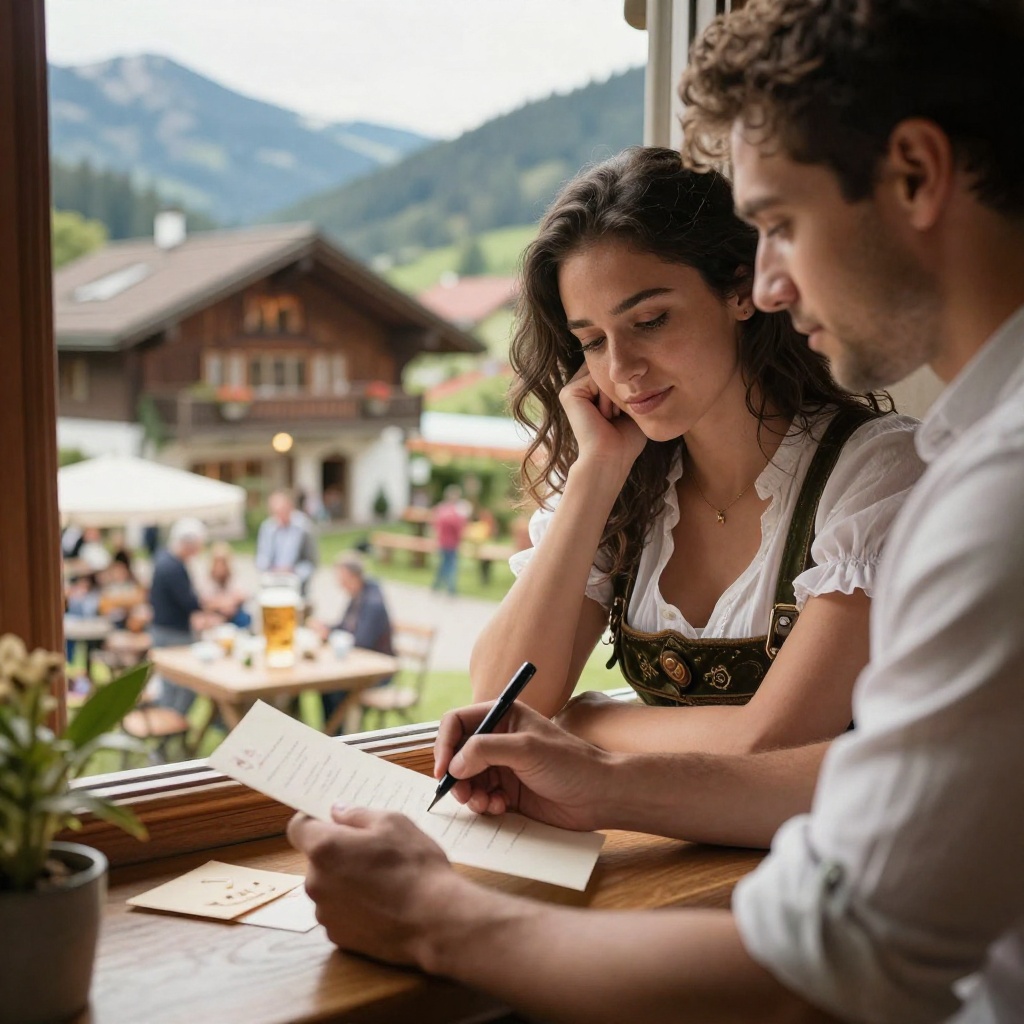
- Handwrite if possible: Shows extra thoughtfulness. In a digital world, the physical effort of handwriting a Liebesbrief is deeply appreciated.
Your German love letter will be treasured for its sincerity and the effort you put into expressing love in their language. Using these phrases provides a foundation upon which you can build a message that is uniquely yours.
Related Articles
- German First Date Phrases for English Speakers
- German Flirting Phrases: Romantic Expressions to Win Their Heart
- German Long-Distance Relationship Phrases: Stay Connected Across Miles
- German 'I Miss You' Phrases: Express Your Longing Sincerely
- Expressing Emotions in German: Feelings Vocabulary for Couples
Ready to learn together?
Speak their language, touch their heart. Fun games, voice practice & goals made for two.
Start Learning for $0.00 →✨ Try free — no credit card needed
Frequently Asked Questions
Besides 'Mein lieber Schatz,' what are some other affectionate German terms of endearment to use in a love letter?
Besides 'Mein lieber Schatz' (My dear treasure), you can use 'Meine geliebte/r...' (My beloved...) followed by their name, or 'Mein Herzblatt' (My sweetheart). 'Seelenverwandter' (soulmate) is also a beautiful term. Use what feels most authentic to your relationship. Couples can share their favorite pet names for each other.
How can I express longing for my partner in a German love letter?
Express longing by saying 'Ich sehne mich nach dir' (I long for you) or 'Ich vermisse dich so sehr' (I miss you so much). Describe the specific things you miss about them. 'Jeder Tag ohne dich ist wie eine Ewigkeit' (Every day without you is like an eternity). Couples can write about what they miss most when they are apart.
What are some ways to describe my partner's best qualities in a German love letter?
Highlight their best qualities by saying 'Ich liebe deine [positive quality]' (I love your [positive quality]). For example, 'Ich liebe deine Ehrlichkeit' (I love your honesty). Be specific and sincere. 'Deine [positive quality] inspiriert mich jeden Tag' (Your [positive quality] inspires me every day). Couples can brainstorm each other's best qualities.
How can I promise my love and commitment to my partner in a German love letter?
Promise your love with phrases like 'Ich werde dich immer lieben' (I will always love you) or 'Meine Liebe zu dir ist unendlich' (My love for you is infinite). Reaffirm your commitment to the relationship. 'Ich verspreche dir meine ewige Liebe und Treue' (I promise you my eternal love and loyalty). Couples can reaffirm their commitment to each other.
What are some appropriate German phrases to use when closing a love letter?
Close your letter with phrases like 'In ewiger Liebe' (In eternal love) or 'Für immer dein/e' (Forever yours). 'Ich sende dir all meine Liebe' (I send you all my love) is also a warm closing. Choose a sign-off that reflects the tone of your letter. Couples can decide on a special closing phrase to use with each other.