Spanish Love Letter Writing: Romantic Phrases for Your Partner
Learn beautiful Spanish phrases for writing love letters to your partner. From opening lines to heartfelt declarations, master romantic Spanish writing.
Writing a love letter in Spanish adds a layer of passion and romance that English alone cannot achieve. Whether for an anniversary, Valentine's Day, or a spontaneous expression of love, these phrases will help you write a letter that touches your partner's heart.
The Art of Spanish Love Letters
Spanish-speaking cultures have a rich tradition of romantic correspondence. A well-written carta de amor (love letter) is treasured and often kept for years. The effort of writing in your partner's language shows deep commitment.
Opening Your Letter
Starting a romantic letter in Spanish requires selecting a greeting that matches the level of intimacy shared with the recipient. While a casual note might begin with a simple greeting, a formal love letter usually employs gendered adjectives that signify affection. Spanish speakers often use possessive pronouns to create a sense of belonging and closeness right from the first line.
Below, the Salutations subsection provides a range of options from classic to contemporary. These examples demonstrate how to address a partner based on whether the relationship is in its early stages or has matured over several years. Choosing the right noun to follow these adjectives is key to setting a romantic atmosphere for the rest of the message.
Pronunciation: keh-ree-doh / keh-ree-dah
"Querida María, te escribo esta carta desde mi corazón."
Salutations
Mi amor My love
Classic and timeless—the most common way to begin.
Mi querido/querida My dear
Slightly more formal but deeply affectionate. Use querido for him, querida for her.
Mi vida My life
Intimate and profound—they are your entire life.
Mi cielo My sky/heaven
Poetic and romantic—they represent everything above.
Expressing Your Feelings
The heart of any romantic correspondence lies in how clearly and passionately one can articulate their emotions. Spanish is a language with an expansive vocabulary dedicated to the specific nuances of affection, from the initial spark of attraction to deep-seated commitment. This section explores how to structure these thoughts effectively, ensuring the message resonates with the reader through precise word choice.
The following Opening Lines serve as a bridge from the greeting to the letter's core, helping to establish the reason for writing. Once the stage is set, the Declarations of Love provide powerful, direct statements of devotion. Utilizing verbs like 'sentir' or 'anhelar' allows for a more descriptive narrative of one’s internal state than simple English equivalents often provide.
Pronunciation: eh-nah-moh-rahr-seh
"Me volví a enamorar de ti en el momento que te vi."
Opening Lines
Te escribo esta carta para decirte cuánto te amo I'm writing this letter to tell you how much I love you
Direct and heartfelt opening.
Hay tantas cosas que quiero decirte There are so many things I want to tell you
Creates anticipation for what follows.
Las palabras no alcanzan para expresar lo que siento Words aren't enough to express what I feel
Acknowledging the limits of language while trying anyway.
Declarations of Love
Eres la persona más importante de mi vida You are the most important person in my life
Clear declaration of their significance.
Cada día me enamoro más de ti Every day I fall more in love with you
Love that continues to grow.
Contigo he encontrado la felicidad verdadera With you I have found true happiness
They brought genuine happiness into your life.
Mi corazón te pertenece completamente My heart belongs to you completely
Total surrender of your heart.
Remembering Special Moments
Recuerdo el día que nos conocimos como si fuera ayer I remember the day we met as if it were yesterday
Nostalgic reflection on your beginning.
Cada momento contigo es un tesoro Every moment with you is a treasure
Valuing your time together.
Nuestros recuerdos son mi mayor riqueza Our memories are my greatest wealth
Memories valued above material things.
Looking to the Future
Quiero pasar el resto de mi vida a tu lado I want to spend the rest of my life by your side
Commitment to a shared future.
Sueño con un futuro juntos I dream of a future together
Sharing your hopes and dreams.
Prometo amarte hoy, mañana y siempre I promise to love you today, tomorrow, and always
A vow of eternal love.
Closing Your Letter
The final lines of a letter provide a lasting impression, wrapping up the sentiments expressed in the previous paragraphs. In Spanish culture, sign-offs can range from physical gestures—such as sending kisses or hugs—to profound statements of loyalty and eternity. The intensity of the closing should align with the overall message of the letter to maintain a consistent emotional arc throughout the piece.
Within the Sign-Offs subsection, various options are categorized by their warmth and finality. Selecting an ending requires an understanding of how possessive terms and temporal adverbs function to solidify the bond between the writer and the recipient. These phrases ensure the letter concludes with the same level of intention with which it began.
Sign-Offs
Con todo mi amor With all my love
Classic and sincere.
Tuyo/Tuya para siempre Yours forever
Use tuyo if you're male, tuya if female.
Te amo con todo mi corazón I love you with all my heart
Final declaration of complete love.
Esperando verte pronto Hoping to see you soon
Anticipating reunion.
Tips for Writing
- Be sincere: Spanish speakers value genuine emotion over elaborate language
- Use their name: Include their name or a special nickname
- Share specifics: Mention real memories and qualities you love
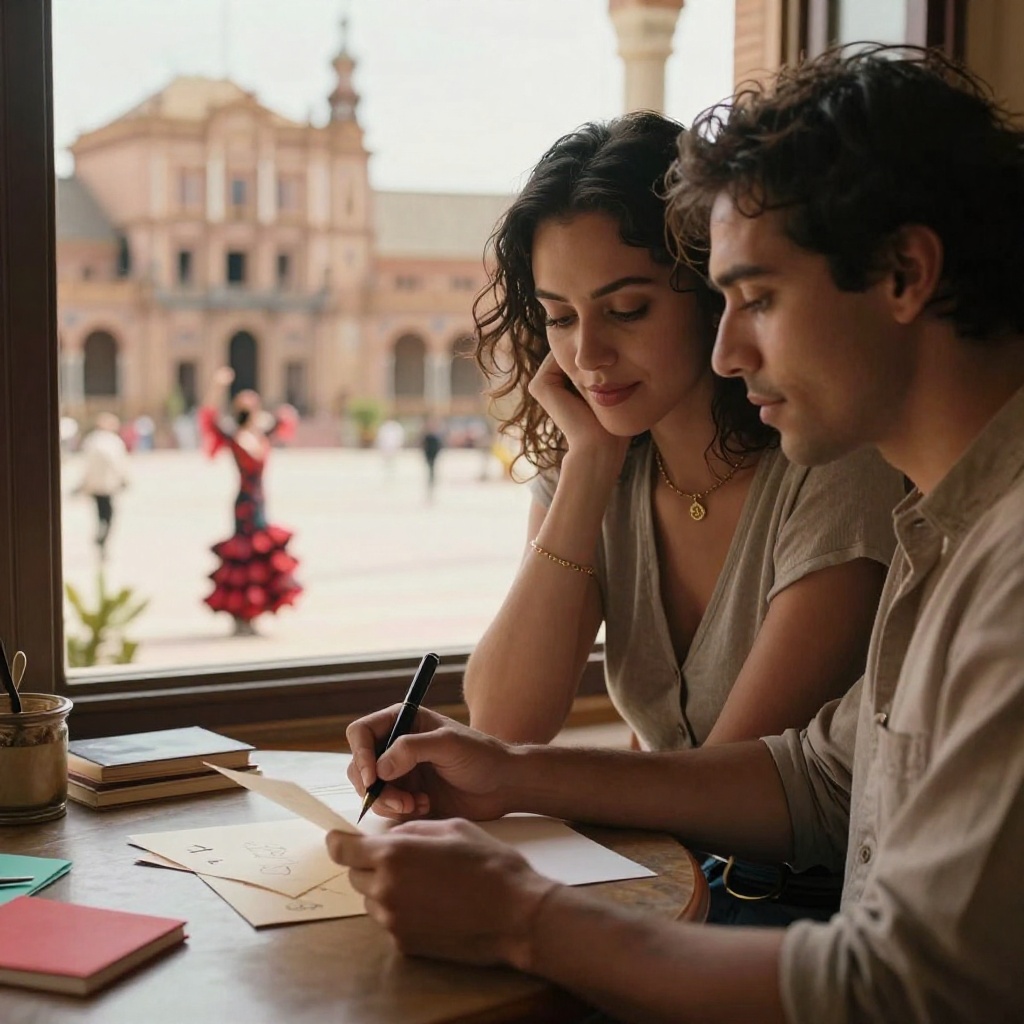
- Handwrite if possible: A handwritten letter in Spanish shows extra effort
Your Spanish love letter will become a treasured keepsake. The effort you put into writing in their language speaks louder than any words.
Related Articles
- Spanish First Date Phrases for English Speakers
- Spanish Flirting Phrases: Romantic Ways to Charm Your Partner
- Spanish Long-Distance Relationship Phrases: Stay Connected Across Miles
- Spanish 'I Miss You' Phrases: Express Your Longing to Your Partner
- Spanish Arguing & Disagreement Phrases for English Speakers
Ready to learn together?
Speak their language, touch their heart. Fun games, voice practice & goals made for two.
Start Learning for $0.00 →✨ Try free — no credit card needed
Frequently Asked Questions
What are some unique ways to start a Spanish love letter besides 'Mi amor'?
Instead of the common 'Mi amor' (My love), try 'Queridísimo/a' (Dearest) for a more formal touch. For a playful start, use 'Para el/la dueño/a de mi corazón' (For the owner of my heart). Couples can brainstorm creative openings together to personalize their letters.
How can I express deep, lasting love in a Spanish love letter?
Go beyond 'Te amo' (I love you) and write 'Mi amor por ti crece cada día' (My love for you grows every day). You can also say 'Eres el amor de mi vida' (You are the love of my life). These phrases convey a deeper level of commitment and affection.
What are some Spanish phrases to reminisce about shared memories in a love letter?
Start with 'Recuerdo cuando...' (I remember when...) and then describe a specific, cherished moment. For example, 'Recuerdo cuando bailamos bajo la lluvia en Barcelona' (I remember when we danced in the rain in Barcelona). Sharing vivid memories strengthens the bond.
How can I close a Spanish love letter with a romantic and heartfelt sign-off?
Instead of just 'Con amor' (With love), try 'Siempre tuyo/a' (Always yours) for a classic touch. For a more passionate ending, use 'Eternamente enamorado/a' (Eternally in love). Select a sign-off that matches the tone of your letter.
What are some tips for making a digital Spanish love letter feel more personal?
Record a short audio message reading a favorite passage from the letter. Include a photo or video that holds special meaning for both of you. Even in a digital format, personal touches make the message more meaningful. Maria and Tomáš exchange digital love letters weekly, alternating who writes.