Spanish Making Up & Reconciliation Phrases for English Speakers
Learn essential Spanish phrases for making up after arguments. Heal rifts and restore connection with your Spanish-speaking partner.
After every disagreement comes the crucial moment of making up. When you're with a Spanish speaker, knowing how to reconcile in their language can deepen your connection and heal wounds faster. Here are essential Spanish phrases for those important moments of reconciliation.
Effective communication in a second language requires more than just translating words; it involves capturing the emotional weight behind them. In Spanish-speaking cultures, sincerity is often conveyed through specific verb choices and the intensity of your delivery. These phrases help bridge the gap between conflict and connection.
Apologizing Sincerely
Apologies in Spanish range from a casual acknowledgment of a mistake to a deep plea for forgiveness. Selecting the right level of intensity shows that you understand the impact of your actions on your partner. In intimate relationships, using the "tú" form (informal) is standard, as it maintains the closeness required for a genuine apology.
This section covers the spectrum of regret, from admitting a simple error to asking for complete forgiveness. Acknowledge the gravity of the situation by focusing on the "porqué" (the why) of your apology. Using these phrases helps demonstrate that you take responsibility for the conflict.
Pronunciation: lah dees-KOOL-pah
"Acepto tu disculpa."
Lo siento mucho
Pronunciation: loh SYEHN-toh MOO-choh
Meaning: "I'm very sorry"
When to use it: The most common and heartfelt apology. Adding "mucho" (very) emphasizes your sincerity. It literally translates to "I feel it much," showing that the weight of the mistake sits heavy on your heart.
Perdóname
Pronunciation: pehr-DOH-nah-meh
Meaning: "Forgive me"
When to use it: A direct request for forgiveness, more emotionally vulnerable than "lo siento." This uses the imperative mood to ask for a specific action from your partner, signaling that you are ready to move past the grievance.
Me equivoqué
Pronunciation: meh eh-kee-voh-KEH
Meaning: "I was wrong"
When to use it: When acknowledging your mistake clearly. Taking responsibility matters. This reflexive verb highlights that you are the one who made the error, which can immediately lower defenses during a heated moment.
No debería haber dicho eso
Pronunciation: noh deh-beh-REE-ah ah-BEHR DEE-choh EH-soh
Meaning: "I shouldn't have said that"
When to use it: When you regret specific words spoken during the argument. This conditional perfect structure is perfect for expressing retrospective regret over things said in the heat of the moment.
Expressing Your Feelings
Spanish is a language that celebrates emotional expression, and being vocal about your internal state is a key part of the reconciliation process. Withholding feelings can often be interpreted as coldness or indifference in many Spanish-speaking cultures. Opening up about how the conflict affects you personally can soften the atmosphere.
The following phrases focus on the "dolor" (pain) and "tristeza" (sadness) that conflict brings. By sharing these feelings, you shift the focus from "who is right" to "how we are feeling." This emotional transparency is a powerful tool for rebuilding the bridge between you and your partner.
Pronunciation: ehl sehn-tee-MYEHN-toh
"Mis sentimientos por ti son reales."
Odio cuando peleamos
Pronunciation: OH-dyoh KWAHN-doh peh-leh-AH-mohs
Meaning: "I hate when we fight"
When to use it: To express how much conflict bothers you and your desire for peace. Using the strong verb "odiar" (to hate) emphasizes that the state of conflict is uncomfortable and unwanted.
Te extraño cuando estamos así
Pronunciation: teh ehks-TRAH-nyoh KWAHN-doh ehs-TAH-mohs ah-SEE
Meaning: "I miss you when we're like this"
When to use it: To express longing for closeness even when you're still together. The word "así" (like this/in this way) refers to the emotional distance or the coldness that follows an argument.
Me duele estar enojados
Pronunciation: meh DWEH-leh ehs-TAHR eh-noh-HAH-dohs
Meaning: "It hurts me that we're angry"
When to use it: To share the emotional pain of being at odds. "Me duele" is the same phrase used for physical pain, illustrating that the emotional rift has a tangible impact on your well-being.
Reaching Out
Taking the first step toward reconciliation, or the "acercamiento," can be the hardest part of the process. In Spanish, these icebreakers are designed to be soft but clear in their intent. They signal that you are ready to stop the silence and begin the work of "arreglar" (fixing) the situation.
These phrases serve as a bridge to reopen the lines of communication. They are low-pressure ways to check if your partner is ready to engage in a constructive dialogue. By using "podemos" (we can), you immediately frame the solution as a collaborative effort rather than a solo mission.
Pronunciation: ah-sehr-KAHR-seh
"Quiero acercarme a ti."
¿Podemos hablar?
Pronunciation: poh-DEH-mohs ah-BLAHR
Meaning: "Can we talk?"
When to use it: The first step in breaking the ice after a disagreement. This is a neutral, respectful way to see if the other person is ready to share their perspective.
Quiero arreglar las cosas
Pronunciation: KYEH-roh ah-rreh-GLAHR lahs KOH-sahs
Meaning: "I want to fix things"
When to use it: To show your commitment to resolution. "Arreglar" suggests that something valuable has been broken and you are willing to put in the effort to mend it.
¿Podemos empezar de nuevo?
Pronunciation: poh-DEH-mohs ehm-peh-SAHR deh NWEH-voh
Meaning: "Can we start over?"
When to use it: When you want to reset and move forward together. This is a powerful phrase for dropping the baggage of a circular argument and trying a fresh approach.
Expressing Love and Commitment
Reaffirming your bond is the most vital part of "hacer las paces" (making peace). It serves as a reminder that the relationship is bigger than any single disagreement. In Spanish, expressing love often involves a distinction between "te quiero" (affection/care) and "te amo" (deep, romantic love).
This section provides phrases that put the relationship back in the spotlight. These expressions focus on the long-term commitment and the value of the partner. They help provide a sense of security, ensuring that while the fight happened, the foundation of the relationship remains unshaken.
Pronunciation: ehl kohm-proh-MEE-soh
"Nuestro compromiso es fuerte."
Te amo, eso no cambia
Pronunciation: teh AH-moh, EH-soh noh KAHM-byah
Meaning: "I love you, that doesn't change"
When to use it: To reassure your partner that your love endures despite conflict. It provides a necessary anchor of stability during the emotional turbulence that follows a fight.
Eres más importante que esta pelea
Pronunciation: EH-rehs mahs eem-pohr-TAHN-teh keh EHS-tah peh-LEH-ah
Meaning: "You're more important than this fight"
When to use it: To put the relationship above the disagreement. This comparative structure helps re-prioritize your partner’s feelings over the desire to "win" the argument.
No quiero perderte
Pronunciation: noh KYEH-roh pehr-DEHR-teh
Meaning: "I don't want to lose you"
When to use it: When expressing how much the relationship means to you. This phrase highlights the stakes and shows that you value your partner’s presence in your life above all else.
Luchemos juntos, no el uno contra el otro
Pronunciation: loo-CHEH-mohs HOON-tohs, noh ehl OO-noh KOHN-trah ehl OH-troh
Meaning: "Let's fight together, not against each other"
When to use it: To reframe the situation as partners versus the problem. Using the "nosotros" form of the verb "luchar" (to fight/struggle) emphasizes unity.
Moving Forward
Reconciliation is not just about ending the current fight, but also about building a better future. Using the future tense or expressing intentions for change shows that you are not just saying sorry to end the discomfort, but that you are truly invested in the growth of the partnership.
These phrases help transition the conversation from the past to the future. They focus on prevention and personal accountability. By discussing how to "evitar" (avoid) future issues, you turn a negative experience into a learning opportunity that strengthens the bond.
Pronunciation: meh-hoh-RAHR
"Podemos mejorar juntos."
¿Cómo podemos evitar esto en el futuro?
Pronunciation: KOH-moh poh-DEH-mohs eh-vee-TAHR EHS-toh ehn ehl foo-TOO-roh
Meaning: "How can we avoid this in the future?"
When to use it: To focus on preventing similar conflicts. This question invites a collaborative brainstorming session on how to handle triggers or misunderstandings differently.
Prometo intentar hacerlo mejor
Pronunciation: proh-MEH-toh een-tehn-TAHR ah-SEHR-loh meh-HOHR
Meaning: "I promise to try to do better"
When to use it: To commit to improvement. It combines a "promesa" (promise) with "intentar" (to try), showing a realistic but determined effort toward personal change.
Cultural Notes on Reconciliation
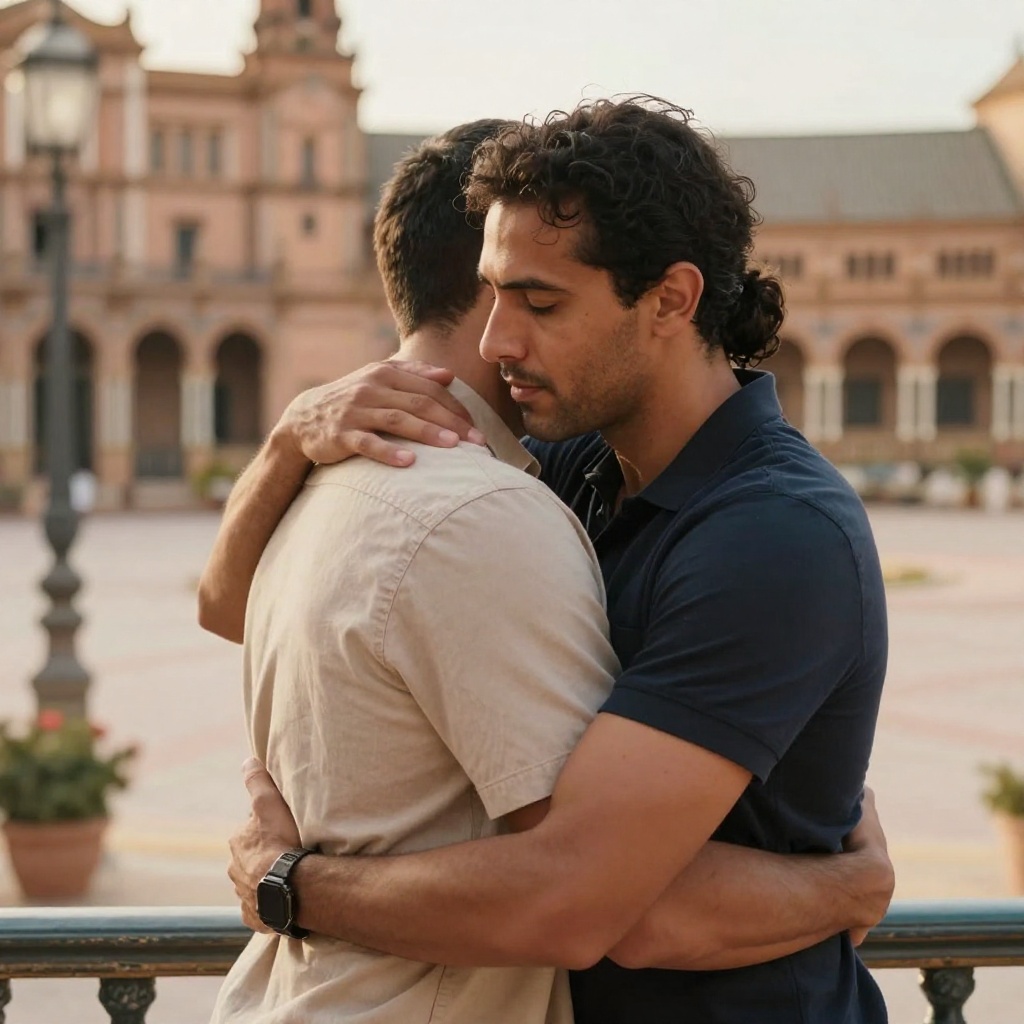
In Spanish-speaking cultures, making up is often an emotional, expressive process. Physical affection—hugs, kisses, holding hands—frequently accompanies verbal reconciliation. Don't hold back on warmth.
Spanish speakers may value thorough reconciliation over quickly "moving on." Taking time to express feelings fully and reconnect emotionally is important.
Sharing a meal together or doing something enjoyable can be part of the healing process. "Hacer las paces" (making peace) is a meaningful concept.
The Sweetest Words
Remember that after an argument, simple expressions of love carry extra weight. "Te quiero" (I love you/I care for you) and "Te amo" (I love you, deeply) remind your partner what truly matters. Making up in Spanish isn't just about words—it's about restoring the warmth and connection that define your relationship.
Ready to learn together?
Speak their language, touch their heart. Fun games, voice practice & goals made for two.
Start Learning for $0.00 →✨ Try free — no credit card needed
Frequently Asked Questions
Besides 'Lo siento,' what are some other ways to sincerely apologize in Spanish?
You can also say 'Te pido disculpas' (I apologize to you), which is a more formal way to express remorse. For a deeper apology, try 'Estoy arrepentido/a' (I am regretful) or 'Cometí un error' (I made a mistake). Always be sincere and take responsibility for your actions. Couples can role-play scenarios to practice apologizing effectively.
How can I ask for forgiveness in Spanish without sounding demanding or entitled?
Instead of directly asking 'Perdóname,' try '¿Me puedes perdonar?' (Can you forgive me?), which is a more polite request. You can also say 'Espero que puedas perdonarme' (I hope you can forgive me). Express your understanding if they need time and space. Respect their feelings and be patient.
What are some phrases to use when you want to understand your partner's perspective after an argument?
Try asking '¿Me puedes explicar cómo te sientes?' (Can you explain how you feel?) or '¿Qué puedo hacer para que te sientas mejor?' (What can I do to make you feel better?). Show genuine interest in understanding their point of view. Active listening is crucial for resolving conflicts.
How do I suggest a compromise or a solution to the problem in Spanish?
Suggest a solution with phrases like '¿Qué te parece si...?' (What do you think if...?) or 'Podríamos intentar...' (We could try...). Propose a compromise by saying 'Estoy dispuesto/a a ceder si tú también lo haces' (I'm willing to compromise if you are too). Focus on finding a solution that works for both of you.
What are some comforting Spanish phrases to reassure your partner after making up?
Reassure your partner with phrases like 'Todo está bien ahora' (Everything is okay now) or 'Ya pasó' (It's over). Express your love and commitment with 'Te quiero mucho' (I love you very much) or 'Siempre estaré aquí para ti' (I will always be here for you). Physical affection, like a hug or kiss, can also help rebuild connection.