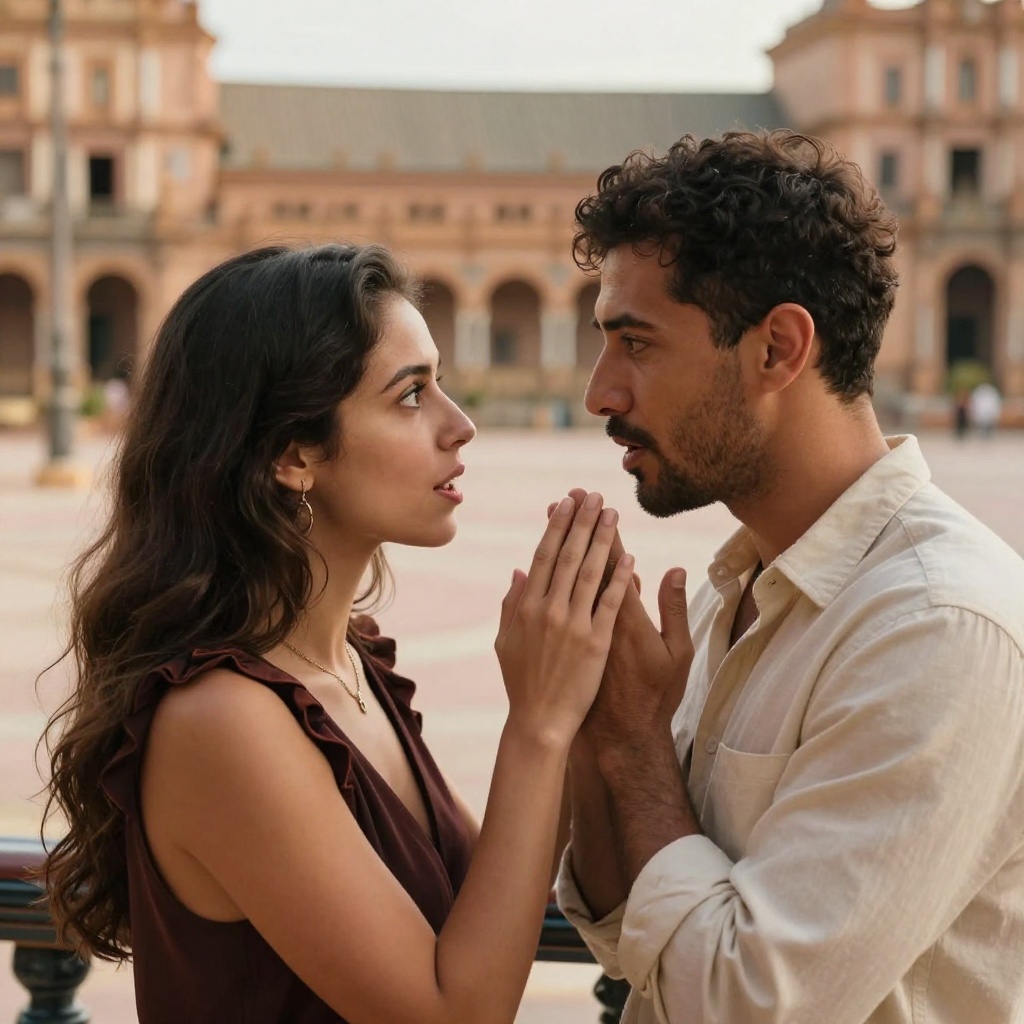
Spanish Accent Guide: Understanding Regional Pronunciation Differences for Couples
Learn the key pronunciation differences between Spanish accents from Spain, Mexico, Argentina, and more. Essential for understanding your partner's regional Spanish.
Why Regional Accents Matter for Your Relationship
Your partner's Spanish accent is part of their identity. Whether they are from Madrid, Mexico City, Buenos Aires, or Bogota, understanding their specific accent shows deep respect and love. This guide explores the major regional differences so you can truly understand - and appreciate - how your partner speaks.
Phrase to Learn
Cada acento es hermoso
Every accent is beautiful
[ KAH-dah ah-SEHN-toh ehs ehr-MOH-soh ]
Remember this when learning your partner's specific regional accent - there is no wrong way to speak Spanish!
The Big Four: Major Spanish Accent Regions
Spanish is spoken in over 20 countries, each with distinct pronunciation. Here are the four main accent families you should know.
Castilian Spanish (Spain)
Pronunciation: GRAH-thee-ahs (Spain) vs GRAH-see-ahs (Latin America)
"Muchas gracias por todo, cariño."
The most distinctive feature of Castilian Spanish is the distincion - pronouncing "c" (before e/i) and "z" as a "th" sound.
| Word | Castilian | Latin American | Meaning |
|---|---|---|---|
| Cerveza | thehr-VEH-thah | sehr-VEH-sah | Beer |
| Corazon | koh-rah-THOHN | koh-rah-SOHN | Heart |
| Gracias | GRAH-thee-ahs | GRAH-see-ahs | Thanks |
| Zapato | thah-PAH-toh | sah-PAH-toh | Shoe |
| Dulce | DOOL-theh | DOOL-seh | Sweet |
Mexican Spanish
Mexican Spanish is often considered the clearest and most neutral accent. Key features:
- Clear pronunciation of all consonants
- Softer "s" sounds
- Distinctive use of diminutives (-ito/-ita everywhere!)
- The word guey (GWAY) as a casual filler
Mexican Diminutives
Mexicans add -ito/-ita to everything for warmth. Your coffee becomes "cafecito," a moment becomes "momentito," and your love becomes "amorcito." If your partner is Mexican, expect lots of these adorable endings!
Argentine Spanish
Argentine Spanish is perhaps the most distinctive accent in the Spanish-speaking world.
| Feature | Standard | Argentine | Example |
|---|---|---|---|
| LL/Y | "yah" sound | "shah" sound | Calle: KAH-yeh vs KAH-sheh |
| Tu | Tu eres | Vos sos | You are |
| Rhythm | Even | Italian-like | Musical intonation |
Pronunciation: vohs sohs ehr-MOH-sah
"Vos sos la mujer mas linda del mundo."
Colombian/Caribbean Spanish
Often praised for its clarity and warmth:
- Musical, melodic intonation
- Clear vowels and moderate speed
- Dropping of final "s" in Caribbean regions
- Heavy use of usted even in casual settings
How to Identify Your Partner's Accent
Listen for these telltale signs:
| If you hear... | Your partner likely speaks... |
|---|---|
| "th" sound for c/z | Castilian (Spain) |
| "sh" for ll/y | Argentine/Uruguayan |
| "Vos" instead of "tu" | Argentine/Central American |
| Lots of "-ito" endings | Mexican |
| Dropped final "s" | Caribbean/Andalusian |
| Very clear consonants | Colombian/Peruvian |
Adapting to Your Partner's Accent
The key to sounding natural is matching your partner's regional features.
Practical Tips
- Listen actively - Pay attention to how your partner pronounces specific sounds
- Ask questions - "How do you say this in your country?" shows genuine interest
- Watch media from their region - TV shows, music, and podcasts
- Do not mix accents - Pick one region and stay consistent
- Embrace slang - Regional expressions are the heart of authentic communication
Accent Pride
Spanish speakers are incredibly proud of their regional accent. Never suggest that one accent is better than another. Saying "I love how you pronounce that" will always earn you bonus points with your partner!
Regional Love Expressions
Even romantic phrases change by region:
| Expression | Spain | Mexico | Argentina | Colombia |
|---|---|---|---|---|
| Beautiful (f) | Guapa | Bonita | Hermosa | Linda |
| Darling | Carino | Mi amor | Mi vida | Mi cielo |
| Cool! | Mola! | Que padre! | Que copado! | Que chevere! |
| Kiss | Beso | Beso | Beso | Pico |
Couples Accent Challenge
Try this fun exercise together:
- Pick a simple sentence like "Te quiero mucho, mi amor"
- Say it in Castilian Spanish (with the "th" sounds)
- Say it in Mexican Spanish (clear and neutral)
- Say it in Argentine Spanish (with the "sh" sounds and voseo)
- Laugh together at the differences!
Understanding your partner's accent is understanding a piece of their soul. Every regional variation carries history, culture, and identity. When you learn to hear and appreciate these differences, you show your partner that you love not just them, but where they come from.
Ready to learn together?
Speak their language, touch their heart. Fun games, voice practice & goals made for two.
Start Learning for $0.00 →✨ Try free — no credit card needed
Frequently Asked Questions
How can I tell the difference between Castilian and Mexican Spanish?
Castilian Spanish from Spain often uses the 'vosotros' form for 'you all,' which is not common in Mexican Spanish. Also, the pronunciation of the letter 'c' before 'e' or 'i,' and the letter 'z' is a 'th' sound in Castilian Spanish, but it's pronounced as an 's' in Mexican Spanish. Listen to native speakers to train your ear.
What are some characteristics of Argentine Spanish that make it unique?
Argentine Spanish is known for its use of 'vos' instead of 'tú' for the informal 'you,' with different verb conjugations. Also, the 'll' and 'y' are often pronounced as a 'sh' sound. The accent has a distinct Italian influence due to immigration patterns. Listen to Argentine music and interviews to familiarize yourself.
How can I adapt to my partner's Spanish accent if it's different from what I'm used to?
The key is patience and active listening. Ask your partner to repeat words or phrases if you don't understand them, and don't be afraid to ask for clarification. Immerse yourself in media from their region, such as movies, music, and podcasts. Over time, your ear will adjust to the nuances of their accent.
Are there any specific phrases that are unique to certain Spanish-speaking regions?
Yes, many regions have their own slang and expressions. For example, in Mexico, 'órale' is a common exclamation, while in Spain, 'vale' is used to mean 'okay.' Ask your partner to teach you some of their regional phrases and explain their meanings. This will help you understand their cultural background better.
What's a fun way for couples to explore different Spanish accents together?
Have a 'Spanish Accent Movie Night.' Watch movies from different Spanish-speaking countries and try to identify the accents. Discuss the differences you hear and try to imitate the pronunciations. This can be a fun and educational way to appreciate the diversity of the Spanish language and improve your listening skills.