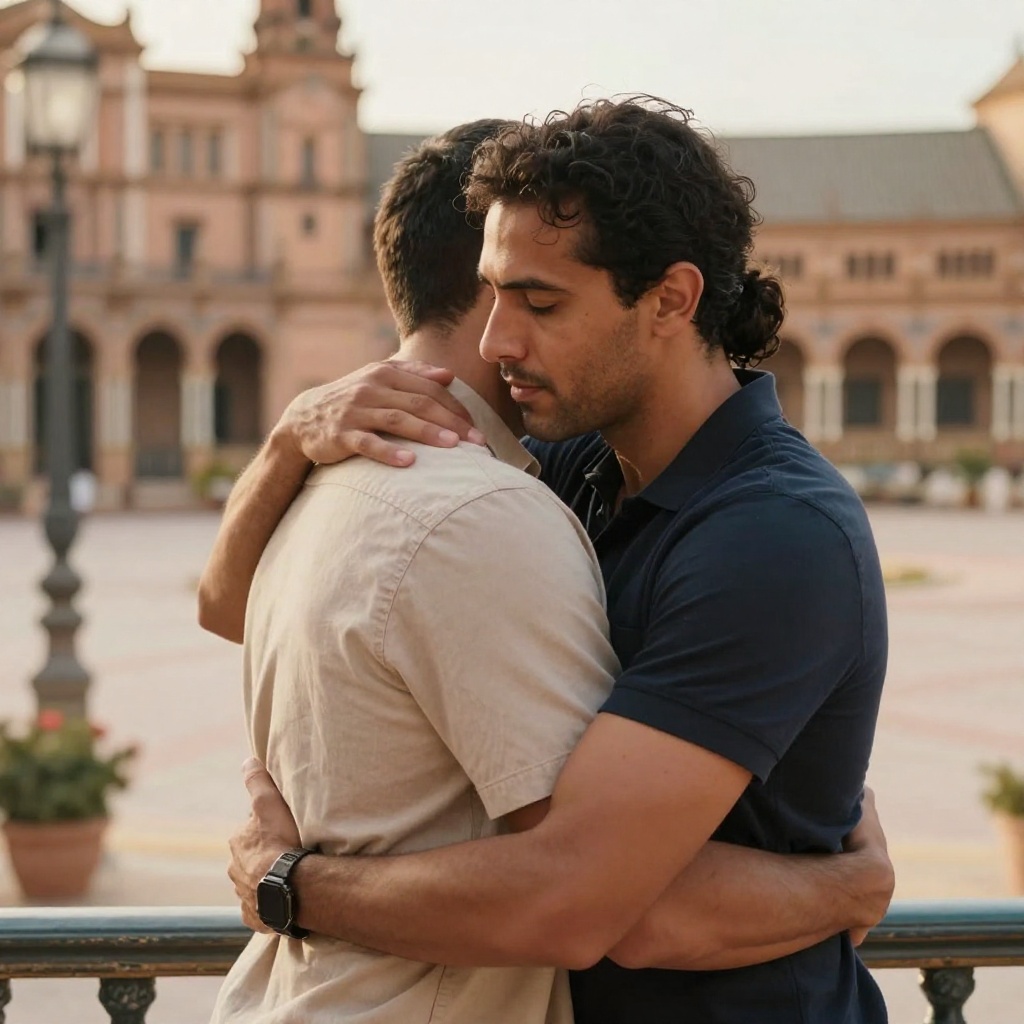
Spanish Small Talk: Conversation Starters for Every Situation
Master Spanish small talk with essential conversation starters. Perfect for meeting your partner's friends and family naturally.
Small talk is the foundation of every relationship. Whether you're meeting your partner's friends, family, or just chatting with new people, these Spanish conversation starters will help you connect naturally.
Phrase to Learn
¡Hola!
Hello!
[ OH-lah ]
The most universal Spanish greeting — works with anyone, anywhere, any time of day.
Essential Phrases
These phrases are the foundation of any Spanish conversation — use them to open, keep going, and wrap up naturally:
| Spanish | English | Pronunciation |
|---|---|---|
| ¡Hola! | Hello! | OH-lah |
| ¿Cómo estás? | How are you? | KOH-moh es-TAHS |
| ¿Qué tal? | How's it going? | keh TAHL |
| Mucho gusto | Nice to meet you | MOO-choh GOOS-toh |
| ¿De dónde eres? | Where are you from? | deh DON-deh EH-res |
| ¿A qué te dedicas? | What do you do for a living? | ah keh teh deh-DEE-kahs |
¿Qué tal? is more casual than ¿Cómo estás? and works well with friends or people your own age. Use ¿Cómo está usted? (the formal version) with older relatives or anyone you want to show extra respect.
Cultural Tip
In Spanish culture, small talk often touches on family and personal wellbeing before moving to other topics. Showing genuine interest in someone's family is appreciated.
More Useful Expressions
| Spanish | English | Pronunciation |
|---|---|---|
| ¿Cómo ha estado tu día? | How has your day been? | KOH-moh ah es-TAH-doh too DEE-ah |
| ¿Qué has hecho hoy? | What have you been up to today? | keh ahs EH-choh oy |
| ¿Te gusta la música? | Do you like music? | teh GOOS-tah lah MOO-see-kah |
| ¿Qué planes tienes? | What are your plans? | keh PLAH-nehs tee-EH-nehs |
| Cuéntame más | Tell me more | KWEN-tah-meh mahs |
Pronunciation: keh TAHL
"¡Hola, ¿qué tal? Mucho tiempo sin verte!"
Additional Phrases
| Spanish | English | Pronunciation |
|---|---|---|
| ¡Qué interesante! | How interesting! | keh een-teh-reh-SAHN-teh |
| Estoy de acuerdo | I agree | es-TOY deh ah-KWEHR-doh |
| Todo está riquísimo | Everything is delicious | TOH-doh es-TAH ree-KEE-see-moh |
| ¿Qué lleva este plato? | What's in this dish? | keh YEH-bah EHS-teh PLAH-toh |
| Hace mucho calor, ¿no? | It's very hot, right? | AH-seh MOO-choh kah-LOR noh |
Breaking the Ice with Surroundings
When entering a new social environment, commenting on the immediate situation is an effective way to begin a dialogue without the need for complex topics. Observing the atmosphere or the weather provides a neutral ground for both speakers. For instance, if you are at an outdoor event, a simple remark like "¿Hace mucho calor, no?" (It's very hot, right?) invites the other person to agree and expand on the observation.
Focusing on the shared experience of the moment helps lower social barriers. If you are at a cafe or a party, you can ask about the music or the venue. Using these situational cues allows the conversation to flow naturally into more personal subjects as both parties become more comfortable with the exchange.
Getting to Know Others
After the initial greetings, shifting the focus toward the other person’s life helps maintain the momentum of the conversation. In many Spanish-speaking cultures, it is standard to inquire about how someone’s day has been or what they have been working on. Instead of a simple "How are you?", try asking "¿Cómo ha estado tu día?" (How has your day been?). This open-ended question encourages a more descriptive response.
In professional or semi-formal settings, understanding someone's background is key. Asking "¿A qué te dedicas?" is the standard, polite way to learn about someone’s profession. If the setting is more relaxed, you might ask about their interests or weekend plans to find common ground.
Pronunciation: deh DON-deh EH-res
"Mucho gusto, ¿de dónde eres?"
Food as a Social Pillar
Food is a central theme in Hispanic social life. Whether you are attending a family dinner or meeting friends for tapas, the meal itself is a constant source of conversation. Complimenting the food is not only polite but also serves as a great transition into discussing local traditions or personal preferences.
If you are enjoying a meal, saying "Todo está riquísimo" (Everything is delicious) is a high compliment to the host or the establishment. You can follow this by asking "¿Qué lleva este plato?" (What is in this dish?) to learn more about the cuisine and keep the interaction going. This demonstrates curiosity and respect for the local culture.
Pronunciation: ah keh teh deh-DEE-kahs
"Qué interesante, ¿a qué te dedicas?"
Tips for Using These Phrases
- Start simple - Basic phrases are perfectly fine
- Ask follow-up questions - Shows genuine interest
- Listen actively - Respond to what they share
- Don't fear mistakes - People appreciate the effort
- Smile and nod - Universal communication helpers
Practice Makes Perfect
Learning to make conversation in your partner's language shows dedication and care. Even if your pronunciation isn't perfect, the effort itself demonstrates your commitment to the relationship.
Related Articles
Ready to learn together?
Speak their language, touch their heart. Fun games, voice practice & goals made for two.
Start Learning for $0.00 →✨ Try free — no credit card needed
Frequently Asked Questions
What are some questions to ask to show genuine interest in someone's life in Spanish?
Ask '¿Qué te gusta hacer en tu tiempo libre?' (What do you like to do in your free time?) or '¿A qué te dedicas?' (What do you do for work?). You can also ask '¿Cuáles son tus pasatiempos?' (What are your hobbies?). Listen attentively and show genuine curiosity. Remember to share information about yourself as well.
How can I politely change the subject in Spanish if the conversation becomes uncomfortable?
Try saying 'Hablando de otra cosa...' (Speaking of something else...) or 'Por cierto...' (By the way...). Then, introduce a new topic. You can also say 'Me recuerdas a...' (You remind me of...) to transition to a related subject. Be subtle and avoid abrupt changes.
What are some phrases to use when you don't understand something someone said in Spanish?
Instead of just saying 'No entiendo,' try '¿Puedes repetirlo, por favor?' (Can you repeat that, please?) or '¿Puedes hablar más despacio, por favor?' (Can you speak more slowly, please?). You can also ask '¿Qué quieres decir con...?' (What do you mean by...?). Be polite and patient.
How do I ask about someone's family in a polite and respectful way in Spanish?
Ask '¿Cómo está tu familia?' (How is your family?) or '¿Tienes hermanos?' (Do you have siblings?). You can also say 'Me gustaría conocer a tu familia algún día' (I would like to meet your family someday). Show genuine interest and be respectful of their privacy. Couples can discuss family traditions and values to better understand each other.
What are some Spanish phrases to use when complimenting someone's skills or talents?
Compliment their skills by saying '¡Qué bien lo haces!' (You do it so well!) or '¡Eres muy talentoso/a!' (You are very talented!). You can also say '¡Me impresionó mucho tu trabajo!' (I was very impressed by your work!). Be specific and sincere in your compliments.