Meeting Your Italian Partner's Family
Essential Italian phrases and cultural tips for meeting your partner's family. Make a great first impression with proper greetings, etiquette, and Italian customs.
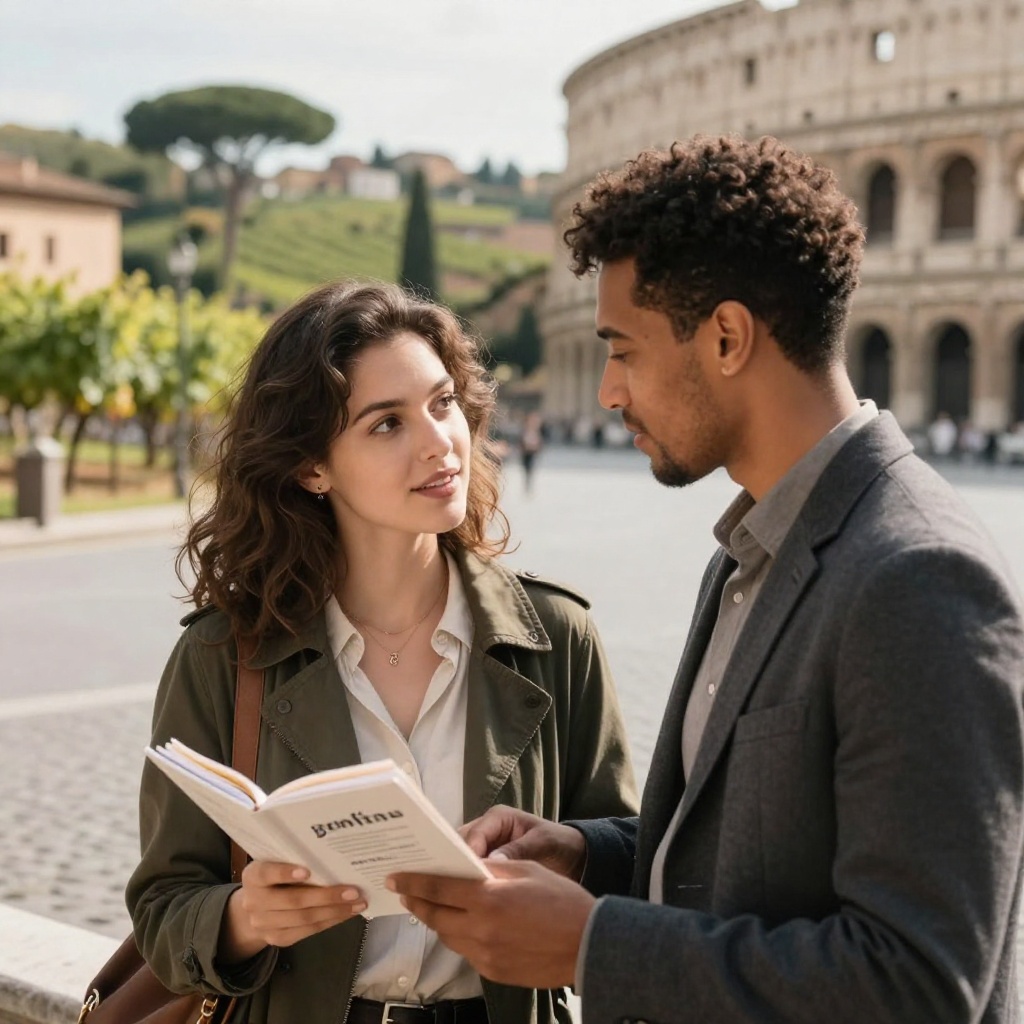
Meeting your Italian partner's family is a momentous occasion! Italian families are warm, expressive, and deeply connected. Food, love, and family are at the heart of Italian culture. With the right phrases and cultural know-how, you'll be embraced like one of their own.
The Essential First Greeting
Phrase to Learn
Piacere di conoscervi
Pleased to meet you (plural)
[ pya-CHEH-reh dee koh-NOH-shehr-vee ]
The perfect polite greeting when meeting your partner's parents. Use 'Lei' (formal you) until invited to use 'tu'.
Greeting Italian Style
Italians are warm and physically expressive. Expect cheek kisses (two, starting with the right) and possibly warm embraces from the family.
Pronunciation: bwon-JOHR-no, eh oon pya-CHEH-reh koh-NOH-shehr-la
"Buongiorno Signora, è un vero piacere conoscerla finalmente."
Pronunciation: SOH-no MOHL-toh feh-LEE-cheh dee EHS-seh-reh kwee
"Sono molto felice di essere qui con voi."
The Lei/Tu Distinction
Italian uses "Lei" (formal) and "tu" (informal) for "you." With your partner's parents, use "Lei" unless they say "Diamoci del tu" (Let's use 'tu'). However, Italian families are often quick to invite informal language - don't be surprised if it happens fast!
Key Phrases for the First Meeting
Pronunciation: oh sen-TEE-toh par-LAH-reh MOHL-toh dee voy
"Ho sentito parlare molto di voi - tutte cose belle!"
Pronunciation: GRAH-tsyeh MEE-leh pehr leen-VEE-toh
"Grazie mille per l'invito, sono felice di essere qui."
Pronunciation: vee oh pohr-TAH-toh oon pen-syeh-REE-no
"Vi ho portato dei fiori / del vino."
Gift-Giving Etiquette
Bringing a gift is expected and appreciated in Italy!
Appropriate Gifts
| Italian | English | Notes |
|---|---|---|
| Dei fiori | Flowers | Avoid chrysanthemums (funerals) |
| Del vino | Wine | Good quality, perhaps from your region |
| Dei cioccolatini | Chocolates | High-quality Italian brands |
| Una specialità del mio paese | A specialty from my country | Unique items are valued |
| Una pianta | A plant | Long-lasting gift, always appreciated |
Gift Presentation
Italians appreciate beautiful presentation. Have gifts nicely wrapped. Avoid giving anything in black (mourning color) or purple (bad luck). Odd numbers of flowers are preferred, and never give chrysanthemums - they're strictly for funerals!
At the Dinner Table
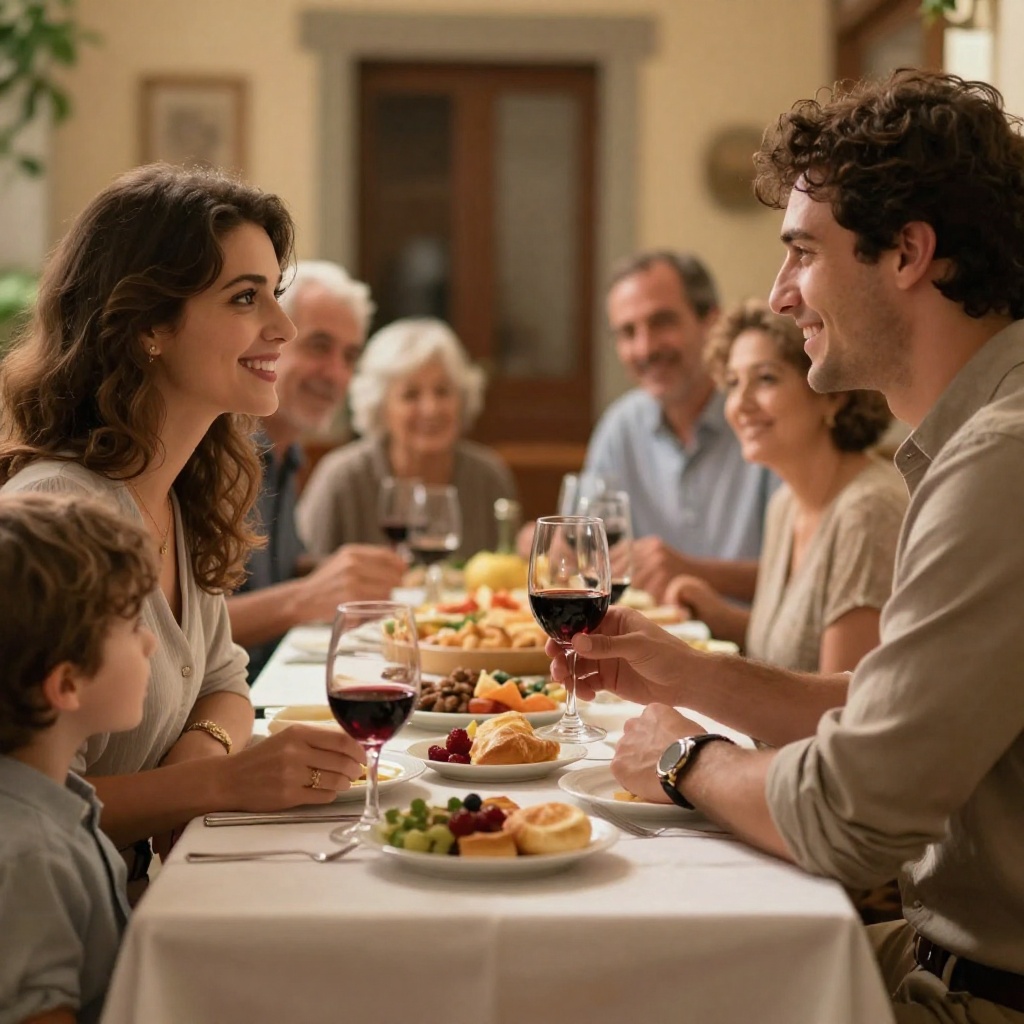
Italian meals are sacred family time. Be prepared for multiple courses and LOTS of food!
Pronunciation: eh skwee-ZEE-toh / bwoh-NEES-see-moh
"È veramente squisito, Signora!"
Pronunciation: POHS-soh ah-VEHR-neh ahn-KOH-rah
"È delizioso! Posso averne ancora?"
La Mamma's Cooking
The mother's cooking is SACRED in Italy. Compliment it effusively and sincerely. Asking for the recipe is a huge compliment. Be warned: Italian mammas will keep filling your plate. "Ancora un po'?" (A little more?) really means "I'm putting more on your plate."
Important Food Rules
| Do This | Why |
|---|---|
| Try everything | Refusing food can offend |
| Compliment multiple times | Italians love food praise |
| Eat all the bread | Don't waste food |
| Never ask for parmesan on seafood | Major culinary sin! |
| No cappuccino after 11am | Espresso only after meals |
Family Vocabulary
| Italian | Pronunciation | English |
|---|---|---|
| la mamma / la madre | la MAM-ma / la MAH-dreh | Mom / Mother |
| il papà / il padre | eel pa-PAH / eel PAH-dreh | Dad / Father |
| la nonna | la NON-na | Grandmother |
| il nonno | eel NON-no | Grandfather |
| il fratello | eel frah-TEL-lo | Brother |
| la sorella | la soh-REL-la | Sister |
| la zia | la TSEE-a | Aunt |
| lo zio | lo TSEE-o | Uncle |
| la suocera | la SWOH-cheh-ra | Mother-in-law |
| il suocero | eel SWOH-cheh-ro | Father-in-law |
Talking About Yourself
Pronunciation: SOH-no dee...
"Sono degli Stati Uniti / dell'Inghilterra / del Canada."
Pronunciation: stoh eem-pah-RAHN-doh lee-tah-LYAH-no
"Sto imparando l'italiano perché amo vostra figlia/vostro figlio."
Pronunciation: lah-VOH-ro KOH-meh...
"Lavoro come ingegnere / insegnante / programmatore."
Polite Responses
| Italian | English | When to Use |
|---|---|---|
| Sì, grazie | Yes, thank you | Accepting offers |
| Con piacere | With pleasure | Enthusiastic agreement |
| Grazie, ma... | Thank you, but... | Polite decline (use sparingly!) |
| Volentieri | Gladly | For invitations |
Wine and Toasts
Wine flows freely at Italian tables. Here's how to participate:
Pronunciation: AHL-la sah-LOO-teh
"Brindiamo alla salute!"
Pronunciation: chin chin
"Cin cin a tutti voi!"
Pronunciation: AHL-la fah-MEE-lyah
"Un brindisi alla famiglia!"
Wine Etiquette
Italians drink wine with meals, not before. Don't order a cocktail with dinner! Make eye contact during toasts. It's polite to wait for someone else to fill your glass. And never, ever put ice in wine - that's a cardinal sin in Italy!
Saying Goodbye
Pronunciation: GRAH-tsyeh dee TOOT-toh, eh STAH-ta OO-na seh-RAH-ta meh-rah-vee-LYOH-sa
"Grazie di tutto, è stata una serata meravigliosa con voi."
Pronunciation: SPEH-ro dee ree-veh-DEHR-vee PREH-sto
"È stato bello, spero di rivedervi presto."
Pronunciation: eh STAH-toh oon VEH-ro pya-CHEH-reh
"È stato un vero piacere passare del tempo con voi."
Things to Avoid
Social interactions in Italy are often governed by the concept of la bella figura, which extends far beyond mere physical appearance to encompass behavior, grace, and manners. When entering a partner's family home, the stakes are high because actions reflect personal upbringing and a level of respect for the hosts' traditions. Misstepping on small details—such as how one handles a bread basket or chooses conversation topics—can lead to unintended tension or a sense of maleducazione.
To help navigate these cultural waters, the sections below are divided into specific "Don't" and "Do" categories. The "Don't" list highlights common faux pas, such as being overly informal too quickly or criticizing the local cuisine, while the "Do" list offers positive alternatives that demonstrate cultural awareness. By adhering to these guidelines, visitors can ensure that their presence is viewed as a thoughtful contribution to the family dynamic rather than a disruption of the established social order.
Observation serves as a vital tool during these encounters. Paying close attention to how the elders interact and the level of formality maintained at the dinner table provides the best cues for conduct. While the following subsections provide a solid foundation, staying attuned to the specific nuances of the family’s regional background will further refine your approach to the visit.
Pronunciation: mah-leh-doo-KAH-toh
"È maleducato mettere i gomiti sul tavolo durante la cena."
Don't:
- Refuse food - At least try everything
- Criticize Italian food/culture - Even jokingly
- Be overly reserved - Italians are expressive, match their energy
- Rush the meal - Italian dinners take hours
- Add cheese to seafood pasta - Culinary crime!
Do:
- Be warm and expressive - Italians love enthusiasm
- Compliment the cooking - Multiple times!
- Ask about family history - Italians love sharing stories
- Try speaking Italian - They'll adore you for it
- Appreciate their regional pride - Italy is very regional
Regional Pride
Italy has strong regional identities. Your partner's family may be proudly Sicilian, Tuscan, Neapolitan, or from another region. Show interest in their specific regional cuisine, dialect, and traditions. Asking "Di che regione siete?" (What region are you from?) shows cultural awareness.
Sample Conversation
You: Buongiorno! Piacere di conoscervi. Parents: Benvenuto/a! Entra, entra! You: Vi ho portato dei fiori. Mom: Oh che belli! Grazie mille! You: Ho sentito parlare molto di voi. Dad: Siediti, siediti. Cosa vuoi da bere? You: Un bicchiere di vino, grazie.
Good luck meeting the family! With warmth, appreciation for their food, and a few Italian phrases, you'll be welcomed with open arms.
Related Articles
- Italian Phrases for Meeting the In-Laws: Make a Great Impression
- Is Italian Hard? Honest Assessment
- Italian Christmas Traditions for Couples: Celebrate Natale Together
- Italian vs English: Key Differences Every Learner Should Know
- Italian Moving In Together: Essential Household Vocabulary for Couples
Ready to learn together?
Speak their language, touch their heart. Fun games, voice practice & goals made for two.
Start Learning for $0.00 →✨ Try free — no credit card needed
Frequently Asked Questions
What are some acceptable gifts to bring when meeting my Italian partner's family for the first time?
Flowers, a bottle of wine, or a small, thoughtful gift that reflects your personality are usually good choices. Avoid bringing overly expensive gifts, as this can be perceived as showing off. A homemade treat or a specialty from your home country is also a nice gesture. Consider asking your partner for advice beforehand.
What are some topics I should avoid discussing when meeting my Italian partner's family?
Avoid controversial topics like politics or religion, especially during the first meeting. It's also best to steer clear of sensitive family matters or gossip. Focus on positive and lighthearted conversation. Ask open-ended questions about their interests and hobbies to keep the conversation flowing smoothly.
How formal should I be when addressing my Italian partner's parents?
It's generally best to use the formal 'Lei' (you) form of address unless they specifically tell you to use the informal 'tu.' Show respect by using titles like 'Signore' (Mr.) or 'Signora' (Mrs.) followed by their last name. Observe how your partner addresses their parents and follow their lead.
What's the proper etiquette for toasting at the dinner table with my Italian partner's family?
Wait for the host to initiate the toast. When toasting, make eye contact with each person as you say 'Salute!' (Cheers!). Take a sip of your wine after the toast. Avoid clinking glasses too loudly, as this can be considered impolite. A simple nod and a smile are sufficient.
How can I show respect for Italian family values during the meeting?
Show genuine interest in their family history and traditions. Listen attentively when they speak and ask thoughtful questions. Offer to help with tasks like setting the table or clearing dishes. Express your appreciation for their hospitality and thank them for inviting you. Demonstrating respect for family values will make a positive impression.