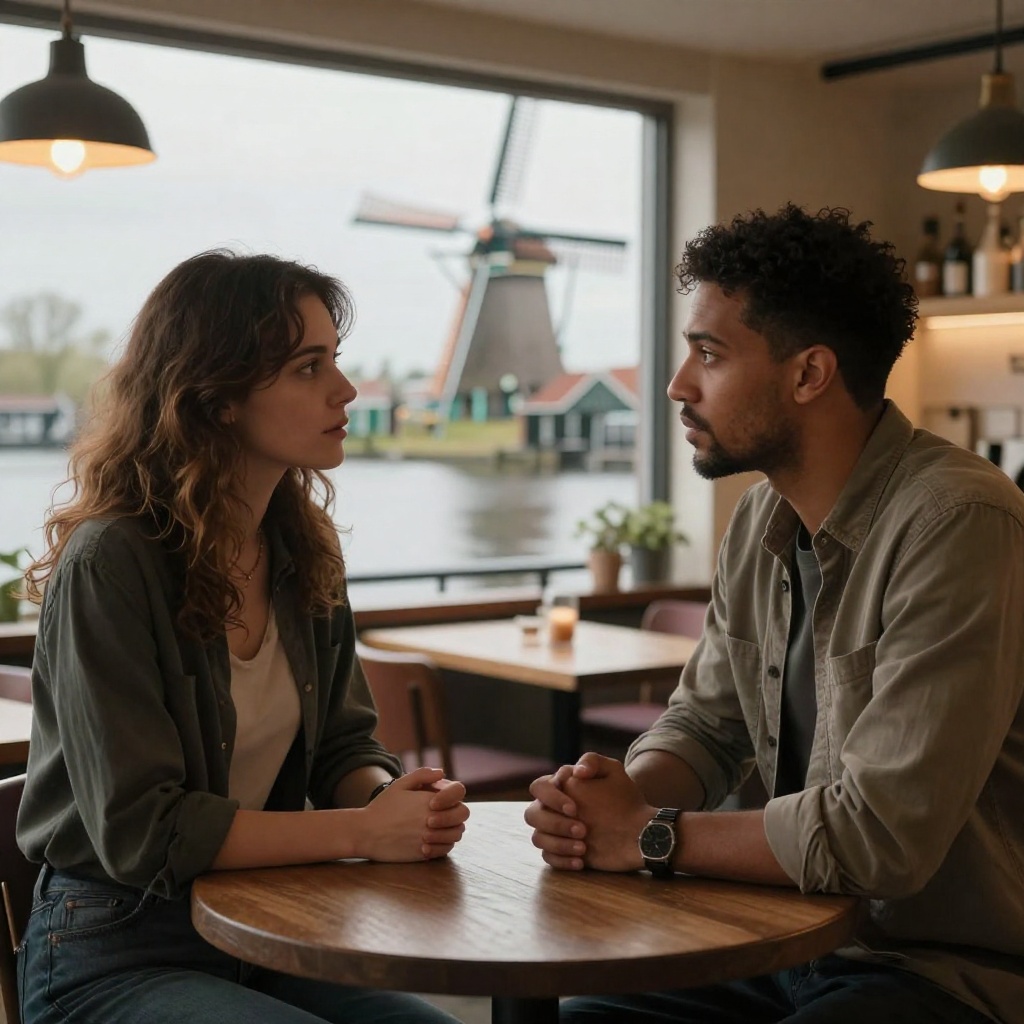
Is Dutch Hard? Honest Assessment
Discover why Dutch is one of the easiest languages for English speakers to learn, plus tips for mastering it with your partner.
If you're in a relationship with a Dutch speaker and wondering whether you can actually learn their language, here's the encouraging truth: Dutch is one of the easiest languages for English speakers to learn. The US Foreign Service Institute ranks Dutch as a Category I language, meaning English speakers can achieve proficiency in just 24-30 weeks of study.
But what makes Dutch accessible, and what challenges should you prepare for? Let's break it down honestly.
The Good News: Dutch and English Are Cousins
Phrase to Learn
Leren kost tijd en toewijding.
Learning takes time and dedication.
[ LAY-run kost TYT en TOO-wai-ding ]
This sentence shows how similar Dutch and English can be - many words are recognizable!
Dutch and English both belong to the West Germanic language family. They share a common ancestor and evolved alongside each other for centuries. This means:
- Thousands of cognates - Words that look and sound similar
- Similar grammar structures - Word order often matches English
- Familiar verb patterns - Conjugation systems are comparable
Language Siblings
Dutch is the closest major language to English. While Frisian (spoken in the northern Netherlands) is technically the closest, Dutch is the closest language with millions of speakers. Your brain is already primed to learn it!
Words You Already Know
You'll be amazed how many Dutch words you can understand immediately. Look at these examples:
Pronunciation: khrah-MAH-tee-kah
"De Nederlandse grammatica kan soms lastig zijn."
Pronunciation: OUT-spraahk
"De uitspraak van de 'g' is een uitdaging voor velen."
Pronunciation: WOOR-dun-skhaht
"Ik probeer elke dag mijn woordenschat uit te breiden."
Pronunciation: OO-fuh-nun
"Het is belangrijk om elke dag te oefenen."
Here's a comparison showing how similar many everyday words are:
| Dutch | English | Similarity |
|---|---|---|
| water | water | Identical |
| man | man | Identical |
| hand | hand | Identical |
| beginnen | begin | Very close |
| melk | milk | Very close |
| brood | bread | Related but different |
| groen | green | Similar |
| maken | make | Similar |
| komen | come | Similar |
| helpen | help | Similar |
These examples matter because they show a useful learning pattern: Dutch often feels familiar at the start, but the spelling and pronunciation can still surprise you. If you can spot the cognates, you get quick wins; if you assume every similar word works exactly like English, you will make avoidable mistakes.
Dutch Grammar: The Easy Parts
While Dutch grammar has a reputation for being tricky, it actually offers several 'shortcuts' that make it more accessible than many other European languages. For English speakers, the structural transition is often smoother than expected because Dutch has stripped away many of the complex layers found in its closest relatives, like German.
In the following sections, we will examine how the word order frequently aligns with English patterns, saving you from constant mental gymnastics. We will also explore the absence of a formal case system and the streamlined gender system, which has merged three historical categories into just two functional ones. These features provide a solid foundation that allows learners to start forming sentences relatively early in their studies.
Pronunciation: OUT-dah-ging
"Het leren van een nieuwe taal is een mooie uitdaging."
Word Order is Similar
Dutch basic word order follows Subject-Verb-Object, just like English:
| Dutch | English |
|---|---|
| Ik drink koffie | I drink coffee |
| Zij leest een boek | She reads a book |
| Wij eten appels | We eat apples |
Pronunciation: TAAL-vaar-dukh-hait
"Mijn taalvaardigheid verbetert elke maand."
No Case System
Unlike German (which has four cases), Dutch only has remnants of case in pronouns. You don't need to memorize elaborate case tables for nouns.
Two Genders (Practically)
While Dutch technically has three genders (masculine, feminine, neuter), in practice there are just two:
- De words (common gender) - de man, de vrouw, de tafel
- Het words (neuter) - het huis, het kind, het water
De vs Het
About 75% of Dutch nouns use "de." When in doubt, guess "de" and you'll be right most of the time! Your partner will understand you even if you get it wrong, and natives make these mistakes too.
The Challenging Parts (And How to Handle Them)
Let's be honest - Dutch has some tricky aspects:
1. Pronunciation of "G" and "R"
The Dutch "g" (and "ch") sound is the notorious guttural sound that doesn't exist in English. It comes from the back of the throat.
Pronunciation: MOO-i-luk
"Sommige aspecten van het Nederlands zijn moeilijk."
Tip: Start by making a "k" sound, then add breath to it. Think of clearing your throat gently. Your partner can help you practice!
2. Vowel Sounds
Dutch has many vowel sounds, including combinations that don't exist in English:
| Dutch | Sound | Example |
|---|---|---|
| ui | ow-ee (combined) | huis (house) |
| ij/ei | ay | wijn/trein |
| oe | oo | goed |
| eu | uh | deur |
| aa | ah (long) | naam |
| uu | ew | minuut |
3. Verb Position in Subordinate Clauses
In main clauses, Dutch is straightforward. But in subordinate clauses (after words like "dat," "omdat," "als"), the verb moves to the end:
| Type | Dutch | English |
|---|---|---|
| Main clause | Ik ga naar huis | I go home |
| Subordinate | ...omdat ik moe ben | ...because I am tired |
Pronunciation: buh-KHRAY-pun
"Ik begin steeds meer te begrijpen wat ze zeggen."
4. Separable Verbs
Some Dutch verbs split apart in sentences:
Opstaan
to get up (separable verb)
| Infinitive | opstaan | to get up |
| Present | ik sta op | I get up |
| Question | sta je op? | are you getting up? |
| Past | ik stond op | I got up |
| Perfect | ik ben opgestaan | I have gotten up |
How Long Will It Really Take?
Here's a realistic timeline for English speakers learning Dutch:
| Level | Time Needed | What You Can Do |
|---|---|---|
| Basic survival | 2-3 months | Greetings, basic phrases, numbers |
| Conversational | 6-9 months | Daily conversations, express feelings |
| Intermediate | 12-18 months | Discuss most topics, understand TV |
| Advanced | 2-3 years | Nuanced discussions, read literature |
Learning with a partner accelerates everything! Having daily practice opportunities and a native speaker to correct you can cut these times significantly.
The Dutch Speak English
One challenge: Dutch people speak excellent English and often switch to English when they hear a foreign accent. Don't let this discourage you! Kindly ask your partner to keep speaking Dutch with you. Say: "Kunnen we alsjeblieft Nederlands praten?" (Can we please speak Dutch?)
Why Learning Dutch Is Worth It
Even though most Dutch people speak English, learning Dutch matters:
1. Deeper Connection with Your Partner
Speaking someone's native language creates intimacy that translation can't match. Inside jokes, pet names, and emotional moments hit differently in Dutch.
2. Understanding Family and Friends
Your partner's family might not speak English as fluently. Learning Dutch opens doors to those relationships.
Pronunciation: kon-ver-SAA-tsee
"Ik probeer zoveel mogelijk conversaties te voeren."
3. Cultural Access
Dutch literature, music, films, and humor are best enjoyed in the original language. Plus, you'll understand what people around you are saying!
4. Living in the Netherlands
If you plan to live together in the Netherlands, Dutch becomes essential for integration, bureaucracy, and feeling at home.
Comparing Dutch to Other Languages
| Language | FSI Category | Weeks to Proficiency | Difficulty for English Speakers |
|---|---|---|---|
| Dutch | I | 24-30 | Easiest |
| German | II | 30-36 | Easy |
| French | I | 24-30 | Easy |
| Spanish | I | 24-30 | Easy |
| Polish | IV | 44 | Hard |
| Russian | IV | 44 | Hard |
| Japanese | V | 88 | Very Hard |
Dutch is genuinely among the easier languages for English speakers, but that ranking assumes a typical learner with steady exposure and regular practice. If you already know German, you may find some grammar patterns easier; if pronunciation is your weak spot, Dutch may feel harder at first than the table suggests. The point is not that Dutch is effortless, but that it is highly achievable.
Tips for Success
Acquiring fluency in Dutch works best when you build small, repeatable habits. Instead of vague goals like "study more," set concrete routines: review five phrase cards after breakfast, listen to one short Dutch clip during lunch, and speak one minute of Dutch with your partner in the evening. That kind of repetition gives you both structure and confidence.
A practical weekly plan helps more than motivation alone. For example: Monday, shadow five sentences from a short video; Tuesday, practice one pronunciation pair like ui and ij; Wednesday, rewrite three English sentences into Dutch; Thursday, have a 10-minute Dutch-only conversation about dinner plans; Friday, review mistakes and turn them into flashcards. Use TV, voice notes, and partner practice as support, not as passive exposure.
- Spaced repetition: Keep a small review deck for phrases you actually need with your partner.
- Shadowing: Repeat a short sentence immediately after hearing it to train rhythm and pronunciation.
- Partner drills: Ask your partner to correct one mistake at a time, then use the corrected sentence twice.
- Topic routines: Revisit the same subjects -- food, plans, feelings, family -- until they become automatic.
Pronunciation: FLOOY-unt
"Mijn doel is om vloeiend Nederlands te spreken."
1. Embrace the Sounds
Practice the "g" sound daily. Record yourself and compare to your partner. It will feel awkward at first, but it gets easier.
2. Learn Chunks, Not Just Words
Instead of memorizing individual words, learn phrases:
- "Hoe gaat het?" (How are you?)
- "Ik hou van je" (I love you)
- "Wat zullen we doen?" (What shall we do?)
3. Watch Dutch TV Together
Shows with Dutch subtitles help enormously. Ask your partner to watch Dutch series with you.
4. Use Apps and Resources
Combine app learning with real conversation practice with your partner.
5. Make Mistakes Proudly
Dutch people appreciate any attempt to speak their language. Don't be shy!
Quick Starter Phrases
Get started with these essential phrases today:
| Dutch | English | Pronunciation |
|---|---|---|
| Hallo | Hello | hah-LOH |
| Dank je wel | Thank you | dahnk yuh vel |
| Alsjeblieft | Please / Here you go | als-yuh-BLEEFT |
| Sorry | Sorry | sor-REE |
| Ja / Nee | Yes / No | yah / nay |
| Ik begrijp het niet | I don't understand | ik buh-KHRYPE het neet |
| Kun je langzamer praten? | Can you speak slower? | kun yuh LAHNG-zah-mer PRAH-tun |
| Ik leer Nederlands | I'm learning Dutch | ik lair NAY-der-lahnds |
The Verdict: Is Dutch Hard?
No, Dutch is not hard for English speakers. It's one of the easiest languages you could choose to learn. Yes, the pronunciation takes practice, and there are grammatical quirks to master. But the shared vocabulary, similar grammar, and logical structure make Dutch very achievable.
With a Dutch-speaking partner to practice with, you have the best possible learning advantage. Every conversation is a lesson, every text message is practice, and your motivation - your love for your partner - is the strongest force there is.
Ready to learn together?
Speak their language, touch their heart. Fun games, voice practice & goals made for two.
Start Learning for $0.00 →✨ Try free — no credit card needed
Frequently Asked Questions
What are some fun ways to practice Dutch as a couple?
Watch Dutch movies or TV shows with subtitles, cook Dutch recipes together, or plan a trip to the Netherlands. You can also create a Dutch-speaking zone in your home where you only communicate in Dutch. Making it a shared experience will keep you both motivated and engaged.
How can I stay motivated when learning Dutch gets challenging?
Set realistic goals, celebrate your progress, and remind yourself of the reasons why you want to learn Dutch. Focus on the benefits, such as connecting with your partner's family or experiencing Dutch culture firsthand. Find a language partner or join a Dutch-speaking community for support and encouragement.
Are there any free resources available for learning Dutch?
Yes, many free resources are available online, such as Duolingo, Memrise, and YouTube channels dedicated to Dutch language learning. You can also find free Dutch textbooks and grammar guides online. Take advantage of these resources to supplement your learning.
What's the best way to handle separable verbs in Dutch?
Separable verbs can be tricky because the prefix separates from the verb in certain sentence structures. Pay attention to the word order and practice using separable verbs in different contexts. Create flashcards with example sentences to help you memorize the patterns. Couples can quiz each other on verb placement.
How important is it to learn Dutch grammar?
While you can get by with basic vocabulary, understanding Dutch grammar is essential for fluency and accuracy. Focus on learning the fundamental grammar rules, such as verb conjugations, word order, and sentence structure. A solid understanding of grammar will allow you to express yourself more clearly and confidently. Use grammar exercises as a couple.