Norwegian Forgiveness Phrases for English Speakers
Learn essential Norwegian phrases for asking and granting forgiveness. Heal your relationship through sincere reconciliation.
Forgiveness in Norwegian is usually direct, simple, and sincere. If you can say exactly what you regret and what you want to make right, your apology will sound much more natural.
Asking for Forgiveness
Use unnskyld when you need to apologize, and kan du tilgi meg? when you want to ask for forgiveness more directly. The first is the everyday apology; the second is more personal and vulnerable.
Keep your sentence short and specific. In Norwegian, that usually feels stronger than a long explanation that avoids the real issue.
Pronunciation: OON-skil
Use this for quick apologies, interrupting someone, or starting a more serious apology.
Unnskyld, jeg burde ikke ha sagt det. - Sorry, I shouldn't have said that.
Kan du tilgi meg? - Can you forgive me?
These two lines cover most situations: the first opens the apology, and the second asks directly for forgiveness after you have taken responsibility.
After someone listens, keep the response simple and grateful. Takk for at du hører på meg means Thank you for listening to me, while Jeg setter pris på at du gir meg en sjanse means I appreciate that you are giving me a chance.
Pronunciation: til-YEE meh
Use this after a direct apology when you want the other person to move from hurt toward forgiveness.
Tilgi meg
Pronunciation: til-YEE meh
Meaning: "Forgive me"
When to use it: A direct request for forgiveness after you have already said what you are sorry for. It is more intimate than unnskyld, so it fits serious relationship conversations.
Example: Tilgi meg for at jeg glemte avtalen vår. - Forgive me for forgetting our plan.
Follow the phrase with one concrete action. For example, say what you will do differently next time, or suggest a calm time to talk again.
Granting Forgiveness
Granting forgiveness is a powerful act of love. When your Norwegian partner apologizes, how you respond shapes the future of your relationship. Forgiveness isn't about pretending the hurt didn't happen—it's about choosing love over resentment.
If you are not ready yet, it is fine to say Jeg trenger litt tid - I need a little time. When you are ready, jeg tilgir deg is the clearest way to say I forgive you.
Pronunciation: yay tihl-GEER deh
Use this when you want to end the conflict clearly and move forward.
Jeg tilgir deg
Pronunciation: yay tihl-GEER deh
Meaning: "I forgive you"
When to use it: Say this when you are ready to release the hurt. It is direct, calm, and appropriate in close relationships.
Example: Jeg tilgir deg, men vi må snakke om hvordan vi unngår dette neste gang. - I forgive you, but we need to talk about how to avoid this next time.
After forgiving, keep the conversation grounded in one practical next step, such as a boundary, a plan, or a check-in later.
Norwegian Emotional Expression
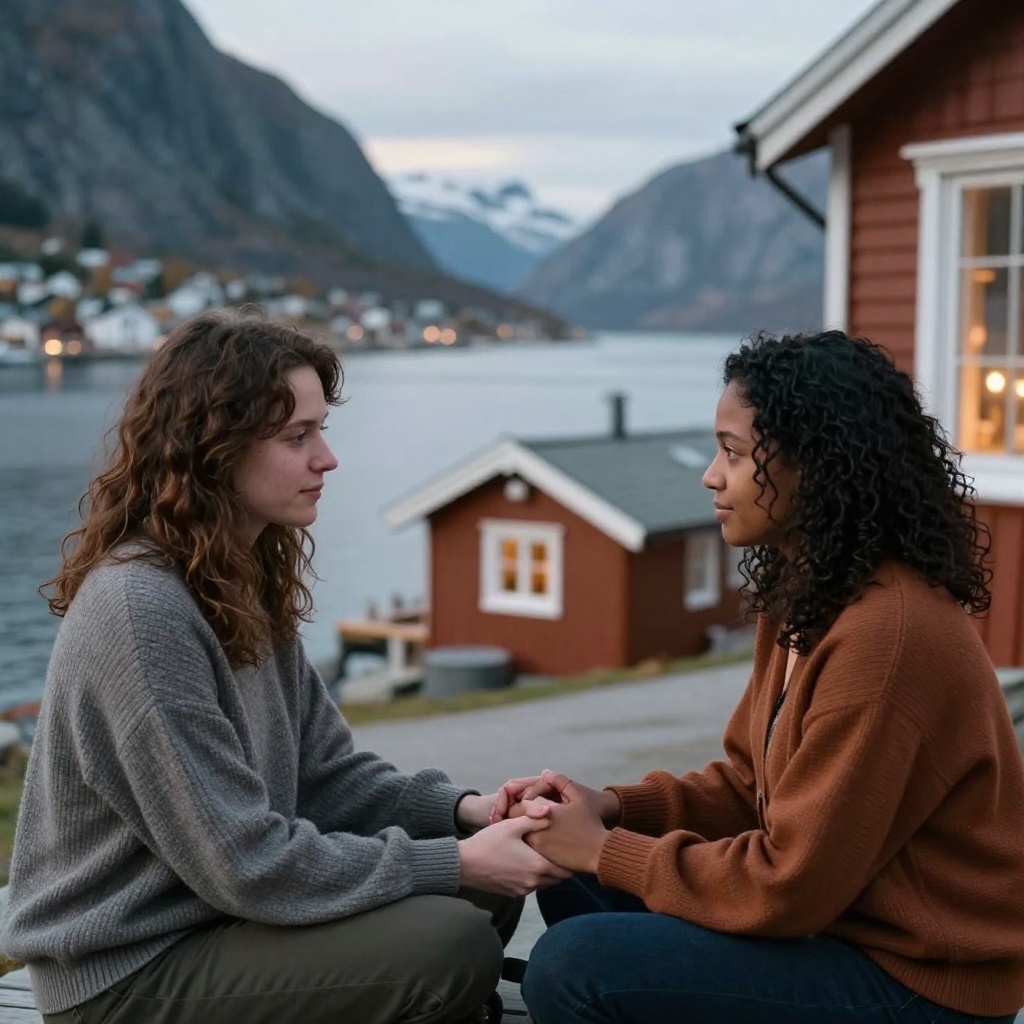
Norwegians tend to be emotionally reserved in public but value deep, honest conversations in private. When discussing forgiveness, choose a quiet, comfortable setting where both of you can speak openly. Avoid having these conversations in public spaces or when rushed.
The Process of Forgiveness
Asking for forgiveness requires vulnerability. Express that you understand the pain you caused, take full responsibility without making excuses, and show genuine remorse for your actions.
Granting forgiveness is equally meaningful. Let your partner know you're choosing to release anger and resentment. This doesn't mean forgetting—it means choosing your relationship over holding onto hurt.
Sometimes forgiveness takes time. It's okay to say you want to forgive but need space to process. Honor your feelings while working toward healing.
Moving Forward Together
After forgiveness, focus on rebuilding trust and preventing similar hurts. Discuss what went wrong and how you can both do better.
The concept of "Tilgivelse" in Norwegian represents this healing power. Physical affection, quality time, and renewed commitment help restore your bond.
Cultural Considerations
Norwegian speakers often value sincere emotional expression. A heartfelt request for forgiveness shows respect for your partner and the relationship. After reconciliation, warmth and closeness help heal any remaining wounds.
Related Articles
- How to Apologize in Norwegian: Essential Phrases for Couples
- Norwegian Making Up & Reconciliation Phrases for English Speakers
- Norwegian Arguing & Disagreement Phrases for English Speakers
- Norwegian First Date Phrases for English Speakers
- Expressing Emotions in Norwegian: Feelings Vocabulary for Couples
Ready to learn together?
Speak their language, touch their heart. Fun games, voice practice & goals made for two.
Start Learning for $0.00 →✨ Try free — no credit card needed
Frequently Asked Questions
Is it ever too late to ask for forgiveness in Norwegian?
While it's always best to address issues promptly, it's generally never too late to ask for forgiveness. A sincere apology, even delayed, can begin the healing process. Use phrases like 'Jeg vet det er sent, men jeg er veldig lei meg' (I know it's late, but I'm very sorry) to show genuine remorse. For couples, practicing vulnerability and open communication is key, regardless of the timing.
What's the best way to show I'm truly sorry, beyond just saying 'Jeg er lei meg'?
Beyond simply saying 'Jeg er lei meg' (I am sorry), demonstrate genuine remorse by acknowledging the specific hurt you caused. Use phrases like 'Jeg forstår at jeg såret deg' (I understand that I hurt you) and explain how you plan to avoid repeating the mistake. Couples can work together to identify triggers and establish healthier communication patterns to prevent future hurt.
How can couples practice forgiveness phrases together in a fun way?
Turn practicing forgiveness phrases into a game! Role-play common scenarios where apologies might be needed, focusing on sincere delivery and active listening. You could even create flashcards with different phrases and situations, making it a lighthearted way to learn and grow together. Remember to use 'Jeg angrer' (I regret) when appropriate.
Are there specific situations where a formal apology is more appropriate in Norwegian culture?
While Norwegians generally value directness, a more formal apology might be warranted in situations involving public embarrassment or significant breaches of trust. Using phrases like 'Jeg beklager på det sterkeste' (I sincerely apologize) can convey the seriousness of your regret. When apologizing to your partner's family, err on the side of formality to show respect.
How do I know if my partner has truly forgiven me in Norwegian culture?
Forgiveness is a process, and it may not always be explicitly stated. Look for signs of reconciliation, such as a return to normal communication patterns, increased affection, and a willingness to move forward. Openly discuss your feelings and ask 'Har du tilgitt meg?' (Have you forgiven me?) to ensure clarity and mutual understanding. Patience and consistent effort are crucial.