Learn Polish from TV Shows and Movies
Discover how Polish films and TV shows can boost your language learning journey together. Expert tips, best shows, and practical strategies for couples.
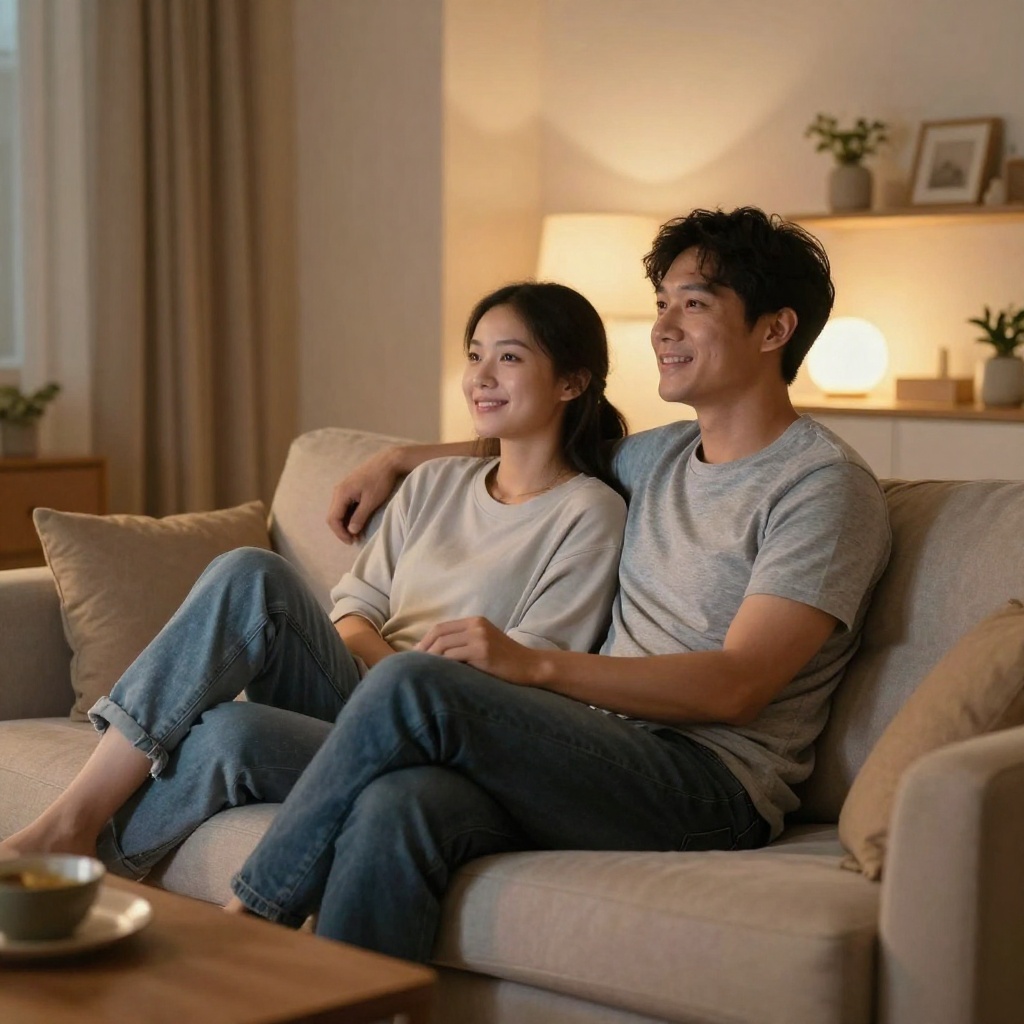
Learning Polish through entertainment isn't just possible—it's one of the most enjoyable ways to immerse yourselves in the language together. Polish cinema and television offer authentic dialogue, cultural context, and natural pronunciation that textbooks simply cannot provide.
Phrase to Learn
Obejrzyjmy film
Let's watch a movie
[ o-bay-ZHEE-my film ]
Perfect phrase to suggest your next Polish learning session together.
Why Polish Media Works for Language Learning
Watching filmy polskie (Polish films) and seriale (TV series) provides several unique advantages. You'll hear natural wymowa (pronunciation), learn slang (slang), and understand kontekst kulturowy (cultural context) that makes the language come alive.
Unlike formal language courses, Polish media exposes you to:
- Regional accents and dialects
- Contemporary vocabulary and expressions
- Non-verbal communication patterns
- Cultural references and humor
- Emotional intonation and rhythm
Polish Film Tradition
Poland has a rich cinematic tradition dating back to the 1950s. Directors like Andrzej Wajda and Krzysztof Kieślowski are internationally acclaimed, making Polish cinema both educational and artistically rewarding.
Best Polish TV Shows for Language Learners
Polish television has entered a vibrant era, moving far beyond traditional soap operas into the realms of high-stakes thrillers and witty comedies. For a learner, these shows offer a window into authentic Polish speech patterns that go beyond the formal dialogues found in textbooks. By observing characters in different social settings, you can pick up on the nuances of formal versus informal address and the rhythmic flow of natural conversation.
Selecting the right content is essential for maintaining motivation. This section breaks down recommendations into two categories to suit your current proficiency level. We explore options for beginners that feature clearer articulation and simpler plots, as well as more complex series for intermediate learners who want to tackle sophisticated wordplay and faster narrative pacing.
Pronunciation: seh-ryal
"Mój ulubiony polski serial to 'Wataha'."
For Beginners
"Ranczo" (The Ranch) is perfect for couples starting their Polish journey. This comedy series uses clear dialogue and familiar rural settings.
Pronunciation: na VSHEE
"Akcja dzieje się na wsi."
"M jak miłość" (L for Love) - Poland's longest-running soap opera offers everyday vocabulary and relationship dialogue that couples will find especially relevant.
For Intermediate Learners
"Pitbull" - This police drama introduces more complex vocabulary while maintaining engaging storylines. Perfect for learning słownictwo prawnicze (legal vocabulary) and terminologia policyjna (police terminology).
"Ojciec Mateusz" (Father Matthew) combines mystery with moral themes, offering rich vocabulary and cultural insights into Polish Catholicism.
Essential Polish Movies for Couples
Polish cinema carries a prestigious reputation for its artistic depth and historical significance. Watching a film together provides a shared cultural experience that can spark deep conversations about Poland’s complex past and its modern identity. From the visual poetry of the Polish Film School to the sharp humor of modern romantic comedies, there is a wide spectrum of storytelling styles to explore during your next movie night.
To help you choose, we have curated a selection that spans several generations of filmmaking. You will find a list of classic cinema titles that are fundamental to understanding the Polish psyche, alongside contemporary films that provide a lighter, more modern look at life in cities like Warsaw, Kraków, and Gdańsk.
Pronunciation: feelm
"Chcesz obejrzeć polski film wieczorem?"
Classic Cinema
"Miś" (Teddy Bear, 1980) - A brilliant comedy that showcases Polish humor and social commentary. The dialogue is clear and the cultural references are explained through context.
"Seksmisja" (Sexmission, 1984) - A sci-fi comedy that's become a cult classic. Great for learning żargon naukowy (scientific jargon) and colloquial expressions.
Contemporary Films
"Kiler" (1997) - A action-comedy that's quotable and culturally significant. You'll learn potoczne wyrażenia (colloquial expressions) that Poles use daily.
Effective Strategies for Learning Together
Passive watching is a pleasant pastime, but transforming a movie into a language lesson requires a more deliberate approach. When you engage with Polish media actively, you begin to notice how grammar rules function in the real world—such as how cases change during a heated argument or how verbs of motion are used in a chase scene. Developing a shared system for watching helps ensure that both viewers are gaining linguistic skills while enjoying the story.
This section outlines specific methodologies to turn your screen time into study time. We detail the Three-Pass Method, which involves repeated viewings with different focus areas, and provide a variety of active viewing techniques designed to improve your listening comprehension and help you memorize new phrases in their natural context.
Pronunciation: nah-pee-sih
"Zawsze oglądam filmy z polskimi napisami."
The Three-Pass Method
Pierwszy raz (First viewing): Watch with Polish audio and English subtitles to understand the plot.
Drugi raz (Second viewing): Use Polish subtitles to connect spoken words with their written form.
Trzeci raz (Third viewing): No subtitles—test your comprehension and focus on intonacja (intonation).
Active Viewing Techniques
- Pause and repeat: Stop to practice difficult wymowa (pronunciation)
- Note-taking: Write down new słówka (vocabulary) together
- Discussion: Talk about scenes using newly learned phrases
- Role-play: Act out favorite dialogues
Polish Humor
Polish comedy often relies on wordplay, irony, and cultural references. Don't worry if you don't understand every joke initially—humor is one of the last aspects of language acquisition, but also the most rewarding.
Vocabulary You'll Encounter
| Category | Polish | English | Context and learner task |
|---|---|---|---|
| Emotions | Jestem szczęśliwy / szczęśliwa | I'm happy | Use it when a character gets good news. Say the sentence aloud and change the ending to match the speaker: szczęśliwy for a man, szczęśliwa for a woman. |
| Daily life | Codzienne życie | Daily life | Common in slice-of-life scenes. Try describing one routine from the episode: W naszym codziennym życiu... - In our daily life... |
| Relationships | Związek | Relationship | Often appears in conversations about dating, marriage, or breakups. Listen for how it combines with verbs like mieć and tworzyć. |
| Work | Praca | Work | Very common in dramas and comedies. Write one line you hear about work and replace the subject with your own situation. |
| Family | Rodzina | Family | Useful for understanding family scenes. Notice whether the speaker uses a formal or affectionate tone when talking about relatives. |
Common Expressions from Polish Media
"Co się dzieje?" (What's happening?) - You'll hear this constantly in dramas and thrillers.
"Wszystko w porządku" (Everything's okay) - A reassuring phrase common in all genres.
"Masz rację" (You're right) - Essential for discussions and arguments in Polish shows.
Pronunciation: nyeh ro-ZU-myem
"Przepraszam, nie rozumiem. Możesz powtórzyć?"
Overcoming Common Challenges
Learning a language through native-level media often brings unexpected hurdles that can feel overwhelming at first. Polish is known for its rich system of prefixes and suffixes, as well as its unique phonology. When actors speak quickly or use slang, the words can seem to blend together into a single stream of sound, making it difficult to isolate the vocabulary you already know. Recognizing these obstacles is the first step toward bypassing them.
We have identified the most frequent stumbling blocks for students of Polish and provided ways to handle them. This includes strategies for decoding fast-paced dialogue, a guide to recognizing regional accents that may sound different from standard Polish, and tips for identifying the cultural references that often hide behind metaphors and jokes.
Fast-Paced Dialogue
Polish speakers in media often talk quickly. Start with children's programs or documentaries where speech is typically slower and clearer.
Regional Accents
Different regions of Poland have distinct accents. Accent śląski (Silesian accent) sounds very different from Warsaw Polish. Exposure to various accents through different shows will improve your overall comprehension.
Cultural References
Polish media is full of historical and cultural references. Keep a notebook for researching odniesienia kulturowe (cultural references) you encounter.
Building Your Polish Media Library
Consistency is a fundamental pillar of language acquisition, and having easy access to a variety of content makes it easier to stay engaged. Building a personal media library allows you to revisit your favorite scenes and build a sense of familiarity with specific actors and directors. In the digital age, finding Polish content is easier than ever, provided you know which resources offer high-quality audio and accurate captioning.
In the following subsections, we evaluate the top streaming platforms that currently host Polish-language catalogs, including those that produce original content. We also provide documentary recommendations, which are often overlooked but serve as excellent tools for learners due to their clear narration and informative subject matter.
Pronunciation: beeb-lyo-teh-kah
"Moja cyfrowa biblioteka ma wiele polskich filmów."
Streaming Platforms
- Netflix Poland - Great selection of Polish originals
- Player.pl - TVN's streaming service
- TVP VOD - Public television archive
- YouTube - Free classic films and series
Documentary Recommendations
"Polska od kuchni" (Poland from the Kitchen) - Perfect for food vocabulary and cultural insights.
"Podróże kulinarne Roberta Makłowicza" (Robert Makłowicz's Culinary Travels) - Combines travel, food, and clear narration.
Tracking Your Progress
Create a dziennik nauki (learning journal) together. Note:
- New vocabulary learned each session
- Phrases you want to practice
- Cultural insights discovered
- Favorite scenes to revisit
Weekly Challenges
- Monday: Watch a 20-minute episode together
- Wednesday: Discuss the plot in Polish
- Friday: Practice dialogue from your favorite scene
- Sunday: Watch without subtitles for 10 minutes
Pronunciation: ro-BEE-my po-STEHN-py
"Już rozumiemy więcej dialogów!"
The Social Aspect
Join polskie grupy filmowe (Polish film groups) online to discuss shows with native speakers. This adds a social dimension to your learning and provides cultural context you might miss.
Beyond Entertainment
Once you're comfortable with entertainment media, branch out to:
- Wiadomości (News programs) for current events vocabulary
- Talk shows for conversational patterns
- Cooking shows for practical, everyday language
- Travel programs for geographical and cultural knowledge
Remember, learning Polish through media should supplement, not replace, structured learning. The combination of formal study and authentic media exposure creates the most effective learning environment for couples.
The key is consistency (stałość) and patience (cierpliwość). Start with content slightly below your current level, and gradually increase difficulty as your comprehension (zrozumienie) improves.
Ready to learn together?
Speak their language, touch their heart. Fun games, voice practice & goals made for two.
Start Learning for $0.00 →✨ Try free — no credit card needed
Frequently Asked Questions
How can couples handle disagreements about which Polish shows to watch for learning?
Compromise is key! Create a rotating schedule where one partner chooses a show one week, and the other chooses the next. Explore different genres and difficulty levels to find common ground. Consider watching the first episode of several shows together and then voting on which ones to continue. Focus on finding shows that both partners find engaging, even if they're not the most educational. Enjoyment is crucial for staying motivated.
What are some good Polish documentaries for language learners?
Look for documentaries on Polish history, culture, or nature. These often feature clear narration and subtitles, making them accessible for language learners. Consider documentaries about Polish cuisine, art, or music to learn vocabulary related to those topics. Many Polish documentaries are available on streaming platforms or through online libraries. Watching documentaries together can spark interesting discussions about Polish culture.
How can I find transcripts of Polish TV shows and movies to aid learning?
Some streaming platforms offer subtitles in both Polish and English, which can be used as a makeshift transcript. Search online for fan-made transcripts or subtitle files for specific shows and movies. Online language learning communities may also have shared resources. Be aware that fan-made transcripts may not be perfectly accurate. Using transcripts can help you understand fast-paced dialogue and learn new vocabulary more effectively.
Are there any Polish TV shows specifically designed for language learners?
While there aren't many shows specifically designed for language learners, some educational programs and children's shows can be helpful. Look for shows with clear pronunciation, simple vocabulary, and engaging storylines. Polish public television may offer educational content online. Even shows not specifically designed for learners can be valuable with the right learning strategies.
How can couples use Polish media to learn about regional accents and dialects?
Pay attention to the accents and dialects spoken by different characters in TV shows and movies. Research the regional variations in Polish pronunciation and vocabulary. Try to identify the characteristics of different accents and dialects. Be aware that some accents may be more challenging to understand than others. Exposure to different accents can improve your overall listening comprehension skills.