Polish Speakers: Global Statistics
Discover fascinating statistics about Polish speakers worldwide. Learn where Polish is spoken, how many people use it, and why it matters for couples learning together.
When you learn Polish as a couple, the question is not just romantic curiosity. It is practical: how many people actually speak Polish, where will it help you, and what kind of community are you joining? The short answer is that Polish reaches far beyond Poland. It is one of the major Slavic languages, it has a large diaspora, and it has enough everyday use to make learning it genuinely useful.
Phrase to Learn
Zasięg języka
language reach
[ za-SHENK yehn-ZOO-ka ]
A useful way to think about Polish is not only how many people speak it, but where those speakers live and how they use the language every day.
The Big Numbers: Polish by the Statistics
Język polski means “the Polish language,” and it is spoken by roughly 45 million people worldwide. Most speakers live in Poland, but millions more use Polish in family life, work, study, church communities, and online. That makes Polish one of the largest Slavic languages and a serious language for anyone with Polish family ties, a Polish partner, or a strong interest in Central European culture.
Primary Polish Speakers:
- Poland: about 37.5 million native speakers
- Diaspora communities: about 6 to 7 million speakers
- Second-language learners: a growing global group, especially heritage learners and partners of Polish speakers
Pronunciation: sta-tys-TY-ka
„Ta statystyka pokazuje, jak duża jest polskojęzyczna społeczność.”
Pronunciation: PRO-tsent
„Jaki procent Polaków mieszka za granicą?”
Where in the World Do People Speak Polish?
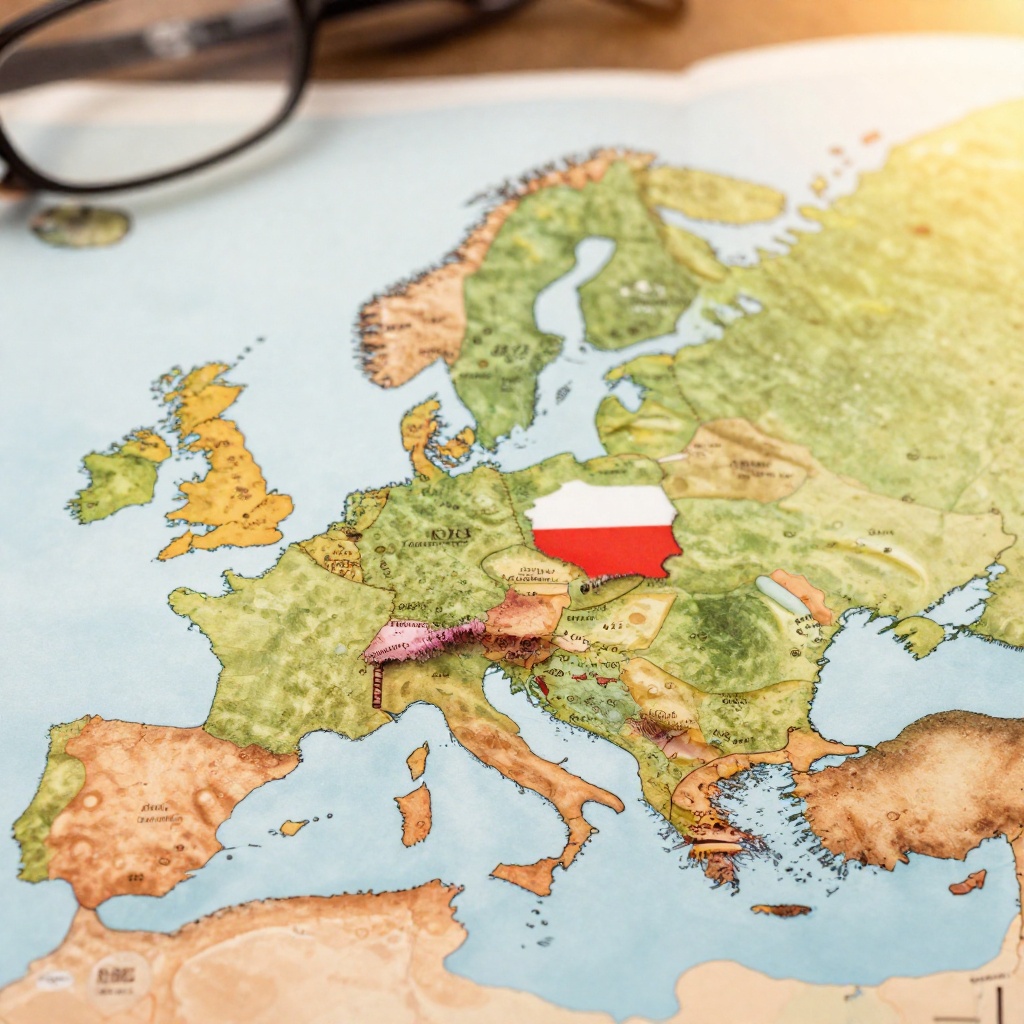
Polish is a West Slavic language, so its strongest base is in Central Europe. But the real story is broader than one country. Migration, work, marriage, study abroad, and digital media have created Polish-speaking communities in many places. For learners, that means Polish is not only a language for travel in Poland. It is also a language that can connect you to relatives, neighbors, coworkers, and communities abroad.
First, there is Poland, where Polish is the everyday language of government, schooling, business, and home life. Then there is the Polonia, the global Polish diaspora, which includes communities in the United States, the United Kingdom, Germany, Canada, France, and Australia. If you are learning as a couple, this matters: a Polish phrase can help you greet family members, navigate a visit, or understand the cultural background behind a partner’s stories.
Pronunciation: e-mi-GRATS-ya
„Emigracja pomogła rozprzestrzenić język polski po świecie.”
Poland: The Heart of Polish Culture
In Polska, Polish is the official language and the one most people use every day. That does not mean the language is flat or only formal. It is the language of news headlines, family jokes, market stalls, school reports, love notes, and quick text messages. Learning Polish gives you access to a living culture, not just a country on a map.
Major Polish Communities Worldwide
| Country | Polish Speakers | Notes |
|---|---|---|
| United States | About 8.5 million people of Polish descent | Large heritage community, especially in cities like Chicago and New York |
| Germany | About 2 million | Strong modern migration links and cross-border family ties |
| United Kingdom | About 1 million | Large post-2004 community; Polish is common in shops, churches, and family networks |
| Canada | About 1.1 million people of Polish ancestry | Active cultural groups and weekend schools support heritage language use |
| Australia | About 214,000 | Smaller but visible community with strong cultural organizations |
| France | About 350,000 | Historical ties plus newer migration keep Polish visible |
Did You Know?
Chicago has one of the largest Polish communities outside Poland. That is why you can still hear Polish in bakeries, churches, community centers, and family gatherings there. For learners, cities like that can feel like a live classroom.
The Polish Language Family Tree
Polish belongs to the West Slavic branch of the Slavic language family. It is closely related to Czech and Slovak, and more distantly related to languages such as Ukrainian and Russian. That does not make Polish “easy,” but it does mean the language has patterns you can learn to recognize.
- Czech (czeski)
- Slovak (słowacki)
- Sorbian (łużycki)
For couples, this can be motivating. Once you start spotting roots, endings, and sound changes, you can begin to guess meaning across related words. That is especially useful when traveling in the region or reading names, signs, and menus.
Language Difficulty Rankings
For English speakers, Polish is often listed by the U.S. Foreign Service Institute as a Category IV language. In plain terms, that means it usually takes more study time than a language like Spanish or French. The reason is not mystery; it is structure. Polish uses cases, gender agreement, and consonant clusters that feel new at first. The good news is that once the patterns click, the language becomes much more predictable.
Regional Varieties and Dialects
Standard Polish, or język literacki, is understood nationwide and is the form you should learn first. But Polish also has regional speech patterns that color how people sound in different parts of the country. Knowing this helps learners avoid confusion when a word sounds slightly different from one speaker to another.
Major Dialect Groups:
- Wielkopolski (Greater Poland) — You might hear pyra instead of standard ziemniak (potato). Listen for vowel differences when visiting Poznań.
- Małopolski (Lesser Poland) — Cracow-area speech often softens consonants. A phrase like idę na rynek (I'm going to the market square) may sound slightly different from Warsaw Polish.
- Śląski (Silesian) — Has distinctive vocabulary, such as gryfnie instead of standard ładnie (nicely). Some linguists consider it a separate language.
- Mazowiecki (Masovian) — The basis for standard Polish. Warsaw speech is the closest to what textbooks teach.
- Pomorski (Pomeranian) — Includes Kashubian influences. You may hear words like bùlwa (potato) that differ sharply from standard Polish.
Pronunciation: DAH-neh
„Zbieramy dane o użyciu języka polskiego w różnych regionach.”
Most speakers can move between a regional gwara and standard Polish depending on the situation. That matters for learners because you will hear different speech styles in songs, family conversations, or local videos. The safe approach is simple: learn standard Polish first, then treat regional differences as useful exposure, not a separate system you must master immediately.
Polish in the Digital Age
The internet has made Polish easier to find, practice, and keep alive between lessons. It also gives learners realistic input, which is crucial if you want your Polish to sound natural rather than textbook-only.
Online Presence:
- Wikipedia (Wikipedyjna): Polish Wikipedia has well over a million articles. Try reading a short entry and picking out words you recognize — even headings like Historia (History) or Geografia (Geography) build reading confidence.
- Social Media (media społecznościowe): Polish speakers are active on Facebook, Instagram, TikTok, and niche forums. Follow Polish meme pages for everyday slang — phrases like daj spokój (give it a rest) or nie ogarniam (I can't handle this) appear constantly.
- Streaming (filmy i podcasty): Polish films, YouTube channels, and podcasts let you hear different accents and speeds. Start with Polish subtitles on — matching spoken words to text trains your ear faster.
- Gaming (gry): Many games offer Polish localization. Playing The Witcher (Wiedźmin) in Polish gives you hundreds of hours of natural dialogue with fantasy vocabulary as a bonus.
If you are learning with a partner, digital media can become shared input. Watch the same short clip, pause on one phrase, and repeat it together. A line like „Jestem w drodze” (“I’m on my way”) is more memorable when you hear it in a real context, not just in a vocabulary list.
Why These Numbers Matter for Language Learners
Speaker counts are more than trivia. They tell you how available the language is in real life. A large speaker base means more chances to hear Polish, more chances to use it, and more reason to keep learning when progress feels slow. For couples, that can be especially encouraging: your effort is not happening in isolation, but inside a living network of speakers, families, communities, and media.
In practical terms, the numbers point to two things: global communication opportunities and growing learner interest. If you know where Polish is used, you can choose better practice goals, better travel expectations, and better conversation topics.
Pronunciation: VYK-res
„Ten wykres pokazuje, jak rozkłada się liczba użytkowników języka polskiego.”
Global Communication Opportunities
Polish is especially useful if your life touches Central Europe, migration history, or family networks. It can help you:
- Talk with relatives who still use Polish at home
- Travel with more confidence in Poland and in Polish neighborhoods abroad
- Understand culture more deeply through jokes, songs, and idioms that do not translate well
- Build trust when speaking with a partner’s family or older relatives
Growing Language Interest
Interest in Polish has grown in recent years because the language sits at the intersection of heritage, work, study, and personal relationships. Learners are not only studying Polish for exams. They are studying it because they want to belong somewhere, communicate with someone important, or reconnect with family history.
- Mobilność w UE (EU mobility) — Free movement means Polish is heard in workplaces, shops, and schools across Europe. Knowing even basic phrases like Przepraszam, czy mówi pan po polsku? (Excuse me, do you speak Polish?) can open doors.
- Film, muzyka i literatura (Film, music, and literature) — Directors like Paweł Pawlikowski and writers like Olga Tokarczuk draw culture-focused learners who want to experience Polish art in the original.
- Biznes i edukacja (Business and education) — Poland's growing economy creates real professional reasons to study the language. Terms like współpraca (cooperation) and umowa (contract) become practical vocabulary.
- Związki i więzi rodzinne (Relationships and family ties) — Learning Polish for a partner or family makes every phrase personal. A simple Kocham cię (I love you) carries more weight when you understand the culture behind it.
Love Connection
Couples often learn faster when the language has emotional value. Polish can become your shared project: a way to say small affectionate things, understand family stories, and build inside jokes that only the two of you share.
Polish Language Status and Recognition
Polish has solid official recognition, which supports its long-term stability. That matters because learners often worry whether a language is “worth it.” In Polish’s case, the answer is yes: it is protected, used widely, and supported by institutions at home and abroad.
Official Language Status:
- European Union: one of 24 official languages
- Poland: the constitutional official language
- Lithuania: recognized in certain local and minority contexts
- Czech Republic: recognized as a minority language in some settings
Cultural Institutions:
The Instytut Polski (Polish Institute) operates in many countries and promotes Polish language and culture through exhibitions, classes, events, and partnerships. For learners, that means the language is supported not only by textbooks but by real institutions and communities that want it to stay visible.
The Future of Polish
Polish is not a frozen heritage language. It is changing, adapting, and staying active in modern life. Demographics, migration, and digital tools all shape its future, but the main sign of strength is simple: people continue to need and choose Polish.
Two trends matter most. First, diaspora communities keep the language alive across generations, often through family use, weekend schools, and cultural events. Second, learning resources are easier to access than ever, which makes Polish more approachable for adults, couples, and self-directed learners.
Pronunciation: vzrost
„Wzrost liczby materiałów online ułatwia naukę polskiego.”
Demographic Trends
Even as Poland’s population ages, Polish remains strong because it has several layers of support:
- Family transmission keeps the language alive in homes
- Diaspora identity encourages heritage learners to return to the language
- International interest keeps new learners entering the community
- Digital content makes Polish easier to hear, read, and practice every week
Learning Resources Growth
The best part for learners is that Polish is now easier to study than it used to be. You can mix formal lessons with real media and keep the language in your daily routine.
- Language apps help with vocabulary, spelling, and daily streaks
- Online courses give structure when you need grammar explained clearly
- Streaming platforms make listening practice more natural
- Community groups create accountability and conversation practice
Making Your Polish Journey Count
When you learn Polish, you are not only memorizing words. You are entering a language spoken by millions of people with distinct histories, strong family ties, and a deep cultural memory. That is what makes every new word meaningful. Słowo means “word,” but in practice it can become a bridge to a person, a family, or a future trip.
If you are learning as a couple, start small and stay specific. Use „Dzień dobry” in the morning, „Dziękuję” after a favor, and „Kocham cię” only when you are ready for a phrase that carries real weight. The best learners do not wait for perfect grammar. They build habits, notice patterns, and keep speaking.
Quick Stats to Impress:
- The Polish alphabet (alfabet polski) has 32 letters, including 9 that English does not have: ą, ć, ę, ł, ń, ó, ś, ź, ż
- The longest commonly cited Polish word is konstantynopolitańczykowianeczka — try saying it slowly: kon-stan-ty-no-po-li-TAN-czy-ko-via-NECH-ka
- Polish literature (literatura polska) includes 5 Nobel Prize winners, from Henryk Sienkiewicz to Olga Tokarczuk
- Polish is spoken on every inhabited continent (na każdym zamieszkanym kontynencie)
So when you ask how many people speak Polish, the answer is not only a number. It is a reminder that the language has reach, history, and everyday usefulness. Every phrase you learn gives you another way to connect.
Related Articles
Ready to learn together?
Speak their language, touch their heart. Fun games, voice practice & goals made for two.
Start Learning for $0.00 →✨ Try free — no credit card needed
Frequently Asked Questions
Beyond Poland, where else is Polish widely spoken?
Significant Polish-speaking communities exist in the United States, United Kingdom, Germany, and Canada. These diasporas maintain the language and culture, offering opportunities for immersion and practice. Connecting with these communities can enrich your learning experience.
How does the number of Polish speakers compare to other Slavic languages?
Polish is one of the largest Slavic languages, with a significant number of speakers compared to languages like Czech or Slovak. However, it has fewer speakers than Russian or Ukrainian. This ranking influences the availability of learning resources and cultural influence.
Are there regional dialects of Polish that I should be aware of?
Yes, Polish has several regional dialects, including Greater Polish, Lesser Polish, and Masovian. While standard Polish is widely understood, being aware of these dialects can help you better understand regional variations in pronunciation and vocabulary. Exposure to dialects can deepen your appreciation.
How has the internet impacted the Polish language?
The internet has facilitated the spread of Polish language and culture globally, with numerous online resources, forums, and social media communities. This digital presence provides learners with access to authentic materials and opportunities to connect with native speakers. The digital age provides more learning opportunities.
Why is it beneficial for couples to know these statistics about Polish speakers?
Understanding the global reach of Polish can motivate couples by highlighting the potential for communication and cultural exchange. It also provides context for the language's importance and relevance in a globalized world. This broader perspective can enhance the learning experience and create shared goals.