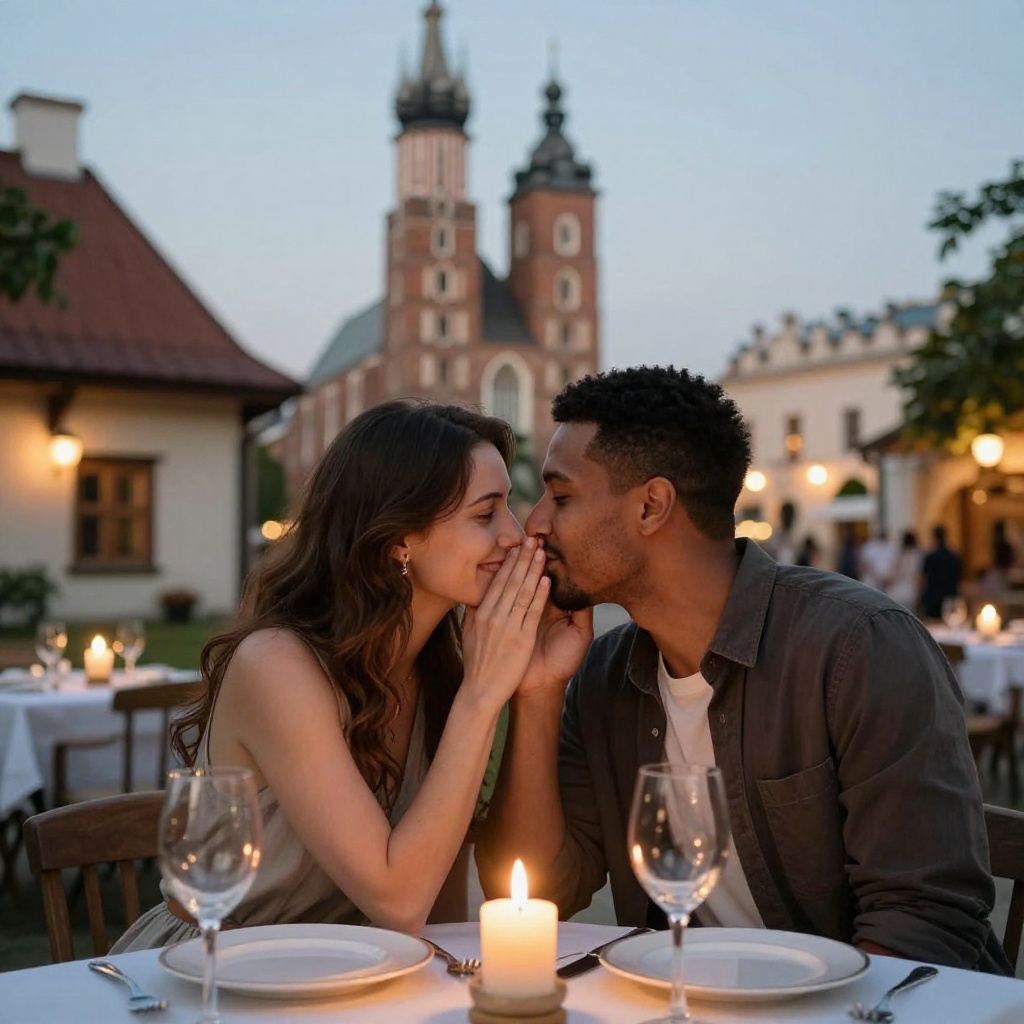
Is Polish Hard to Learn? Honest Answer for Couples
Polish has a reputation for being difficult, but is it really? Honest assessment for couples learning together, with realistic timeline and tips.
You've fallen for someone who speaks Polish, and now you're wondering: is Polish hard to learn? The short answer? Yes, it presents challenges—but no, it's not impossible. In fact, having a Polish partner gives you advantages that solo learners can only dream of. Let's break down exactly what you're facing and why it's absolutely worth the effort.
Phrase to Learn
Ćwiczmy razem
Let's practice together
[ CHVEECH-my RAH-zehm ]
The most important phrase you'll ever learn - and your motivation through the tough parts.
The Honest Assessment
According to the US Foreign Service Institute, Polish is a Category IV language, requiring approximately 1100 hours of study for English speakers to reach general proficiency. That puts it in the "hard" category alongside Russian, Turkish, and Finnish. But here's what those statistics don't tell you: when you're learning for someone you love, everything changes.
The journey from "complete beginner" to "comfortable conversations with your partner's family" typically takes 6-12 months with consistent practice. Compare that to the 3-5 years it takes most classroom learners, and you'll see why having a native speaker in your life is such a game-changer.
The Polish Advantage
Polish people are incredibly appreciative when foreigners attempt their language. Even basic efforts earn genuine smiles and encouragement. Your partner's family will be touched that you're learning, regardless of your skill level.
What Makes Polish Challenging
Seven Cases: Polish nouns change form based on their role in the sentence. Compare lubię kawę (I like coffee), nie ma kawy (there is no coffee), and idę po kawę (I am going for coffee). The meaning stays simple, but the ending changes with the job of the word. Start with our guide to the 100 most common Polish words to build your foundation first.
Consonant Clusters: Polish has sounds that don't exist in English. A word like źdźbło (blade of grass) looks intimidating, but in real conversation you will use far simpler words first: czuję (I feel), proszę (please), dziękuję (thank you).
Vocabulary Differences: Unlike Romance languages, Polish doesn't share many cognates with English. That means you often have to learn meaning from scratch, but it also means progress is very visible: every new word is a real win, not a guessed one.
Pronunciation: vy-MOH-vah
"Polska wymowa może być wyzwaniem, ale jest do opanowania." - Polish pronunciation can be a challenge, but it is manageable.
Free Word Order: While this actually becomes an advantage later, it means you can't rely on sentence position clues like in English. For example, Cię kocham and Kocham cię both mean "I love you," but the first version puts extra emphasis on you.
What Makes Polish Easier Than You Think
Phonetic Spelling: Once you learn the alphabet, you can pronounce any Polish word. No silent letters or weird exceptions like in English.
Regular Verb Patterns: Despite initial complexity, Polish verbs follow predictable patterns. Most fit into just a few conjugation categories.
Your Partner Advantage: Native speakers provide instant feedback, cultural context, and real motivation. Struggling with pronunciation? Your personal tutor is right there! Check out our guide to common pronunciation mistakes to avoid the biggest pitfalls.
English Loanwords: Modern Polish includes many English words, especially for technology and pop culture. Komputer, internet, and weekend are the same in both languages.
Realistic Timeline for Couples
| Milestone | Typical Time | Polish Example | What It Means |
|---|---|---|---|
| First survival phrases | 2-4 weeks | Cześć, Dziękuję, Kocham cię | You can greet people, show kindness, and say a few important couple phrases. |
| Basic daily talk | 2-3 months | Jak minął dzień? (How was your day?) | You can handle simple routines, plans, and check-ins. |
| Family visits | 4-6 months | Miło mi was poznać (Nice to meet you all) | You can follow familiar topics and participate politely. |
| Deeper conversations | 8-12 months | Chcę cię zrozumieć (I want to understand you) | You can discuss feelings, preferences, and relationship needs more clearly. |
| Confident fluency | 2+ years | Żartuję po polsku (I joke in Polish) | You can move comfortably between everyday talk, humor, and cultural references. |
Having a Polish partner usually speeds up these stages because you get frequent, meaningful practice. The exact pace still depends on consistency, exposure, and how much Polish you use together.
The Immersion Bonus
Even if you don't live in Poland, dating a Polish person provides cultural immersion. You'll celebrate Polish holidays, understand family dynamics, and naturally absorb cultural context that textbook learners miss.
The Couples Advantage: Why Learning Together Changes Everything
Built-in Practice Partner: Every conversation is a mini-lesson. Your partner can gently correct mistakes and introduce new vocabulary naturally.
Emotional Motivation: You're not learning abstract phrases—you're learning to express love, share dreams, and connect deeply. That emotional connection accelerates learning dramatically.
Cultural Context: Understanding why certain phrases matter culturally helps them stick. When your partner explains that "Jak się masz?" isn't just "How are you?" but a genuine inquiry about wellbeing, you remember it.
Real-World Application: Instead of memorizing vocabulary lists, you're learning phrases you'll actually use. From sweet good morning texts to romantic expressions, every word serves your relationship.
Tips for Success as a Couple
Start with feelings and daily life: Learn to express emotions and describe your day before tackling complex grammar.
Create Polish moments: Designate certain times or activities for Polish-only communication. Maybe Sunday breakfast becomes śniadanie po polsku.
Be patient with each other: Language learning tests relationships. Celebrate progress, laugh at mistakes, and remember why you started.
Use technology wisely: Apps like Love Languages provide structure, but your partner provides the heart. Combine both for best results.
Learn culturally: Understand that Polish directness isn't rudeness—it's honesty. These cultural insights matter as much as vocabulary.
Practice pronunciation daily: Five minutes of tongue twisters beats hours of silent vocabulary review. Your mouth needs to learn these new movements.
Set couple goals: "By summer, we'll have a 10-minute conversation entirely in Polish" gives you something to work toward together.
What to Learn First: Your Priority List
- Essential phrases for couples - "I love you," "How was your day?" "I'm proud of you"
- Family vocabulary - You'll need this for video calls and visits
- Food and restaurant language - Sharing meals is relationship-building
- Emotional expressions - Learn to fight fair and make up in Polish
- Cultural courtesies - Polish hospitality has specific rules worth knowing
Start with essential phrases for couples before diving into more complex topics. Mastering the basics builds confidence for everything else.
The Bottom Line
Is Polish hard to learn? Objectively, yes. But here's what matters more: it's absolutely achievable, especially with your Polish partner by your side. The difficulty becomes part of your love story—those moments when you finally pronounce szczęśliwy correctly, or when you make your partner's grandmother smile with a perfectly timed Dzień dobry.
Every challenge you overcome together strengthens both your language skills and your relationship. Those 1100 hours the FSI mentions? They'll fly by when you're learning to express your heart in a new language. The grammar cases, the tricky sounds, the cultural nuances—they're not obstacles to love, they're pathways to deeper connection.
Ready to learn together?
Speak their language, touch their heart. Fun games, voice practice & goals made for two.
Start Learning for $0.00 →✨ Try free — no credit card needed
Frequently Asked Questions
How long does it realistically take to become conversational in Polish?
Reaching conversational fluency in Polish typically takes 700-800 hours of study. This can translate to 1-2 years of consistent effort, but it varies based on individual learning styles and dedication. Couples who study together often progress faster due to mutual support and motivation. Set realistic goals and celebrate your milestones along the way.
What are the most challenging aspects of Polish grammar for English speakers?
Polish grammar is complex, featuring seven noun cases, verb conjugations that change based on person, gender, and tense, and grammatical gender for nouns. Mastering these aspects requires patience and consistent practice. Couples can break down grammar rules into smaller, manageable chunks and work through exercises together to reinforce their understanding.
What are the easiest parts of Polish for English speakers to learn?
Polish shares some vocabulary with English, making initial vocabulary acquisition easier. Also, Polish pronunciation, while initially daunting, becomes predictable once you learn the rules. Focus on building a strong foundation in pronunciation and basic vocabulary to gain momentum. Celebrate these early wins as a couple to stay motivated.
Are there any language learning apps specifically designed for Polish?
While some popular language learning apps include Polish, it's worth exploring apps and websites specifically designed for Polish. These often provide more in-depth grammar explanations and culturally relevant content. Look for resources that allow couples to track their progress and compete in a friendly way.
How can learning Polish together strengthen a couple's relationship?
Learning a new language together requires teamwork, communication, and mutual support. Overcoming challenges and celebrating successes strengthens your bond. Plus, you'll gain a deeper understanding of each other's learning styles and cultural perspectives. The shared experience of learning Polish can create lasting memories and enhance your connection.