Polish Name Days and Traditions
Discover Polish name days, wedding traditions, and cultural celebrations. Learn essential phrases and customs to connect with Polish culture as a couple.
Polish culture is rich with beautiful traditions that strengthen family bonds and community connections. As a couple learning Polish together, understanding these customs will help you connect more deeply with Polish speakers and participate meaningfully in their celebrations.
Phrase to Learn
Wszystkiego najlepszego z okazji imienin!
All the best on your name day!
[ FSHIST-kye-go nay-LEP-she-go z o-KAH-zyee ee-MYEN-een ]
The traditional greeting for someone celebrating their name day.
What Are Name Days?
Imieniny (name days) are perhaps more important than birthdays in Polish culture. Each day of the year is dedicated to one or more Catholic saints, and people celebrate on the day assigned to their first name. If your name is Anna, you celebrate on July 26th (St. Anna's day). If you're Piotr, your imieniny (name days) fall on June 29th.
Essential Name Day Vocabulary
| Polish | English | Pronunciation |
|---|---|---|
| Imiennik/Imienniczka | Person celebrating their name day | ee-MYEN-neek/ee-myen-NEECH-ka |
| Święty patron | Patron saint | sh-VYEN-tee PAH-tron |
| Kalendarz liturgiczny | Liturgical calendar | ka-len-DAHZH lee-toor-GEECH-nee |
| Życzenia | Wishes/greetings | zhee-CHEN-ya |
| Bukiet | Bouquet | BOO-kyet |
Name Day vs. Birthday
While birthdays (urodziny) are celebrated, name days often receive more attention and formal recognition. In workplaces, schools, and social circles, people typically remember and acknowledge name days more than birthdays.
How to Celebrate Name Days
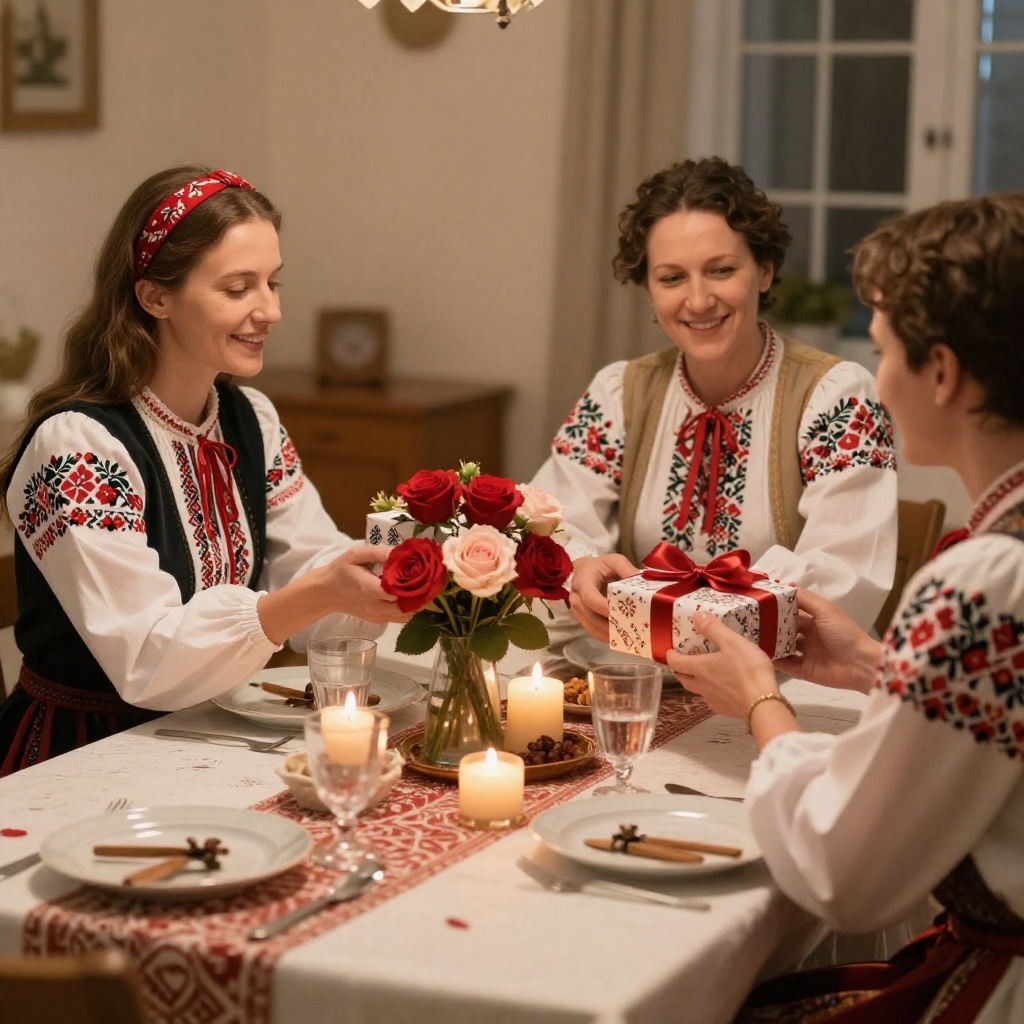
Polish name days (imieniny) are treated as open social events rather than intimate personal milestones. Colleagues, neighbours, and extended family may drop by unannounced throughout the day, and the host typically offers coffee, cake, and a spread of cold dishes. Arriving without a small gift would be considered impolite — a bunch of flowers or a box of chocolates is always appropriate.
Two things set name day etiquette apart from birthday etiquette: the greeting phrase matters (see below), and an odd number of flowers is essential — even numbers are reserved for funerals.
Traditional Greetings
When congratulating someone on their name day, these are the most common phrases. Practice saying them aloud — the pronunciation notes will help:
- Wszystkiego najlepszego z okazji imienin! — All the best on your name day! (FSHIST-kye-go nai-LEP-she-go z o-KAZ-yee ee-MYEN-een) — The standard, safe greeting for any name day.
- Sto lat! — May you live 100 years! (stoh laht) — Also sung as a song at celebrations: Sto lat, sto lat, niech żyje, żyje nam!
- Dużo zdrowia i szczęścia! — Lots of health and happiness! (DOO-zho ZDRO-vya ee SHCHEN-shcha) — A warm addition after the main greeting, especially for older family members.
- Najlepsze życzenia! — Best wishes! (nai-LEP-she zhi-CHEN-ya) — A shorter alternative that works in cards, texts, and quick conversations.
Pronunciation: stoh laht
"Sto lat! Sto lat! Niech żyje, żyje nam!"
Gift-Giving Traditions
Traditional name day gifts include:
- Kwiaty (flowers) - especially important for women
- Książka (a book) - thoughtful and personal
- Słodycze (sweets) - chocolates or traditional Polish treats
- Pamiątka (a keepsake) - something meaningful but not expensive
Polish Wedding Traditions
Polish weddings (wesela) are elaborate celebrations full of meaningful customs that couples should understand.
Pre-Wedding Traditions
Wieczór panieński (bachelorette party) and wieczór kawalerski (bachelor party) are modern additions, but traditional pre-wedding customs include:
- Prośby (asking for the bride's hand) - formal request to parents
- Zaręczyny (engagement) - often involves blessing from both families
Wedding Day Customs
The Blessing
Before leaving for church, parents give the couple chleb i sól (bread and salt) - symbols of prosperity and flavor in life. They also sprinkle the couple with zboże (grain) and monety (coins) for fertility and wealth.
At the Reception
The oczepiny (capping ceremony) is a beloved tradition where the bride's veil is removed and replaced with a married woman's cap, symbolizing her transition to married life.
Wedding Toasts
Polish wedding toasts are elaborate affairs. The starosta (master of ceremonies) leads multiple toasts throughout the evening, each with specific words and meanings. Learning these phrases shows deep cultural respect.
Seasonal and Holiday Traditions
Poland's two biggest holidays — Easter (Wielkanoc) and Christmas (Boże Narodzenie) — each carry their own vocabulary and rituals. Knowing the key words lets you participate actively rather than just observe.
Pronunciation: tra-dy-tsya
"Polska tradycja dzielenia się opłatkiem jest bardzo stara."
Easter Celebrations
Wielkanoc (Easter) brings beautiful traditions perfect for couples to share:
- Śmigus-dyngus - Easter Monday water splashing tradition
- Pisanki (decorated eggs) - intricate egg decorating
- Święcone (blessed food) - Easter basket blessing
Christmas Traditions
Boże Narodzenie (Christmas) in Poland involves:
- Wigilia (Christmas Eve dinner) - the most important celebration
- Opłatek (Christmas wafer) - shared with wishes for the coming year
- Kolędy (Christmas carols) - traditional songs sung door-to-door
Pronunciation: vee-GEEL-ya
"Wigilia jest najważniejszą tradycją świąteczną."
How to Participate as a Couple
Polish people genuinely enjoy sharing their traditions with curious foreigners. If you attend a celebration as a couple, split the roles: one of you handles greetings (Wszystkiego najlepszego!), the other manages the gift. Asking your host a simple question — Co to znaczy? (What does this mean?) — signals interest and usually leads to a warm, extended explanation.
Pronunciation: vspoohl-nyeh
"Wspólnie uczymy się polskich kolęd na Wigilię."
Learning Together
As you explore these traditions:
- Practice greetings - Learn the proper phrases for each occasion
- Research dates - Keep a calendar of important name days for friends
- Ask questions - Polish people love sharing their culture with interested learners
- Participate respectfully - Join in when invited, observe when appropriate
Essential Phrases for Celebrations
Świętować
to celebrate
| I | świętuję | I celebrate |
| You (informal) | świętujesz | you celebrate |
| He/She | świętuje | he/she celebrates |
| We | świętujemy | we celebrate |
| You (plural) | świętujecie | you all celebrate |
| They | świętują | they celebrate |
Making Cultural Connections
Polish speakers notice and appreciate even small efforts. A few practical steps that go a long way:
- Keep a name-day calendar — look up your Polish friends' names so you can text a greeting on the right day
- Bring an odd number of flowers — three, five, or seven stems; never an even number
- Learn one carol before Wigilia — even a single verse of Cicha Noc (Silent Night in Polish) will delight any Polish family
- Ask before joining rituals — phrases like Czy mogę spróbować? (May I try?) show respect rather than presumption
Modern Adaptations
While traditional customs remain strong, modern Polish families often adapt celebrations. Here is what that looks like in practice:
- Łączenie tradycji (Combining traditions) — Mixed couples blend customs. You might hear: U nas w domu mieszamy polskie i angielskie tradycje (At our house we mix Polish and English traditions).
- Uproszczone świętowanie (Simplified celebrations) — Busy city families may skip the full open house. A quick Wszystkiego najlepszego! text message is increasingly common.
- Życzenia cyfrowe (Digital greetings) — Sending wishes by message is now normal. A typical text: Sto lat! Dużo zdrowia i uśmiechów! (Many years! Lots of health and smiles!)
- Otwartość (Inclusive practices) — Non-Catholic participants are warmly welcomed. A helpful phrase: Chętnie poznam wasze tradycje (I'd be happy to learn your traditions).
Gift-Giving Etiquette
When giving flowers for name days or other celebrations, always give an odd number of stems. Even numbers are reserved for funerals and somber occasions.
Regional Variations
Different regions of Poland may have unique customs:
- Góralszczyzna (Highlands) — mountain weddings feature zbójnicki dances and regional folk costumes; celebrations can last two days
- Kaszuby (Kashubia) — Kashubians maintain their own dialect and embroidery patterns; name-day customs here often include folk songs
- Śląsk (Silesia) — strong mining heritage shapes communal celebrations; St. Barbara's Day (December 4) is treated almost like a local holiday
- Mazowsze (Masovia) — as the central region around Warsaw, customs here tend to be the most widely recognised as "standard Polish"
Important Cultural Notes
Remember: These traditions often have deep religious and historical significance. Approach them with respect and genuine interest rather than as mere curiosities.
Ready to learn together?
Speak their language, touch their heart. Fun games, voice practice & goals made for two.
Start Learning for $0.00 →✨ Try free — no credit card needed
Frequently Asked Questions
How do I say 'Happy Name Day' in Polish and what's a typical response?
You say 'Wszystkiego najlepszego z okazji imienin!' (Vshist-KYEH-goh nai-LEP-sheh-goh zuh oh-KAH-zee ee-myeh-NEE-een!). A typical response is 'Dziękuję bardzo!' (Jen-KOO-yeh BAHR-dzo!) meaning 'Thank you very much!'. Couples can practice these greetings to prepare for Polish celebrations.
What kind of gifts are appropriate for a Polish name day celebration?
Flowers, chocolates, or small personal gifts are common. It's the thought that counts. Avoid overly extravagant gifts unless you're very close to the person. Discuss gift ideas with your partner to ensure your present is well-received.
What are some common Polish wedding superstitions?
One superstition is that the bride should wear something old, something new, something borrowed, and something blue for good luck. Another is that the groom should carry the bride over the threshold of their new home. Research these superstitions with your partner and decide if you want to incorporate any into your own celebration.
How do Polish couples typically celebrate Christmas Eve?
Christmas Eve, or 'Wigilia,' is a very important celebration. Families gather for a meatless meal featuring twelve dishes, symbolizing the twelve apostles. Before eating, they share a Christmas wafer ('opłatek') and exchange wishes. Couples can create their own Wigilia tradition by sharing a special meal and exchanging heartfelt wishes.
How can learning about Polish traditions help us connect with Polish friends and family?
Understanding Polish traditions shows respect for their culture and values. It provides opportunities for meaningful conversations and shared experiences. Ask your Polish friends and family about their favorite traditions and participate in their celebrations. Share your own cultural traditions with them to create a sense of mutual understanding.