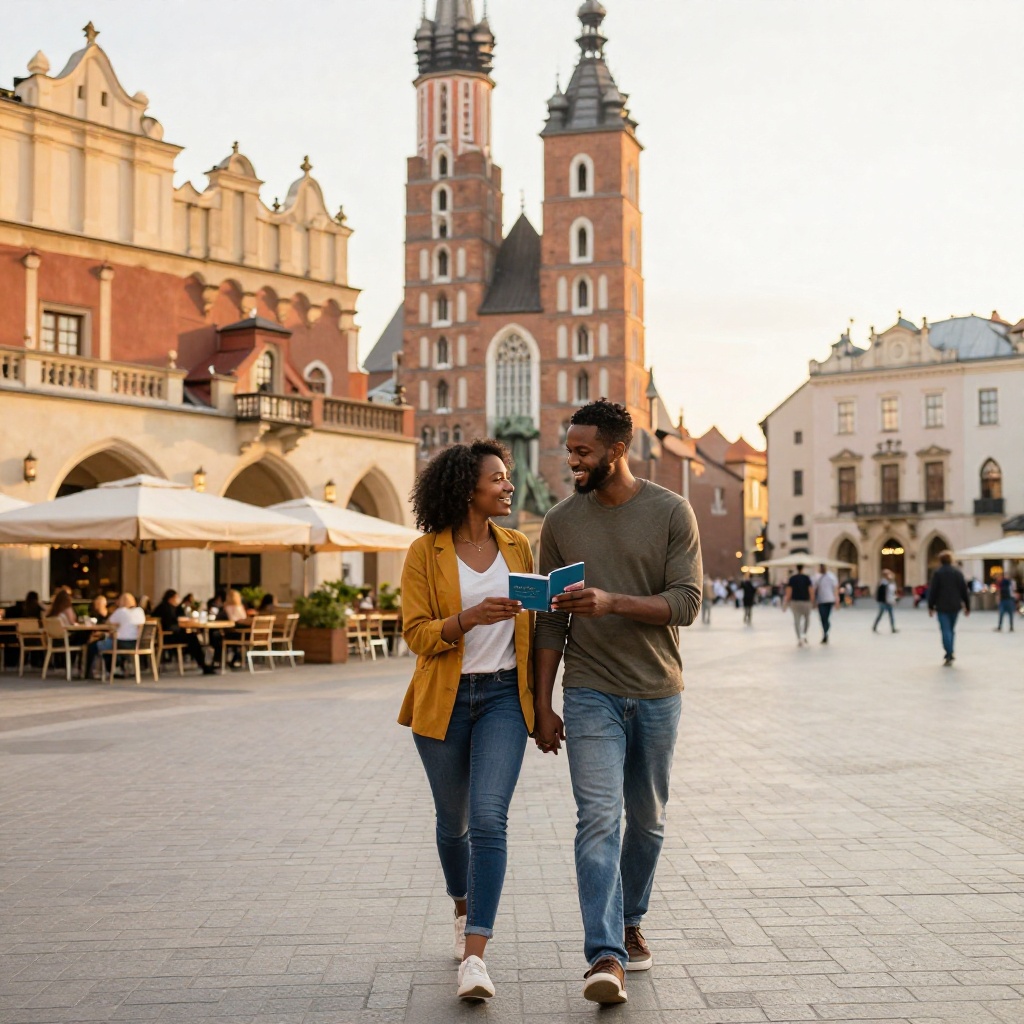
Polish Phone Calls: Answer Like a Local
Learn essential Polish phone conversation skills with your partner. From professional greetings to romantic calls, master Polish telephone etiquette together.
Phone conversations in Polish can feel intimidating, but they're an essential skill for couples visiting Poland or communicating with Polish-speaking family. Without visual cues, you'll rely entirely on listening skills and proper telephone etiquette.
Phrase to Learn
Halo?
Hello?
[ HAH-loh ]
The most common way to answer the phone in Poland - polite and professional.
How Polish People Answer the Phone
Unlike English speakers who say "Hello," Polish speakers have several distinct ways to answer:
Formal Answering
Słucham? (I'm listening?) is the gold standard. It's polite, professional, and works in any situation. The question mark indicates you're ready to hear what the caller has to say.
Pronunciation: SWOO-ham
"Słucham? Kto mówi?"
Casual Family Answering
Tak? (Yes?) is more casual and typically used with family or close friends. It's direct and informal.
Halo? (Hello?) borrowed from other languages, is becoming more common among younger Poles.
Business Phone Etiquette
When answering for a business or formally:
"Dzień dobry, słucham" (Good day, I'm listening) - professional morning greeting "Dobry wieczór, słucham" (Good evening, I'm listening) - professional evening greeting
Polish Phone Etiquette
Poles value directness in phone calls. Don't spend too much time on pleasantries - state your purpose clearly and politely.
Making Phone Calls: Essential Openers
When you're the one calling, start with a proper greeting and identify yourself:
Calling Friends or Family
"Cześć, tu [your name]" (Hi, this is [your name]) "Hej, mówi [your name]" (Hey, [your name] speaking)
Formal Calls
"Dzień dobry, nazywam się [your name]" (Good day, my name is [your name]) "Dobry wieczór, tu [your name] z [company/organization]" (Good evening, this is [your name] from [company/organization])
Pronunciation: na-ZY-vam sheh
"Dzień dobry, nazywam się Anna Kowalska."
Key Phone Conversation Verbs
Mówić
to speak
| I | mówię | I speak |
| You (informal) | mówisz | you speak |
| He/She | mówi | he/she speaks |
| We | mówimy | we speak |
| You (plural) | mówicie | you all speak |
| They | mówią | they speak |
Essential Phone Phrases
Navigating the initial stages of a Polish phone conversation requires a command of specific verbs and sentence structures. Unlike face-to-face interactions where visual cues assist understanding, phone calls rely entirely on verbal clarity. This section outlines the essential linguistic tools needed to direct the conversation toward your intended recipient or handle the logistics of the call when things do not go as planned.
We will examine the nuances of asking to speak with someone, including the shift between formal and informal address. Furthermore, the guide covers necessary responses for when someone isn't available, such as understanding that a person is 'busy' or 'out of the office.' To ensure no information is lost, we also detail the phrases used for taking messages and relaying contact details accurately.
Pronunciation: po-won-chytch
"Czy może mnie Pani połączyć z dyrektorem?"
Asking to Speak with Someone
| Polish | English | Pronunciation |
|---|---|---|
| Czy mogę rozmawiać z...? | Can I speak with...? | chih MO-geh roz-ma-VYACH z |
| Czy jest [name]? | Is [name] there? | chih yest |
| Poproszę [name] | I'd like [name] please | po-PRO-sheh |
When Someone Isn't Available
"Nie ma go/jej" (He/She isn't here) "Jest zajęty/zajęta" (He/She is busy) "Wyszedł/Wyszła" (He/She went out)
Pronunciation: chih MO-geh zo-STA-veech vya-do-MOSHCH
"Nie ma go? Czy mogę zostawić wiadomość?"
Taking Messages
"Czy chce Pan/Pani zostawić wiadomość?" (Would you like to leave a message? - formal) "Coś przekażesz?" (Will you pass something along? - informal) "Powiem mu/jej" (I'll tell him/her)
Romantic Phone Calls
When calling your Polish partner, these phrases add sweetness:
"Kochanie, to ja" (Darling, it's me) "Tęsknię za tobą" (I miss you) "Dzwonię, bo..." (I'm calling because...) "Kiedy się zobaczymy?" (When will we see each other?)
Ending Phone Calls Politely
The conclusion of a Polish phone call is just as culturally significant as the opening greeting. Polish etiquette distinguishes between 'seeing' and 'hearing' someone, leading to specific closing phrases that are unique to telephonic communication. Choosing the correct sign-off prevents an abrupt or awkward end to an otherwise successful interaction.
This section breaks down the differences between casual endings, suitable for peers and family, and formal endings, which are mandatory for professional environments. You will learn why certain phrases are preferred over others when you cannot see the person you are speaking to. Master these conventions to ensure your exit from the conversation is as polished as your introduction.
Pronunciation: do oo-swy-she-nya
"Dziękuję za pomoc, do usłyszenia!"
Casual Endings
"Na razie!" (See you later!) "Cześć!" (Bye!) "Do usłyszenia!" (Talk to you later!)
Formal Endings
"Do widzenia" (Goodbye) "Miłego dnia" (Have a nice day) "Dziękuję za rozmowę" (Thank you for the conversation)
Pronunciation: odd-ZVOH-nye
"Jestem teraz zajęty, oddzwonię do Pani później."
Dealing with Connection Problems
"Nie słyszę" (I can't hear) "Źle słychać" (The connection is bad) "Proszę mówić głośniej" (Please speak louder) "Rozłączamy się" (We're getting disconnected) "Zadzwonię ponownie" (I'll call again)
Common Phone Call Scenarios
Moving from isolated phrases to full interactions is the key to functional fluency. In Poland, specific service-based calls follow a predictable script that, once understood, makes the process much more manageable. This section applies your vocabulary to practical, real-world situations you are likely to encounter during travel or daily life.
We focus on two high-frequency tasks: calling a restaurant and calling for information. Whether you are requesting a table for four at a specific time or inquiring about the opening hours of a museum, these subsections provide the templates for a successful exchange. Understanding these common scenarios allows you to anticipate the questions a receptionist or host might ask in return.
Pronunciation: re-zer-va-tsya
"Chciałbym zrobić rezerwację na jutro na godzinę ósmą."
Calling a Restaurant
"Dzień dobry, chciałbym zarezerwować stolik" (Good day, I'd like to reserve a table) "Na ile osób?" (For how many people?) "Na którą godzinę?" (For what time?)
Calling for Information
"Przepraszam, czy mogę zapytać o...?" (Excuse me, can I ask about...?) "Jakie są godziny otwarcia?" (What are the opening hours?) "Ile to kosztuje?" (How much does it cost?)
Phone Number Format
Polish phone numbers are typically said digit by digit, not in groups. The number 123-456-789 would be "jeden, dwa, trzy, cztery, pięć, sześć, siedem, osiem, dziewięć."
Emergency Calls
While hopefully you'll never need these, it's important to know:
"To nagły wypadek" (This is an emergency) "Potrzebuję pomocy" (I need help) "Proszę przysłać karetkę" (Please send an ambulance)
Practice Tips for Couples
- Role Play Together: Take turns being the caller and the person answering
- Record Conversations: Practice and listen back to improve pronunciation
- Start Simple: Begin with basic scenarios before moving to complex business calls
- Use Polish Names: Practice with typical Polish names like Anna, Piotr, or Katarzyna
Pro tip: Polish phone conversations tend to be more direct than English ones. Don't be offended by the brevity - it's cultural efficiency, not rudeness!
Building Confidence
Phone calls in a foreign language are challenging because you can't rely on body language or facial expressions. Start with familiar people who speak slowly and clearly. As your confidence grows, you'll find Polish phone conversations become second nature.
Remember, even native speakers sometimes ask "Możesz powtórzyć?" (Can you repeat that?) during phone calls. Don't be afraid to ask for clarification!
Ready to learn together?
Speak their language, touch their heart. Fun games, voice practice & goals made for two.
Start Learning for $0.00 →✨ Try free — no credit card needed
Frequently Asked Questions
What's the best way to ask someone to repeat themselves on the phone in Polish?
A polite way to ask someone to repeat themselves is "Przepraszam, możesz powtórzyć?" (Excuse me, can you repeat?). If the connection is bad, you can say "Przepraszam, słabo cię słyszę" (Excuse me, I can't hear you well). It's important to be polite and patient, especially if you're having trouble understanding. Couples can practice these phrases together to improve their phone communication skills.
How do I politely ask who is calling on the phone in Polish?
You can ask "Przepraszam, kto mówi?" (Excuse me, who is speaking?) or "Z kim rozmawiam?" (With whom am I speaking?). It's important to be polite, especially if you don't recognize the number. Avoid being too direct or demanding. Couples can role-play different phone call scenarios to practice these phrases.
What are some common phrases to use when leaving a voicemail message in Polish?
Start by introducing yourself: "Dzień dobry, tu [Your Name]" (Good day, this is [Your Name]). Then, state the reason for your call and leave your phone number. End with "Proszę o kontakt" (Please contact me) and "Dziękuję" (Thank you). Speak clearly and slowly. Couples can help each other write and record voicemail messages in Polish.
How do I handle a wrong number phone call in Polish politely?
Simply say "Przepraszam, to zły numer" (Excuse me, this is the wrong number). There's no need to apologize excessively or engage in a long conversation. Just be polite and end the call quickly. Couples can practice saying this phrase to avoid awkwardness in real-life situations.
How can couples practice their Polish phone call skills together?
Role-playing is a great way to practice. One person can pretend to be calling a restaurant to make a reservation, while the other person answers the phone. You can also practice making inquiries, leaving messages, and dealing with connection problems. Focus on using the correct phrases and pronunciation. Couples can provide each other with feedback and encouragement.