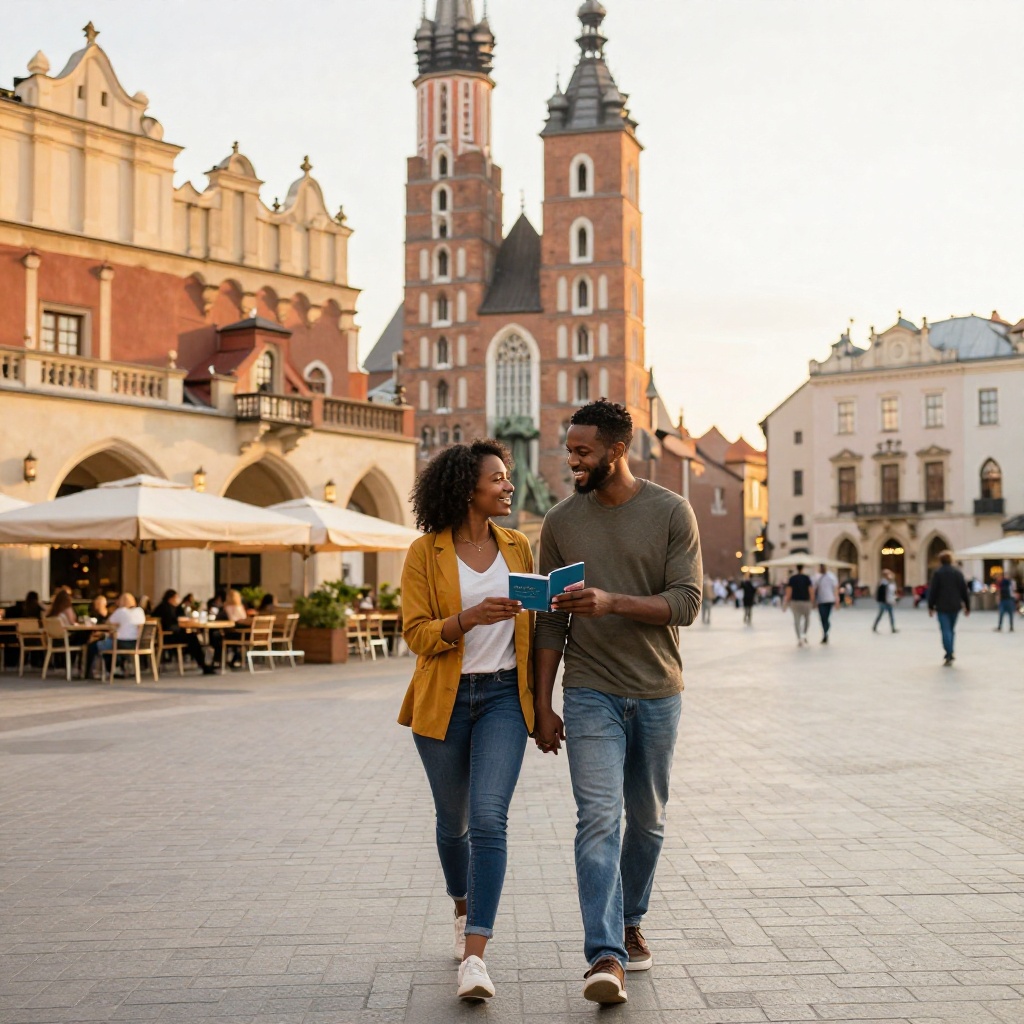
Polish Small Talk: Conversation Starters
Master essential Polish conversation starters and small talk phrases. Learn how to introduce yourself, discuss weather, and make connections naturally.
Meeting new people in Poland becomes infinitely easier when you master the art of small talk (pogawędka). Whether you're attending a Polish wedding, visiting your partner's family, or simply exploring Poland together, these conversation starters will help you connect with locals and make lasting impressions.
Phrase to Learn
How are you?
[ yahk sheh mahsh ]
The most essential greeting question - use with friends and peers.
Essential Greetings and Introductions
Polish introductions follow specific patterns that show respect and friendliness. Here are the basics every couple should know:
Formal Introductions
Pronunciation: jen DOH-bree
"Dzień dobry, bardzo mi miło Pana poznać."
Use dzień dobry (good day) from morning until late afternoon. It's safe, polite, and works in virtually any situation. Follow it with:
- Nazywam się... (My name is...) - NAH-zee-vahm sheh
- Miło mi Pana/Panią poznać (Nice to meet you, sir/madam) - MEE-woh mee PAH-nah/PAH-nyohng poh-ZNAHCH
- Jestem z Ameryki/Anglii (I'm from America/England) - YEH-stem z ah-MEH-ree-kee/ANG-lee
Casual Introductions
With people your age or younger, switch to informal language:
- Cześć (Hi) - cheshch
- Jestem... (I'm...) - YEH-stem
- Miło cię poznać (Nice to meet you) - MEE-woh cheh poh-ZNAHCH
- Skąd jesteś? (Where are you from?) - skohnd YEH-stesh
Polish Handshake Etiquette
Poles shake hands frequently - when meeting, leaving, and even when seeing friends daily. Maintain eye contact and use a firm grip. Women may extend their hand first to men.
Weather: The Universal Conversation Starter
Weather talk is as popular in Poland as anywhere else. These phrases will serve you well:
| Polish | English | Pronunciation |
|---|---|---|
| Jaka dziś pogoda? | What's the weather like today? | YAH-kah jeesh poh-GOH-dah |
| Piękny dzień, prawda? | Beautiful day, right? | PYEK-nee jen PRAHV-dah |
| Pada deszcz | It's raining | PAH-dah deshch |
| Jest zimno/ciepło | It's cold/warm | yest ZHEEM-noh/CHEH-pwoh |
| Wreszcie wiosna! | Spring at last! | VRESH-cheh VEE-ohs-nah |
Pronunciation: STRAHSH-nyeh goh-ROHN-tsoh jeesh
"Strasznie gorąco dziś, nie sądzisz?"
Asking About Someone's Day
Show genuine interest with these caring questions:
- Co słychać? (What's up?) - tsoh SWEE-hahch
- Jak minął dzień? (How was your day?) - yahk mee-nohw jen
- Jak się czujesz? (How are you feeling?) - yahk sheh CHOO-yesh
- Co robiłeś dziś? (What did you do today?) - tsoh roh-BEE-wesh jeesh
Typical Responses
- Dobrze, dziękuję (Fine, thank you) - DOH-zheh jen-KOO-yeh
- Nie mogę narzekać (Can't complain) - nyeh MOH-geh nah-ZHEH-kahch
- Mogło być lepiej (Could have been better) - MOH-gwoh beech LEH-pyay
- Świetnie! (Great!) - SHVYET-nyeh
Compliments That Open Doors
Polish people appreciate sincere compliments. Try these conversation starters:
- Piękny dom macie (You have a beautiful home) - PYEK-nee dohm MAH-cheh
- Pyszne jedzenie (Delicious food) - PISH-neh yeh-ZEH-nyeh
- Bardzo ładnie wyglądasz (You look very nice) - BAHR-dzoh WAHD-nyeh vig-WOHN-dahsh
- Świetny pomysł (Great idea) - SHVYET-nee poh-MEE-swoh
Polish Modesty
Poles often deflect compliments with phrases like "Ależ skąd" (Oh, come on) or "To nic takiego" (It's nothing special). This is cultural modesty, not rudeness!
Finding Common Ground
Establishing a connection requires moving beyond basic greetings and identifying shared experiences that can sustain a longer dialogue. In Polish social circles, finding a "common language" (wspólny język) is the key to transitioning from a formal acquaintance to a friendly rapport. By focusing on mutual interests, you allow the conversation to flow more naturally and give your interlocutor a chance to speak about things they are genuinely passionate about.
This section provides the linguistic tools needed to explore these shared territories effectively. We will cover "Hobbies and Interests" to help you discover what others do when they are not working, and "Travel and Places," which allows you to swap recommendations or stories about various regions of Poland and the world.
Pronunciation: vshpoohl-nih
"Szukamy wspólnego tematu do rozmowy."
Hobbies and Interests
Lubić
to like
| I | lubię | I like |
| You (informal) | lubisz | you like |
| He/She | lubi | he/she likes |
| We | lubimy | we like |
| You (plural) | lubicie | you all like |
| They | lubią | they like |
Common topics to explore:
- Czy lubisz sport? (Do you like sports?) - chee LOO-beesh spoht
- Jaką muzykę słuchasz? (What music do you listen to?) - YAH-kohng moo-ZI-keh SWOO-hahsh
- Czy paljesz? (Do you smoke?) - chee PAH-leesh
- Masz dzieci? (Do you have children?) - mahsh JEH-chee
- Jak długo jesteś w Polsce? (How long have you been in Poland?) - yahk DWOO-goh YEH-stesh f POHL-stseh
Travel and Places
- Czy byłeś już w Krakowie? (Have you been to Krakow yet?) - chee BEE-wesh yoosh f krah-KOH-vyeh
- Które miasto ci się podoba? (Which city do you like?) - KTOO-reh mee-AHS-toh chee sheh poh-DOH-bah
- Skąd pochodzisz? (Where do you come from?) - skohnd poh-HO-jeesh
Family Topics
Family is central to Polish culture, making it a natural conversation topic:
- Masz rodzeństwo? (Do you have siblings?) - mahsh roh-JEN-stvoh
- Jak się nazywają twoi rodzice? (What are your parents' names?) - yahk sheh nah-ZEE-vah-yohng TVOH-ee roh-JEE-tseh
- Czy rodzina mieszka blisko? (Does your family live nearby?) - chee roh-JEE-nah myesh-KAH BLEE-skoh
Pronunciation: mahm dvyeh SHOH-stree
"Mam dwie siostry i jednego brata."
Food: A Gateway to Polish Hearts
Poles take enormous pride in their cuisine. These food-related conversation starters never fail:
- Co lubisz jeść? (What do you like to eat?) - tsoh LOO-beesh yeshch
- Czy gotowujesz? (Do you cook?) - chee goh-toh-VOO-yesh
- Które polskie jedzenie ci smakuje? (Which Polish food do you enjoy?) - KTOO-reh POHL-skyeh yeh-ZEH-nyeh chee smah-KOO-yeh
- Czy próbowałeś już pierogów? (Have you tried pierogi yet?) - chee proo-boh-VAH-wesh yoosh pyeh-ROH-goof
Work and Studies
Professional topics:
- Czym się zajmujesz? (What do you do for work?) - cheem sheh zahy-MOO-yesh
- Gdzie pracujesz? (Where do you work?) - gdyeh prah-TSOO-yesh
- Lubisz swoją pracę? (Do you like your job?) - LOO-beesh SVOH-yohng PRAH-tseh
- Co studiowałeś? (What did you study?) - tsoh stoo-dee-oh-VAH-wesh
Graceful Exit Strategies
Knowing how to politely end conversations is just as important:
- Było bardzo miło z tobą rozmawiać (It was very nice talking with you) - BEE-woh BAHR-dzoh MEE-woh z toh-BOHNG rohs-mah-VEE-ahch
- Muszę już iść (I have to go now) - MOO-sheh yoosh eeshch
- Do zobaczenia! (See you!) - doh zoh-bah-CHEH-nyah
- Miłego dnia! (Have a nice day!) - mee-WEH-goh inyah
Pro tip: When someone shares something personal, respond with "Rozumiem" (I understand) or "To interesujące" (That's interesting) to show you're actively listening.
Cultural Conversation Taboos
With new acquaintances, it is usually better to avoid topics that can feel invasive or argumentative. If the conversation drifts that way, use a light redirect rather than shutting it down abruptly.
- Pieniądze? (Money?) - better to avoid. To interesujące, ale może porozmawiajmy o podróżach. (That's interesting, but maybe let's talk about travel.)
- Polityka? (Politics?) - better to avoid. Wolę lekkie tematy na początek. (I prefer lighter topics to start.)
- Dlaczego Polska robi to tak? (Why does Poland do it like that?) - sounds critical. Jak to działa u was? (How does it work here?) is softer.
- Masz chłopaka/dziewczynę? (Do you have a boyfriend/girlfriend?) - too personal early on. Lubisz poznawać nowych ludzi? (Do you like meeting new people?) is safer.
Instead, focus on positive shared experiences, cultural exchange, and genuine curiosity about Polish life.
Mastering Polish small talk takes practice, but these conversation starters will help you and your partner navigate social situations with confidence. Remember, Poles appreciate effort more than perfection - your attempts to speak their language will be warmly received!
Related Articles
Ready to learn together?
Speak their language, touch their heart. Fun games, voice practice & goals made for two.
Start Learning for $0.00 →✨ Try free — no credit card needed
Frequently Asked Questions
How can I ask about someone's weekend in Polish?
To ask about someone's weekend, you can say "Jak minął weekend?" (How was your weekend?). A typical response might be "Było świetnie, dziękuję" (It was great, thank you) or "Niezbyt dobrze" (Not so good). As a couple, you can practice asking each other about your weekends and discussing what you did, using past tense verbs to describe your activities.
What are some polite ways to end a conversation in Polish?
To politely end a conversation, use phrases like "Przepraszam, muszę już iść" (Excuse me, I have to go) or "Miło było porozmawiać" (It was nice talking to you). You can also say "Do zobaczenia" (See you later). Couples can practice these exit strategies in role-playing scenarios to get comfortable using them naturally.
Are there any specific topics I should avoid discussing in Poland?
While Poland is generally open, avoid sensitive topics like politics with strangers or very personal financial matters early in conversations. Religion can be a delicate subject depending on the person. Instead, focus on positive topics like travel or hobbies. As a couple, discuss appropriate conversation topics beforehand to avoid accidental offense.
How can I compliment someone's Polish language skills in a natural way?
Complimenting someone's language skills is a great way to connect! You can say "Mówisz bardzo dobrze po polsku" (You speak Polish very well) or "Twój polski jest imponujący" (Your Polish is impressive). To make it even more personal, add something specific you noticed, like "Your pronunciation is excellent!". Couples can practice giving each other compliments to build confidence.
Besides weather, what are some other 'safe' small talk topics in Poland?
Beyond the weather, discussing hobbies, travel experiences (especially within Poland), or recent cultural events are good choices. Asking about local attractions or restaurants can also spark interesting conversations. Couples can research local events together to have shared topics to discuss with new acquaintances.