Poland Travel: Phrases and Tips
Master essential Polish travel phrases for couples visiting Poland. From airport arrivals to romantic dining, learn what you need for an unforgettable trip together.
Planning a romantic getaway to Poland with your partner? Learning essential Polish phrases together will not only make your trip smoother but also create special bonding moments as you navigate this beautiful country side by side.
Phrase to Learn
Czy możecie nam pomóc?
Can you help us?
[ chih MO-zheh-cheh nam po-MOTS ]
The most useful phrase for any travel situation when you need assistance together.
Whether you're exploring the medieval streets of Kraków (Krakow) or enjoying the vibrant nightlife of Warszawa (Warsaw), these phrases will help you connect with locals and make the most of your Polish adventure.
At the Airport: Your First Polish Impressions
Your Polish journey begins the moment you land at lotnisko (airport). Here are the essential phrases for a smooth arrival:
Pronunciation: GDJEH yest viy-SHCHEH
"Przepraszam, gdzie jest wyjście?"
Airport Essentials
| Polish phrase | English meaning | When to use it |
|---|---|---|
| Paszport, proszę | Passport, please | Show it at immigration |
| Nic do zgłoszenia | Nothing to declare | Use at customs if you have nothing to declare |
| Gdzie są nasze bagaże? | Where are our bags? | Ask at baggage claim if your luggage is missing |
| Czy jest tu taxi? | Is there a taxi here? | Useful right outside arrivals |
| Ile kosztuje przejazd do centrum? | How much is the ride to downtown? | Ask before you enter a taxi |
Polish Hospitality
Poles are generally very helpful to tourists, especially couples traveling together. Don't hesitate to ask for help - saying "Jesteśmy turystami" (We are tourists) often gets you extra assistance and patience.
Hotel Check-in: Your Home Away from Home
Checking into your hotel (hotel) or pensjonat (guesthouse) is your first real interaction with Polish hospitality. Here's what you need to know:
Pronunciation: MA-mih reh-zehr-VA-tsyeh na naz-VIS-ko
"Mamy rezerwację na nazwisko Smith."
Hotel Vocabulary for Couples
- Pokój dwuosobowy (double room) - "PO-kooy dvoo-o-so-BO-vih"
- Łóżko małżeńskie (double bed) - "WOOZH-ko maw-ZHEN-skeh"
- Śniadanie (breakfast) - "shnya-DA-nyeh"
- Czy jest Wi-Fi? (Is there Wi-Fi?) - "chih yest vee-fee"
- O której godzinie jest śniadanie? (What time is breakfast?) - "o KTOO-rey go-JEE-nyeh yest shnya-DA-nyeh"
Getting Around: Transportation for Two
Exploring Poland together means mastering transportation phrases. Whether you're taking tramwaj (tram), autobus (bus), or taxi (taxi), these phrases will get you where you need to go:
Public Transportation
Pronunciation: dva bee-LEH-tih PRO-sheh
"Dwa bilety do centrum, proszę."
Essential Transport Phrases:
- Gdzie jest dworzec? (Where is the train station?) - "GDJEH yest DVO-zhets"
- Kiedy odjeżdża następny pociąg? (When does the next train leave?) - "KYEH-dih od-YEZH-ja nas-TEMP-nih PO-chong"
- Czy to jest właściwy kierunek? (Is this the right direction?) - "chih to yest VWASH-chee-vih kyeh-ROO-nek"
- Wysiadamy na następnej (We get off at the next stop) - "vih-sha-DA-mih na nas-TEMP-ney"
Transportation Tips
In Polish cities, validate your tickets immediately after boarding. Inspectors are common, and the fine for jazda na gapę (fare dodging) is substantial. Always buy tickets for both of you!
Dining Out: Romantic Polish Meals
One of the greatest joys of traveling to Poland as a couple is experiencing the incredible food together. From traditional pierogi (dumplings) to hearty bigos (hunter's stew), here's how to navigate Polish restaurants:
Pronunciation: STO-leek dla DVOOKH o-SOOP
"Czy jest wolny stolik dla dwóch osób?"
Restaurant Essentials
Ordering Together:
- Mamy ochotę na... (We feel like having...) - start the conversation before you order together
- Co Państwo polecają? (What do you recommend?) - polite and useful with unfamiliar menus
- Dla mnie... (For me...) - the easiest way to begin your own order
- A dla mojej żony/mojego męża (And for my wife/husband) - handy when ordering for both of you
- Rachunek, proszę (The bill, please) - the simplest way to close the meal
Must-Try Polish Dishes
| Polish Name | English Translation | Description |
|---|---|---|
| Pierogi ruskie | Russian dumplings | Potato and cheese filled |
| Kotlet schabowy | Breaded pork cutlet | Poland's national dish |
| Żurek | Sour rye soup | Traditional soup, perfect for sharing |
| Sernik | Cheesecake | Perfect romantic dessert |
Shopping Together: Polish Markets and Stores
Exploring rynek (market squares) and sklepy (shops) together is a wonderful way to experience local culture:
Pronunciation: EE-leh to kosh-TOO-yeh
"Przepraszam, ile to kosztuje?"
Shopping Phrases for Couples
- Czy mogę to przymierzyć? (Can I try this on?) - "chih MO-geh to pshih-myeh-ZHITch"
- Szukamy prezentów (We're looking for gifts) - "SHOO-ka-mih preh-ZEN-toof"
- Co myślisz o tym? (What do you think about this?) - "tso MISH-leesh o tim"
- To za droge (This is too expensive) - "to za DRO-geh"
- Weźmiemy to (We'll take it) - "vezh-MYEH-mih to"
Emergency Phrases: Stay Safe Together
While Poland is generally very safe for tourists, it's important to know basic emergency phrases:
Essential Emergency Vocabulary:
- Pomocy! (Help!) - "po-MO-tsih"
- Potrzebujemy pomocy (We need help) - "po-tsheh-BOO-yeh-mih po-MO-tsih"
- Zgubiłem/Zgubiłam paszport (I lost my passport - m/f) - "ZGOO-bee-wem/ZGOO-bee-wam PASH-port"
- Gdzie jest szpital? (Where is the hospital?) - "GDJEH yest SHPEE-tal"
- Policja (Police) - "po-LEETS-ya"
Emergency Numbers
In Poland, dial 112 for all emergencies. Most operators speak English, but knowing basic Polish phrases can speed up assistance.
Romantic Polish Phrases for Your Trip
No romantic trip to Poland is complete without some sweet Polish phrases to whisper to your partner:
Pronunciation: ten VIH-yazt yest fspa-nya-WIH
"Kochanie, ten wyjazd jest wspaniały!"
Romantic Travel Phrases:
- Kocham podróżować z tobą (I love traveling with you) - "KO-ham po-droo-ZHO-vatch s to-BONG"
- To miejsce jest piękne (This place is beautiful) - "to MYEY-stseh yest PYENK-neh"
- Zrobimy sobie zdjęcie (Let's take a photo) - "ZROB-ee-mih SO-byeh ZDJYEN-cheh"
- Pamiętka z naszej podróży (A souvenir from our trip) - "pa-MYON-tka z NA-shey po-DROO-zhih"
Cultural Etiquette: Do's and Don'ts for Couples
DO:
- Remove shoes when entering someone's home
- Bring flowers (odd number) if invited to dinner
- Say "Dzień dobry" (Good day) when entering shops
- Wait for the host to make the first toast
DON'T:
- Give even numbers of flowers (associated with funerals)
- Be overly loud in public transportation
- Forget to say "Dziękuję" (Thank you) - "djyen-KOO-yeh"
Planning Your Polish Adventure
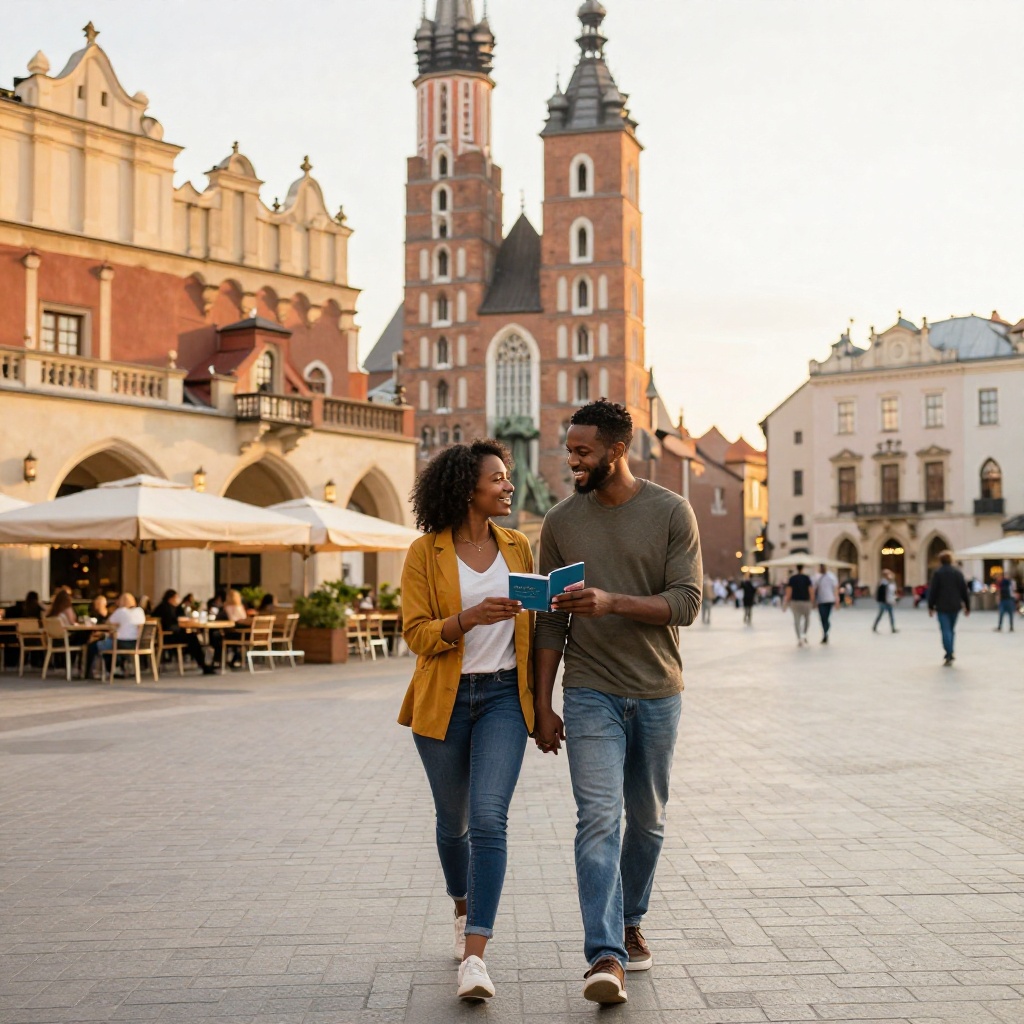
Poland offers incredible experiences for couples: romantic walks through Stare Miasto (Old Town) in Kraków, sunset views from Zamek Królewski (Royal Castle) in Warsaw, or cozy evenings in kawiarnie (cafés) sipping kawa (coffee) together.
Popular Couple Destinations:
- Kraków - Medieval charm and romance
- Gdańsk - Beautiful Baltic coast
- Wrocław - Colorful market square
- Zakopane - Mountain adventures together
Learning these phrases together before your trip will not only make your travel experience smoother but also show locals that you've made an effort to connect with Polish culture. Poles deeply appreciate when visitors attempt to speak their language, no matter how basic the level.
Pro Tip: Practice these phrases with your partner before you travel. Make it fun by role-playing different scenarios - ordering dinner, asking for directions, or checking into your hotel. You'll arrive in Poland feeling confident and connected!
Remember, the goal isn't perfection - it's connection. Every "Dziękuję" (thank you), "Przepraszam" (excuse me), and "Miłego dnia" (have a nice day) will open doors and hearts during your Polish adventure together.
Ready to learn together?
Speak their language, touch their heart. Fun games, voice practice & goals made for two.
Start Learning for $0.00 →✨ Try free — no credit card needed
Frequently Asked Questions
What are some polite ways to ask for directions in Polish while traveling?
Start with "Przepraszam, czy możesz mi pomóc?" (Excuse me, can you help me?). Then, clearly state where you want to go, for example, "Jak dojść do [name of place]?" (How do I get to [name of place]?). Always be polite and thank the person for their assistance: "Dziękuję bardzo za pomoc!" (Thank you very much for your help!). Couples can practice asking for directions together before their trip.
How can I handle dietary restrictions or allergies when eating out in Poland?
Learn how to say your dietary needs clearly. For example, "Jestem uczulony/uczulona na [allergen]" (I am allergic to [allergen]). You can also ask, "Czy to danie zawiera [allergen]?" (Does this dish contain [allergen]?). Be prepared to explain your restrictions in detail, as not all servers may be fluent in English. Couples can create a translated card with their dietary restrictions to show at restaurants.
What's the best way to handle unexpected situations, like lost luggage or a delayed train?
Stay calm and be polite. Report lost luggage to the airline immediately and obtain a reference number. For train delays, inquire at the information desk for updates and alternative routes. Having key phrases like "Mój bagaż zaginął" (My luggage is lost) and "Mój pociąg jest opóźniony" (My train is delayed) will be helpful. Couples can create a checklist of important documents and contacts to keep readily available.
How can I show appreciation to locals who are helpful during my trip?
A simple "Dziękuję" (Thank you) goes a long way. If someone goes above and beyond, you can say "Jestem bardzo wdzięczny/wdzięczna" (I am very grateful). Offering a small gift, like a souvenir from your home country, can also be a nice gesture, but it's not always necessary. Genuine gratitude and respect are always appreciated. Couples can discuss appropriate ways to express gratitude in different situations.
What are some common scams or tourist traps to be aware of in Poland?
Be wary of overly friendly strangers offering unsolicited help, especially near tourist attractions. Always use official taxi stands and agree on a price beforehand. Keep a close eye on your belongings in crowded areas to avoid pickpockets. If something seems too good to be true, it probably is. Couples can research common scams in specific cities they plan to visit and discuss how to avoid them.