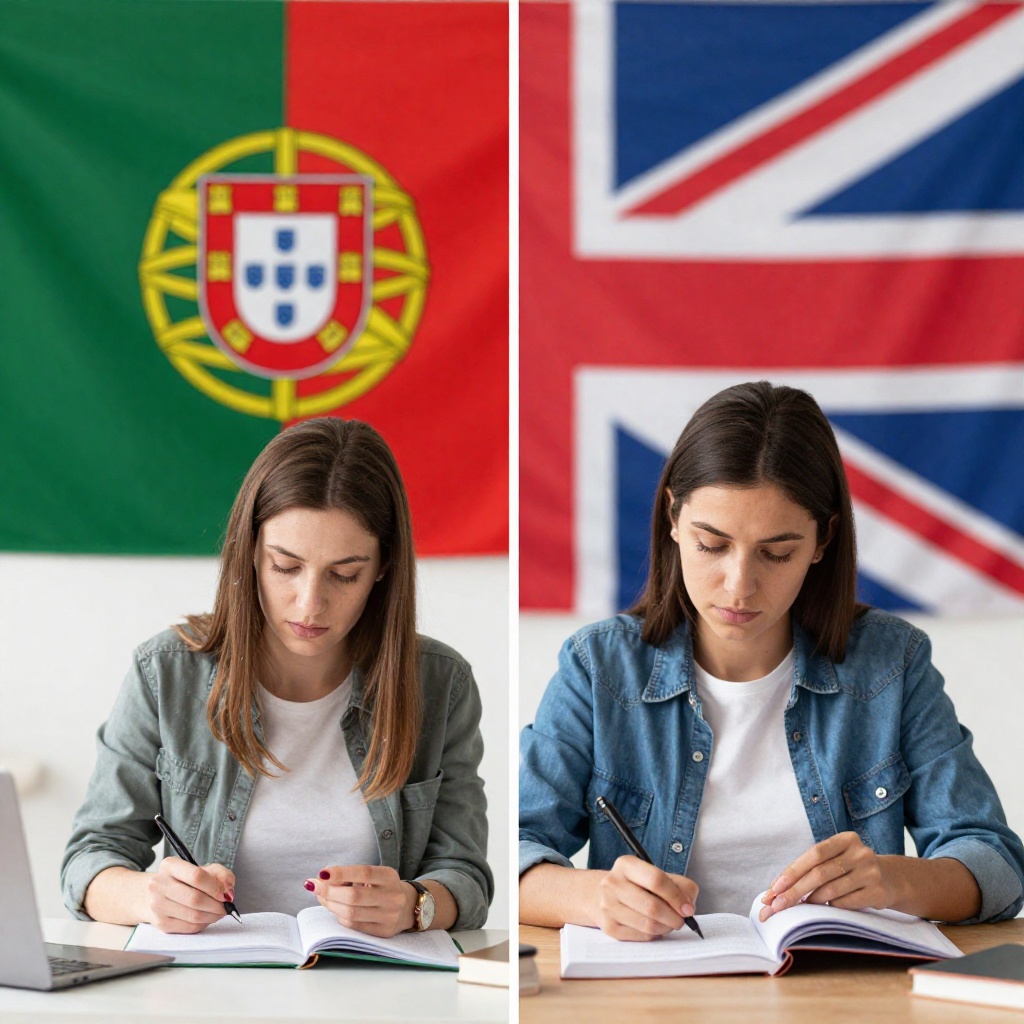
Is Portuguese Hard? Honest Assessment
Wondering if Portuguese is hard to learn? Get an honest assessment of Portuguese difficulty for English speakers, with tips to make your journey easier.
If you're considering learning Portuguese for your partner, you've probably asked yourself: "Is Portuguese hard to learn?" The honest answer is nuanced. Portuguese has both challenging aspects and features that make it surprisingly accessible for English speakers. Let's break it down.
The Good News: Why Portuguese is Learnable
Phrase to Learn
Português é lindo
Portuguese is beautiful
[ por-too-GAYS eh LEEN-doo ]
The language itself is encouraging you to learn!
1. A Fellow Romance Language with Latin Roots
English borrowed heavily from Latin and French, which means you already know thousands of Portuguese words without realizing it. Check out these cognates:
Pronunciation: eem-por-TAHN-chee
"Isso é muito importante. (This is very important.)"
Pronunciation: poh-SEE-vehl
"Tudo é possível. (Everything is possible.)"
Your Vocabulary Head Start
Studies suggest that English speakers can recognize over 3,000 Portuguese words from day one due to shared Latin roots. Words ending in -tion in English often become -ção in Portuguese (nation → nação, information → informação).
2. Consistent Spelling Rules
Unlike English with its chaotic spelling, Portuguese is largely phonetic. Once you learn the rules, you can pronounce almost any word correctly just by reading it. No more "though," "through," "thought" confusion!
3. No Cases Like German or Russian
Portuguese nouns don't change their endings based on their function in a sentence (nominative, accusative, dative, etc.). If you've ever struggled with German or Russian cases, you'll appreciate this simplicity.
The Challenges: What Makes Portuguese Tricky
While Portuguese shares many Latin roots with English, the structural logic of the language often presents a steep learning curve for beginners. These difficulties aren't insurmountable, but they do require a departure from the analytical structure of English in favor of a more inflected system. Recognizing these patterns early helps in developing the mental flexibility needed for fluency.
The following breakdown explores the three most prominent hurdles for learners: the intricate world of verb conjugations, the classification system of gendered nouns, and the unique pronunciation peculiarities—specifically the nasal vowels—that define the sounds of Lisbon or Rio. Each of these elements demands specific attention, as they represent the most significant departures from English grammar and phonology.
Pronunciation: kohm-plek-see-DAH-dee
"A complexidade dos verbos exige estudo diário."
1. Verb Conjugations
This is probably the biggest hurdle for English speakers. Portuguese verbs change form based on who's doing the action, when they're doing it, and even the mood of the statement.
falar
to speak
| eu | falo | I speak |
| tu | falas | you speak (informal) |
| você | fala | you speak (formal/Brazil) |
| ele/ela | fala | he/she speaks |
| nós | falamos | we speak |
| vocês | falam | you all speak |
| eles/elas | falam | they speak |
The good news? Regular verbs follow predictable patterns, and most everyday communication only requires mastering a handful of tenses.
2. Gendered Nouns
Every noun in Portuguese is either masculine or feminine, and this affects articles and adjectives:
Pronunciation: oo LEE-vroo boh-NEE-too
"O livro é muito bonito. (The book is very beautiful.)"
Pronunciation: ah KAH-zah boh-NEE-tah
"A casa é bonita. (The house is beautiful.)"
Notice how "bonito" becomes "bonita" to match the feminine noun "casa." This takes practice, but patterns emerge quickly.
3. Pronunciation Peculiarities
Portuguese has sounds that don't exist in English, particularly nasal vowels:
The Nasal Sound
Portuguese nasal sounds (ão, ãe, õe) are unique. The trick is to let air flow through your nose while saying the vowel—similar to the "ng" in English "singing" but softer. Your partner can help you perfect these sounds!
Brazilian vs European Portuguese: Which is Easier?
Many learners find Brazilian Portuguese more accessible for several reasons:
| Aspect | Brazilian Portuguese | European Portuguese |
|---|---|---|
| Pronunciation | Clearer vowels, more open | Reduced vowels, "swallowed" sounds |
| Speaking Speed | Generally slower | Often faster |
| Pronoun Use | Simpler (você dominant) | More complex (tu/você varies) |
| Media Availability | Abundant (music, Netflix, YouTube) | Less common internationally |
Pronunciation: voh-SEH FAH-lah por-too-GAYS
"Olá! Você fala português? (Hello! Do you speak Portuguese?)"
However, if your partner is from Portugal, learning European Portuguese is absolutely worthwhile. The differences are comparable to American vs British English—you'll understand each other fine!
How Long Does It Take to Learn Portuguese?
The US Foreign Service Institute classifies Portuguese as a Category I language—among the easiest for English speakers to learn. Their estimate:
- Basic conversational fluency: 24-30 weeks (600-750 hours)
- Professional proficiency: 44 weeks (1,100 hours)
But here's the secret: learning Portuguese with your partner accelerates everything. Daily practice with a native speaker is invaluable.
The Love Advantage
Couples who learn each other's languages progress 40% faster than solo learners, according to language learning research. Your emotional connection and daily practice opportunities make all the difference!
Tips for Making Portuguese Easier
Approaching a new language with a strategic mindset can significantly reduce the time spent in the initial frustration phase of learning. Rather than attempting to master every grammatical rule simultaneously, successful learners often focus on high-impact techniques that build confidence and functional ability. Efficiency in language acquisition comes from prioritizing communication over theoretical perfection.
In this section, we cover four key strategies: focusing on high-frequency words to build a core lexicon, using media immersion to normalize the sounds of the language, and the necessity of speaking from day one. We also address the psychological aspect of learning, explaining why embracing mistakes is a necessary component of refining your skills. These methods provide a roadmap for navigating the complexities of Portuguese with greater ease.
1. Start with High-Frequency Words
Focus on the words you hear every day in real conversations: que, não, mais, hoje, and muito. These are small words, but they do a lot of work.
Pronunciation: mysh
"Quero mais café, por favor. (I want more coffee, please.)"
Try building one sentence around each word: Não sei, quero mais, que horas são? Repeating them in context helps the patterns stick faster than memorizing isolated vocabulary.
2. Immerse Yourself in Portuguese Media
- Brazilian music: Bossa nova, MPB, and sertanejo
- Portuguese fado: Beautiful traditional music
- Telenovelas: Brazilian soap operas are perfect for learning
- Podcasts: Portuguese Pod 101, Café Brasil
3. Practice Speaking from Day One
Don't wait until you're "ready." Start using what you learn immediately with your partner:
Pronunciation: KOH-moo see deez
"Amor, como se diz 'beautiful' em português? (Love, how do you say 'beautiful' in Portuguese?)"
4. Embrace Making Mistakes
Portuguese speakers are known for their warmth and patience with learners. Your partner especially will appreciate every effort you make.
The Verdict: Is Portuguese Hard?
Portuguese is challenging, but it is not unusually hard for English speakers. The work is real, especially with verbs and pronunciation, yet the language also gives you a lot of help through familiar vocabulary and regular spelling patterns.
| What helps | What takes practice |
|---|---|
| Many cognates with English | Verb conjugations |
| Mostly consistent spelling | Gender agreement |
| No grammatical cases | Nasal vowels and reduced vowels |
| Lots of learning resources | Listening to fast native speech |
For learners with a Portuguese-speaking partner, the biggest advantage is daily exposure. You can ask one question, repeat one phrase, and get corrected in real time.
Pronunciation: EH-oo kohn-SEE-goo
"Português é difícil, mas eu consigo! (Portuguese is difficult, but I can do it!)"
So the honest answer is: Portuguese is manageable, especially if you focus on speaking early instead of waiting for perfection.
Start Your Portuguese Journey
The question isn't really whether Portuguese is hard—it's whether the effort is worth it. For someone you love? Absolutely. Every new word you learn is a small gift to your relationship, a bridge between your worlds.
So, is Portuguese hard to learn? It's challenging but absolutely achievable. And with love as your motivation, you're already halfway there.
Related Articles
Ready to learn together?
Speak their language, touch their heart. Fun games, voice practice & goals made for two.
Start Learning for $0.00 →✨ Try free — no credit card needed
Frequently Asked Questions
What are the biggest differences between Brazilian and European Portuguese?
The main differences lie in pronunciation, grammar, and vocabulary. Brazilian Portuguese tends to be more open and nasal, while European Portuguese is more closed and precise. Grammatically, Brazilian Portuguese often simplifies verb conjugations. Vocabulary differences exist for everyday items. Couples learning together can decide which dialect to focus on, or learn both and quiz each other.
How can I best deal with the verb conjugations in Portuguese?
Focus on mastering the most common verb tenses first, such as the present, past, and future. Use online resources and apps to practice conjugations. Break down the conjugations into smaller, manageable chunks. Create flashcards or use spaced repetition software. Partners can quiz each other and provide encouragement to stay motivated.
What are some effective ways to immerse myself in Portuguese media?
Start by watching Portuguese-language TV shows and movies with subtitles. Listen to Portuguese music and podcasts. Read Portuguese books and articles. Follow Portuguese-speaking social media accounts. Even small amounts of daily exposure can make a big difference. Couples can watch a Portuguese movie together each week and discuss it afterwards.
How important is it to learn grammar rules when starting to learn Portuguese?
While grammar is important, it's not necessary to master every rule before you start speaking. Focus on learning the basic grammar concepts and then practice using them in conversation. Don't be afraid to make mistakes; they are a natural part of the learning process. As you progress, you can gradually learn more complex grammar rules. A couple can choose to focus on different grammar concepts each week and teach it to the other.
What are the best resources for finding native Portuguese speakers to practice with?
Online language exchange platforms like HelloTalk and Tandem are great for connecting with native speakers. You can also look for Portuguese conversation groups in your local area. Consider hiring a Portuguese tutor online. Even a short conversation each week can significantly improve your fluency. A couple can use these resources together or take turns practicing with native speakers.