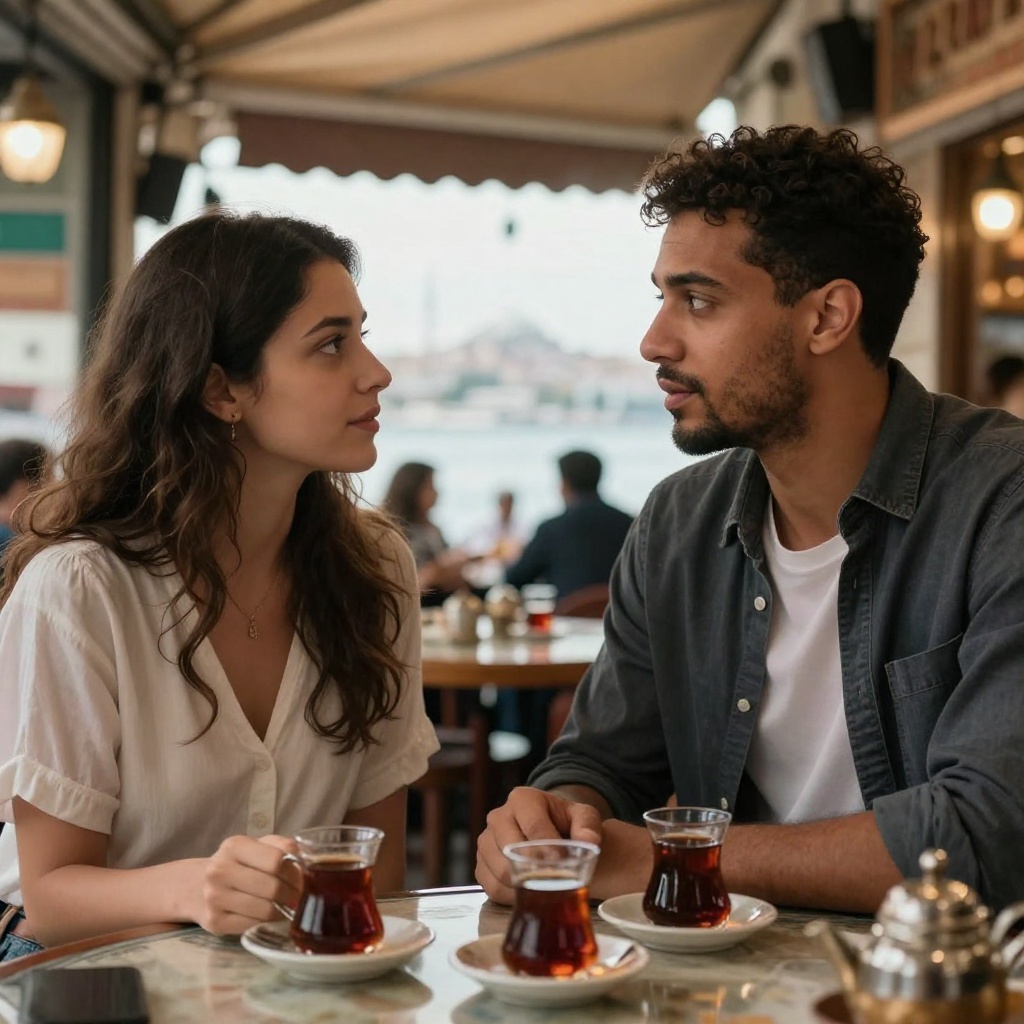
Turkish Small Talk: Conversation Starters for Every Situation
Master Turkish small talk with essential conversation starters. Perfect for meeting your partner's friends and family naturally.
Small talk is the foundation of every relationship. Whether you're meeting your partner's friends, family, or just chatting with new people, these Turkish conversation starters will help you connect naturally.
Phrase to Learn
Merhaba, nasılsınız?
Hello, how are you? (Formal)
[ mehr-HAH-bah nah-SIHL-suh-nuhz ]
A polite opening for meeting someone new or starting a conversation respectfully.
Essential Phrases
These phrases cover the small talk situations you'll encounter most often — introductions, checking in, and keeping conversation flowing naturally:
| Turkish | English | Pronunciation |
|---|---|---|
| Merhaba, nasılsınız? | Hello, how are you? (formal) | mehr-HAH-bah nah-SIHL-suh-nuhz |
| İyiyim, teşekkür ederim | I'm well, thank you | EE-yee-yim teh-shek-KUER eh-deh-REEM |
| Çok memnun oldum | Very pleased to meet you | chohk mem-NOON ohl-doom |
| Türkçe öğreniyorum | I'm learning Turkish | tuerk-CHEH oh-reh-nee-YOH-room |
| Biraz Türkçe biliyorum | I know a little Turkish | bee-RAHZ tuerk-CHEH bee-lee-YOH-room |
Türkçe öğreniyorum is a great opener because it sets expectations and typically earns an encouraging response — Turks genuinely appreciate the effort.
Cultural Tip
In Turkish culture, small talk often touches on family and personal wellbeing before moving to other topics. Showing genuine interest in someone's family is appreciated.
More Useful Expressions
| Turkish | English | Pronunciation |
|---|---|---|
| Nerelisiniz? | Where are you from? (formal) | neh-reh-LEE-see-niz |
| Ben [şehir]'liyim | I'm from [city] | ben … lee-YEEM |
| Harika bir hava, değil mi? | Lovely weather, isn't it? | hah-REE-kah beer HAH-vah deh-YIL mee |
| Boş zamanlarında ne yaparsınız? | What do you do in your free time? | bohsh zah-man-lah-RINDA neh yah-par-SIN-iz |
| Çok ilginç! | How interesting! | chohk eel-GEENCH |
Pronunciation: boo-GOON neh yah-puh-YOHR-su-nuz
"Merhaba, bugün ne yapıyorsunuz?"
Keeping the Conversation Going
| Turkish | English | Pronunciation |
|---|---|---|
| Anlıyorum | I understand | ahn-lih-YOH-room |
| Tekrar söyler misiniz? | Could you say that again? | tek-RAHR soh-ler mee-SEE-niz |
| Yavaş konuşabilir misiniz? | Could you speak more slowly? | yah-VAHSH koh-noo-sha-BEE-leer mee-SEE-niz |
| Türkçesi ne? | What's that in Turkish? | tuerk-CHEH-see neh |
Tips for Using These Phrases
- Start simple - Basic phrases are perfectly fine
- Ask follow-up questions - Shows genuine interest
- Listen actively - Respond to what they share
- Don't fear mistakes - People appreciate the effort
- Smile and nod - Universal communication helpers
Practice Makes Perfect
Learning to make conversation in your partner's language shows dedication and care. Even if your pronunciation isn't perfect, the effort itself demonstrates your commitment to the relationship.
Related Articles
- Turkish Greetings and Goodbyes for Couples
- Turkish Grammar Basics for Beginners
- 100 Most Common Turkish Words to Learn
To truly connect, expand your repertoire beyond apologies. Here are a few more practical phrases for common situations:
- Commenting on the weather: Turks often start conversations with observations about the weather. Try "Hava bugün çok güzel" (HAH-vah bu-GOON chok gu-ZEL), meaning "The weather is very nice today."
- Asking about someone's day: A simple "Nasılsın?" (nah-SUHL-suhn) meaning "How are you?" is a great way to show you care. Follow up with "İyi misin?" (EE-yee mee-SEEN) meaning "Are you okay?" if they seem down.
- Expressing interest in their hobbies: "Boş zamanlarında ne yaparsın?" (BOHSH zah-man-lah-RIN-dah neh yah-PAR-suhn?) translates to "What do you do in your free time?" and can lead to engaging discussions.
- Offering help: "Yardıma ihtiyacın var mı?" (yar-Dih-MAH ih-tee-yah-JEEHN var MIH?) asks "Do you need help?". This is particularly useful when navigating crowded markets or public transportation.
Remember to adjust your tone and volume to match the environment. Speaking loudly can be perceived as rude, especially in quieter settings like cafes or homes. Observational learning is helpful. Pay attention to how native speakers interact with one another, and try to mimic their cadence and body language.
Pronunciation: chok gu-ZEL beer guen DEH-yil mee
"Hava harika, çok güzel bir gün değil mi?"
Pronunciation: neh-reh-LEE-see-niz
"Türkiye'ye hoş geldiniz, nerelisiniz?"
Pronunciation: yar-dihm-JIH oh-lah-bee-LEER mee-YIM
"Bir şeye bakıyordunuz galiba, yardımcı olabilir miyim?"
Related Articles
Ready to learn together?
Speak their language, touch their heart. Fun games, voice practice & goals made for two.
Start Learning for $0.00 →✨ Try free — no credit card needed
Frequently Asked Questions
What are some good follow-up questions after the initial small talk?
After asking basic questions like "Nasılsınız?" (How are you?), you can delve deeper by asking about their hobbies, interests, or recent activities. For example, "Boş zamanlarınızda neler yapmaktan hoşlanırsınız?" (What do you like to do in your free time?) shows genuine interest. Couples can role-play asking each other these questions.
How can I gracefully exit a small talk conversation in Turkish?
Use phrases like "Tanıştığıma memnun oldum" (Pleased to meet you) or "Sohbet etmek güzeldi" (It was nice chatting). You can also say "Görüşmek üzere" (See you later) if you expect to see them again. Be polite and smile as you excuse yourself. Make sure your partner knows your exit strategy in advance.
Are there any topics I should avoid in Turkish small talk?
Avoid overly personal or controversial topics, especially when meeting someone for the first time. Politics, religion, and personal finances are generally best avoided. Focus on neutral topics like the weather, local events, or shared interests. Observe how your partner's family interacts to gauge acceptable topics.
How do I deal with awkward silences in a Turkish conversation?
If there's a lull in the conversation, try asking an open-ended question to get the other person talking. You can also comment on something you observe in the environment or offer a compliment. Having a few backup topics prepared can help fill those silences. Prepare some topics with your partner beforehand.
What's the best way to practice small talk with my partner in Turkish?
Set aside 15-20 minutes each day to practice small talk scenarios. Pretend you're meeting each other for the first time or attending a social event. Focus on using the phrases you've learned and try to keep the conversation flowing naturally. Give each other constructive feedback afterwards.